From hope to faith
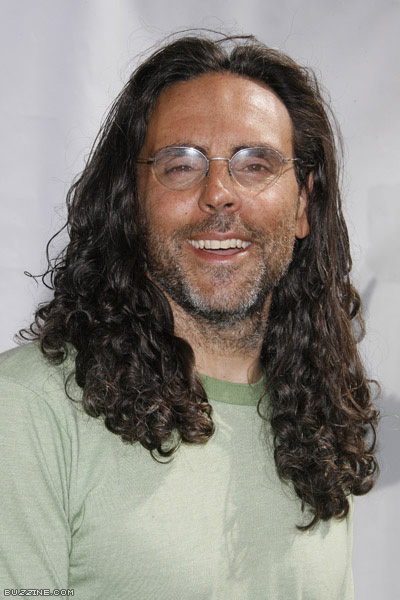
Director Tom Shadyac shares his quest for the meaning of life in ‘I Am’
By Carl Kozlowski 03/17/2011
Like it? Tweet it! SHARE IT!
For nearly 15 years, movie director Tom Shadyac was on top of the world, owning a mansion on 500 acres of land in the foothills of east Pasadena, a private jet and a collection of fancy cars. His films — from collaborations with Jim Carrey on the two “Ace Ventura” films, “Liar Liar” and “Bruce Almighty,” to smash hits with Eddie Murphy on “The Nutty Professor” and Robin Williams on “Patch Adams” — grossed more than $1 billion worldwide.
But in 2007, Shadyac suffered a double-whammy of misfortune: The “Bruce Almighty” sequel “Evan Almighty” became one of the most expensive comedies ever made and the biggest comedic box-office bombs of all time. Then he suffered severe head trauma in a bicycle accident. Side effects of the accident included blurred vision and severe migraines that never seemed to go away, and Shadyac thought he was going to die.
The life-threatening injuries miraculously healed, but the experience humbled Shadyac, causing a radical transformation in how he viewed life, sending him on a spiritual and philosophical quest that took him around the planet in search of answers from various world religions and famous philosophers. As a result, he wound up feeling that his wealth and extravagant lifestyle — in a world where millions of people go to sleep hungry every night — were a form of mental illness.
Shadyac decided to change his life and his mindset, and wound up selling off his land and his house — as well as his jet — and moved into a mobile home on the Malibu coastline. Although he gave away most of his wealth, he spent $1 million to finance a highly personal documentary titled “I Am,” a mix of insights and analysis into the meaning of life.
“I wouldn’t say I’ve run into haters, but people who don’t see eye to eye,” Shadyac says of some of the responses to the film. “And that’s to be expected and welcome. My father himself, whom I loved dearly, thought much of my vision might be utopian. Yet my father built a huge business that takes care of people first, cures cancer first, ahead of profit motive.”
Shadyac’s father, Richard C. Shadyac Sr., an attorney, was a friend of TV legend Danny Thomas, who founded St Jude Children’s Research Hospital in Memphis, Tenn. The elder Shadyac, according to online sources, served in many capacities with the facility, and from 1992 to 2005 acted as St. Jude’s CEO.
In choosing some of the world’s deepest thinkers and most spiritual figures — among them Howard Zinn, Noam Chomsky and Desmond Tutu — Shadyac put himself in an awkward spot that actually fit well with the project. He found that with this highly intellectual crowd, his past work on films like “Ace Ventura: Pet Detective” didn’t register at all, thus leaving him “without the ability to use my ego as a crutch.”
He originally planned to just ask his subjects what was wrong with the world and how to fix it, but eventually he decided it was more valuable to focus on what mankind is doing right. Grabbing a pitcher of water to pour a drink, Shadyac pauses — as if just realizing that the container provided him with the perfect analogy.
“I think both perspectives on life — half-full, half-empty — can be valuable, but I just want to know the truth,” says Shadyac. “Truth can be a matter of perspective, but I also think there’s a definite truth that exists, that there are laws to the universe the way Gandhi and Dr. Martin Luther King believed.
“I moved from hope to faith. Hope is the belief we might get it done and do right as a species, and faith is the knowledge we will get it done. When you see the underlying story of who people really are and what the nature of reality is, I think it tells a very positive story.”
In making the film, Shadyac came to see the value in many different forms of spiritual thought. The film quotes Jesus Christ from Scripture and St. Francis of Assisi, but also frequently invokes Gandhi and Muslim beliefs on a couple
of occasions.
Shadyac explains that in his personal spiritual life, he practices what he terms “the Lectio Divino,” meditating on an assortment of divine readings and trying to glean the “meat and marrow” from all parts of the world. Shadyac believes that’s in keeping with the biggest lesson his film has to offer: that we are brothers and sisters who share the same DNA and must feel connected to all creatures if we are to make the planet healthy again.
Despite all the deep thoughts, Shadyac reassures comedy fans that he now feels ready to dive back into just making people laugh again.
“I think laughter is a sacred act, so, of course I’d do comedy again,” he says. “If you’ve got an idea for ‘Ace 3,’ I’m all ears.”
Tuesday, October 11, 2011
SERJ TANKIAN: The Man with some really rockin' poetry
PHOTOS: Chris Anthony (Serj Tankian) System for success
System of a Down frontman Serj Tankian releases new book of poetry
By Carl Kozlowski 03/24/2011
Give Serj Tankian five minutes and he’ll find a new way to impress you. He’s sold millions of albums and toured the world as the lead singer of System of a Down, written symphonies for jazz ensembles and orchestras, joined the fight for countless social justice causes, co-wrote a musical that debuted at Harvard and is headed to New York City, and now he’s just published his second volume of poetry, “Glaring Through Oblivion.”
And from the sound of things in a recent exclusive phone interview with the Pasadena Weekly, Glendale resident Tankian is just getting started. He took a few minutes to reflect on his career while preparing for a book tour that includes a stop on Tuesday at the Barnes & Noble in the Americana at Brand in Glendale.
“I’ve co-scored a film, but I’m looking forward to scoring a full film,” says Tankian, who speaks with a tone that’s mellow but at
a pace that’s near manic with energy. “I’ve arranged my rock songs for orchestra before and released it on CD/DVD as ‘Elect
the Dead Symphony.’ I also have a museum project in the works,
an art project collaborating with an artist friend of mine developing interesting installations of multi-century exhibits.”
Tankian has had plenty of time for his varied solo projects since the System members opted to take a hiatus in 2005 (they are currently reuniting for a world tour). The band formed in 1994 and quickly made a massive mark on the music world with a unique sound that combined hard rock with exotic instrumentation, as well as lyrics that combined serious social commentary with absurdist jokes — coming together in the band’s uniquely memorable videos that mixed creepy and funny imagery.
“I think it’s just that life is absurd and commenting on that is a necessity,” explains Tankian when asked about the odd mix in System’s work. “It’s also that life is absurdly serious. It’s also in my character. I don’t stick to one shtick. It’s always been there. I’ve never been afraid to express myself. A lot of bands in hard rock are afraid to be taken lightly, so I’ve never been afraid. I feel we go through such a wide array of emotions in a day, why pick only one for your art?”
That broad spectrum of emotions is present in nearly every page of “Oblivion,” a striking coffee-table book with dark yet vivid paintings by Roger Kupelian. The poems within are a blend of critiques on modern technology and political extremism, mixed with more personal poems about Tankian’s reflections on love and his place in the world.
The tome follows a prior volume of poetry titled “Cool Gardens” that he published in 2001, and the process of writing a new book has inspired Tankian to attempt his first nonfiction book. Still in the works, that’s about “the intersection of spirituality and justice,” and was inspired by a lengthy personal conversation he had with the Dalai Lama three years ago.
“There were a lot of requests from people who bought the first book asking for a second,” says Tankian. “It just felt right, and I
had my friend whose work fascinated me, so I wanted to work with him and do something cool. And there was expression of course – the first and foremost reason to put out anything. What is different about this one compared to ‘Cool Gardens’ was a lot of one-liners — art matched with a one-liner of truth or a joke.”
System of a Down frontman Serj Tankian releases new book of poetry
By Carl Kozlowski 03/24/2011
Give Serj Tankian five minutes and he’ll find a new way to impress you. He’s sold millions of albums and toured the world as the lead singer of System of a Down, written symphonies for jazz ensembles and orchestras, joined the fight for countless social justice causes, co-wrote a musical that debuted at Harvard and is headed to New York City, and now he’s just published his second volume of poetry, “Glaring Through Oblivion.”
And from the sound of things in a recent exclusive phone interview with the Pasadena Weekly, Glendale resident Tankian is just getting started. He took a few minutes to reflect on his career while preparing for a book tour that includes a stop on Tuesday at the Barnes & Noble in the Americana at Brand in Glendale.
“I’ve co-scored a film, but I’m looking forward to scoring a full film,” says Tankian, who speaks with a tone that’s mellow but at
a pace that’s near manic with energy. “I’ve arranged my rock songs for orchestra before and released it on CD/DVD as ‘Elect
the Dead Symphony.’ I also have a museum project in the works,
an art project collaborating with an artist friend of mine developing interesting installations of multi-century exhibits.”
Tankian has had plenty of time for his varied solo projects since the System members opted to take a hiatus in 2005 (they are currently reuniting for a world tour). The band formed in 1994 and quickly made a massive mark on the music world with a unique sound that combined hard rock with exotic instrumentation, as well as lyrics that combined serious social commentary with absurdist jokes — coming together in the band’s uniquely memorable videos that mixed creepy and funny imagery.
“I think it’s just that life is absurd and commenting on that is a necessity,” explains Tankian when asked about the odd mix in System’s work. “It’s also that life is absurdly serious. It’s also in my character. I don’t stick to one shtick. It’s always been there. I’ve never been afraid to express myself. A lot of bands in hard rock are afraid to be taken lightly, so I’ve never been afraid. I feel we go through such a wide array of emotions in a day, why pick only one for your art?”
That broad spectrum of emotions is present in nearly every page of “Oblivion,” a striking coffee-table book with dark yet vivid paintings by Roger Kupelian. The poems within are a blend of critiques on modern technology and political extremism, mixed with more personal poems about Tankian’s reflections on love and his place in the world.
The tome follows a prior volume of poetry titled “Cool Gardens” that he published in 2001, and the process of writing a new book has inspired Tankian to attempt his first nonfiction book. Still in the works, that’s about “the intersection of spirituality and justice,” and was inspired by a lengthy personal conversation he had with the Dalai Lama three years ago.
“There were a lot of requests from people who bought the first book asking for a second,” says Tankian. “It just felt right, and I
had my friend whose work fascinated me, so I wanted to work with him and do something cool. And there was expression of course – the first and foremost reason to put out anything. What is different about this one compared to ‘Cool Gardens’ was a lot of one-liners — art matched with a one-liner of truth or a joke.”
Labels:
Armenian,
rock music,
Serj Tankian,
System of a Down
CHRISTOPHER TITUS: NOT JUST A COMIC BUT A MODERN-DAY CARLIN-STYLE PROPHET
Comedy with a cause
Christopher Titus teams with Dana Carvey, Kevin Nealon and Billy Gardell to raise funds for foster teens
By Carl Kozlowski 05/05/2011
Christopher Titus endured a lot of emotional pain growing up with a verbally abusive alcoholic father and a schizophrenic mother who ultimately committed suicide. But he lifted himself out of despair with laughter, becoming a standup comedian who turned his pain into riveting and relatable tales that eventually earned him his own self-titled sitcom on FOX.
Titus has come a long way in his career, with a third standup special for Comedy Central set to air July 4. But he’s kept his heart open to the hardships of others, establishing the nonprofit Insight Youth Project, which raises money for children from dysfunctional and abusive families, and using revenue from stand-up shows to help organizations that help teens who are homeless or in foster care.
On Saturday, Titus will join Dana Carvey, SNL alum and “Weeds” star Kevin Nealon and Billy Gardell, star of CBS’ “Mike & Molly,” in “Laugh Your A$$ Off, Save the World,” a fundraiser to benefit the Olive Crest center for troubled teens at Glendale’s Alex Theatre.
“There are 56,000 foster and homeless teens in Los Angeles, and that’s a big deal for me,” says Titus. “We want to eradicate the problem of teens being homeless from Los Angeles by 2020. I had a tough childhood, with a tough dad and an insane mom, but can you imagine living in the bushes by the 101 [freeway]?”
The Insight Youth Project seeks out private, faith-based charities because Titus believes state-run foster homes are often places where caregivers “are just out to cash a check,” and that private programs make more effort to truly help.
He chose Olive Crest — serving children and families in California, Nevada and the Pacific Northwest since 1973 — because it provides housing, counseling and education for both troubled youths and their parents so that the families have a better shot at staying together before kids are placed in foster care.
“Right now they’re trying to fill a $150,000 shortfall for their counseling program,” Titus says of Olive Crest. “I really learned about these issues by volunteering with a Hollywood day shelter called My Friend’s Place. They told me these kids live in the bushes by the freeway, and I was like ‘holy shit.’ This is freakin’ Los Angeles, one of the most beautiful cities on earth, and economically we set trends and that’s not one we should be setting.”
Plenty of other social issues are upsetting Titus these days, fueling the outraged comedic sensibilities that flourished during the three-year run of his sitcom “Titus.” His new comedy special is called “Neverlution,” and is also rooted in his frustrations with the world.
“We’re a society built on revolution, but now we’re placated by Starbucks and iPads, and so we’re never going to get angry enough to have a revolution again,” says Titus. “We spend $900 billion on bullets and defense, and $90 billion on education. Why is Singapore kicking our ass on math and science? We’re not paying attention to what matters. I’m not Democrat or Republican, but that’s just messed up.”
Indeed, Titus is fiercely independent politically, finding faults with both parties. But mostly he believes that individuals should find a charity that they believe in and get involved rather than waiting on government agencies to do it for them.
“Just remembering what a screw-up I was as a teenager, I was a horrible student at 17 and they wouldn’t give me my diploma because I had to go to summer school to graduate,” Titus recalls. “But I turned into a guy with a Writers’ Guild nomination. Who
you are is a choice. What you want to be is a choice, and sometimes people don’t give these kids a choice. We need to give money to groups that give kids counseling and a different life.”
Christopher Titus teams with Dana Carvey, Kevin Nealon and Billy Gardell to raise funds for foster teens
By Carl Kozlowski 05/05/2011
Christopher Titus endured a lot of emotional pain growing up with a verbally abusive alcoholic father and a schizophrenic mother who ultimately committed suicide. But he lifted himself out of despair with laughter, becoming a standup comedian who turned his pain into riveting and relatable tales that eventually earned him his own self-titled sitcom on FOX.
Titus has come a long way in his career, with a third standup special for Comedy Central set to air July 4. But he’s kept his heart open to the hardships of others, establishing the nonprofit Insight Youth Project, which raises money for children from dysfunctional and abusive families, and using revenue from stand-up shows to help organizations that help teens who are homeless or in foster care.
On Saturday, Titus will join Dana Carvey, SNL alum and “Weeds” star Kevin Nealon and Billy Gardell, star of CBS’ “Mike & Molly,” in “Laugh Your A$$ Off, Save the World,” a fundraiser to benefit the Olive Crest center for troubled teens at Glendale’s Alex Theatre.
“There are 56,000 foster and homeless teens in Los Angeles, and that’s a big deal for me,” says Titus. “We want to eradicate the problem of teens being homeless from Los Angeles by 2020. I had a tough childhood, with a tough dad and an insane mom, but can you imagine living in the bushes by the 101 [freeway]?”
The Insight Youth Project seeks out private, faith-based charities because Titus believes state-run foster homes are often places where caregivers “are just out to cash a check,” and that private programs make more effort to truly help.
He chose Olive Crest — serving children and families in California, Nevada and the Pacific Northwest since 1973 — because it provides housing, counseling and education for both troubled youths and their parents so that the families have a better shot at staying together before kids are placed in foster care.
“Right now they’re trying to fill a $150,000 shortfall for their counseling program,” Titus says of Olive Crest. “I really learned about these issues by volunteering with a Hollywood day shelter called My Friend’s Place. They told me these kids live in the bushes by the freeway, and I was like ‘holy shit.’ This is freakin’ Los Angeles, one of the most beautiful cities on earth, and economically we set trends and that’s not one we should be setting.”
Plenty of other social issues are upsetting Titus these days, fueling the outraged comedic sensibilities that flourished during the three-year run of his sitcom “Titus.” His new comedy special is called “Neverlution,” and is also rooted in his frustrations with the world.
“We’re a society built on revolution, but now we’re placated by Starbucks and iPads, and so we’re never going to get angry enough to have a revolution again,” says Titus. “We spend $900 billion on bullets and defense, and $90 billion on education. Why is Singapore kicking our ass on math and science? We’re not paying attention to what matters. I’m not Democrat or Republican, but that’s just messed up.”
Indeed, Titus is fiercely independent politically, finding faults with both parties. But mostly he believes that individuals should find a charity that they believe in and get involved rather than waiting on government agencies to do it for them.
“Just remembering what a screw-up I was as a teenager, I was a horrible student at 17 and they wouldn’t give me my diploma because I had to go to summer school to graduate,” Titus recalls. “But I turned into a guy with a Writers’ Guild nomination. Who
you are is a choice. What you want to be is a choice, and sometimes people don’t give these kids a choice. We need to give money to groups that give kids counseling and a different life.”
Labels:
"Titus",
Christopher Titus,
Fox TV,
sitcom,
standup
KAREEM ABDUL-JABBAR SKYHOOKS THE KOZ
Forgotten heroes
Kareem Abdul-Jabbar shines a light on lesser-known legends with the documentary ‘On the Shoulders of Giants’
By Carl Kozlowski 05/26/2011
Say the name Kareem Abdul-Jabbar and two words usually come to mind: “Lakers great.”
But aside from winning five NBA championships during the Lakers’ legendary “Showtime” era, and one before that with the Milwaukee Bucks, Abdul-Jabbar is also known for being the highest scorer in NBA history and the only person to earn national championships in high school, in college under legendary UCLA coach John Wooden, and in the pros.
Unlike many sports stars, Abdul-Jabbar didn’t fade into obscurity when he walked away from the game in 1989. Rather, the UCLA history grad dove into numerous other projects, including establishing the Skyhook Foundation, a nonprofit organization dedicated to improving lives through sports and education. He’s also authored seven books, the most recent of which is “On the Shoulders of Giants: My Journey Through the Harlem Renaissance,” which relates the African-American cultural movement in 1930s Harlem.
Now Abdul-Jabbar has taken his interest in that historic era to a higher level, co-writing and producing a documentary of the same name that focuses on the Harlem Rens, the first all-black professional basketball team. As part of his promotional tour for the film, Abdul-Jabbar will be joined Saturday by award-winning composer Bill Cunliffe, who scored the documentary, at Pasadena’s All Saints Episcopal Church for a showing and discussion of the movie.
Last week, Abdul-Jabbar fielded questions from Pasadena Weekly via email while on a cross-country flight to promotional appearances in New York City.
Pasadena Weekly: How did you get inspired to work in films?
Kareem Abdul-Jabbar: I have always enjoyed films since I was a kid watching John Wayne, Dean Martin and Jerry Lewis, Randolph Scott, Tyrone Power and the Marx Brothers, so film has always been something that I have appreciated and felt that I could contribute to. “On the Shoulders of Giants” is such an effort. I am very happy with the results of this film and hope to get more opportunities to make more films.
How did you learn about the Rens and decide to do the film about them out of all the great African-American stories to tell?
I learned about the Rens while I was still in high school, but not in any depth. After retiring I was able to find out so much more about this forgotten team, and I did not want to see them fall through the cracks of history. “On the Shoulders of Giants” pays homage to the Harlem community, which was my home, and a great team that has never been fully appreciated. I chose this story because it was a natural start to use basketball to begin my film career. As you noted, there are many stories about African Americans that have gone untold. I think it is a rich area for me to explore. My plans are to develop a library of films that celebrate social and racial tolerance about these forgotten heroes.
What do you hope people will take away from seeing “Giants?”
I hope people can get an idea of what it took for basketball to become as popular as it is worldwide. The humble beginnings of the game are virtually unknown and the struggles of black Americans to participate have never been fully illuminated.
Was there anything you were surprised to learn from the story of the Rens?
I had no idea that black Americans had to go through so much hardship just to have an opportunity to play professional basketball. Their story really parallels that of the Negro League baseball players. I am sure you are aware of Ken Burns’ fine documentary on that subject. I was also surprised to find out that Coach Wooden played against the Rens when he was a professional basketball player with the Indianapolis Kautskys. Also, Rens star Dolly King officiated many of my high school basketball games. At the time, I had no idea that he had been a star for the Rens during the 1940s.
How is your fight against cancer proceeding?
I am doing very well with my battle with leukemia. I am in remission and I intend to do what is necessary to maintain that status.
What did Coach Wooden mean to you and how did his death affect you?
John Wooden was my teacher, mentor and friend. What I learned from him has affected my life and given me guidance in how to be the best citizen I can be. He is an inspiration and I miss him every day dearly.
What would you advise kids going into sports? Do you feel that the trend is going toward or against prospects finishing college before hitting the pros?
I advise any young athlete to get a college degree. Their sports career is something that they can pursue at the same time as their education. This is one very important lesson that I learned from John Wooden: not to neglect my intellectual development because athletes should not feel that they cannot pursue both at the same time. Most professional athletes have on average a very short career — three, four years, max. Your education lasts you your whole lifetime.
What do you feel can be done to increase the literacy of kids in poverty who don’t have a lot of educational opportunities?
That problem has to be solved by society as a whole. The things that are done to improve our school systems, like Head Start, go a long way toward getting the message over to families that education is a key to a successful life.
And finally, how do you feel about the state of the Lakers?
The Lakers have always managed to find a way to the top. I am sure they will try and keep that record intact.
Kareem Abdul-Jabbar shines a light on lesser-known legends with the documentary ‘On the Shoulders of Giants’
By Carl Kozlowski 05/26/2011
Say the name Kareem Abdul-Jabbar and two words usually come to mind: “Lakers great.”
But aside from winning five NBA championships during the Lakers’ legendary “Showtime” era, and one before that with the Milwaukee Bucks, Abdul-Jabbar is also known for being the highest scorer in NBA history and the only person to earn national championships in high school, in college under legendary UCLA coach John Wooden, and in the pros.
Unlike many sports stars, Abdul-Jabbar didn’t fade into obscurity when he walked away from the game in 1989. Rather, the UCLA history grad dove into numerous other projects, including establishing the Skyhook Foundation, a nonprofit organization dedicated to improving lives through sports and education. He’s also authored seven books, the most recent of which is “On the Shoulders of Giants: My Journey Through the Harlem Renaissance,” which relates the African-American cultural movement in 1930s Harlem.
Now Abdul-Jabbar has taken his interest in that historic era to a higher level, co-writing and producing a documentary of the same name that focuses on the Harlem Rens, the first all-black professional basketball team. As part of his promotional tour for the film, Abdul-Jabbar will be joined Saturday by award-winning composer Bill Cunliffe, who scored the documentary, at Pasadena’s All Saints Episcopal Church for a showing and discussion of the movie.
Last week, Abdul-Jabbar fielded questions from Pasadena Weekly via email while on a cross-country flight to promotional appearances in New York City.
Pasadena Weekly: How did you get inspired to work in films?
Kareem Abdul-Jabbar: I have always enjoyed films since I was a kid watching John Wayne, Dean Martin and Jerry Lewis, Randolph Scott, Tyrone Power and the Marx Brothers, so film has always been something that I have appreciated and felt that I could contribute to. “On the Shoulders of Giants” is such an effort. I am very happy with the results of this film and hope to get more opportunities to make more films.
How did you learn about the Rens and decide to do the film about them out of all the great African-American stories to tell?
I learned about the Rens while I was still in high school, but not in any depth. After retiring I was able to find out so much more about this forgotten team, and I did not want to see them fall through the cracks of history. “On the Shoulders of Giants” pays homage to the Harlem community, which was my home, and a great team that has never been fully appreciated. I chose this story because it was a natural start to use basketball to begin my film career. As you noted, there are many stories about African Americans that have gone untold. I think it is a rich area for me to explore. My plans are to develop a library of films that celebrate social and racial tolerance about these forgotten heroes.
What do you hope people will take away from seeing “Giants?”
I hope people can get an idea of what it took for basketball to become as popular as it is worldwide. The humble beginnings of the game are virtually unknown and the struggles of black Americans to participate have never been fully illuminated.
Was there anything you were surprised to learn from the story of the Rens?
I had no idea that black Americans had to go through so much hardship just to have an opportunity to play professional basketball. Their story really parallels that of the Negro League baseball players. I am sure you are aware of Ken Burns’ fine documentary on that subject. I was also surprised to find out that Coach Wooden played against the Rens when he was a professional basketball player with the Indianapolis Kautskys. Also, Rens star Dolly King officiated many of my high school basketball games. At the time, I had no idea that he had been a star for the Rens during the 1940s.
How is your fight against cancer proceeding?
I am doing very well with my battle with leukemia. I am in remission and I intend to do what is necessary to maintain that status.
What did Coach Wooden mean to you and how did his death affect you?
John Wooden was my teacher, mentor and friend. What I learned from him has affected my life and given me guidance in how to be the best citizen I can be. He is an inspiration and I miss him every day dearly.
What would you advise kids going into sports? Do you feel that the trend is going toward or against prospects finishing college before hitting the pros?
I advise any young athlete to get a college degree. Their sports career is something that they can pursue at the same time as their education. This is one very important lesson that I learned from John Wooden: not to neglect my intellectual development because athletes should not feel that they cannot pursue both at the same time. Most professional athletes have on average a very short career — three, four years, max. Your education lasts you your whole lifetime.
What do you feel can be done to increase the literacy of kids in poverty who don’t have a lot of educational opportunities?
That problem has to be solved by society as a whole. The things that are done to improve our school systems, like Head Start, go a long way toward getting the message over to families that education is a key to a successful life.
And finally, how do you feel about the state of the Lakers?
The Lakers have always managed to find a way to the top. I am sure they will try and keep that record intact.
THE REAL-LIFE MUSIC MAN: MARVIN HAMLISCH
Marvin goes POP
Legendary Marvin Hamlisch leads the Pasadena POPS in performing his own hits
By Carl Kozlowski 07/21/2011
After a career in which he has won four Emmys, four Grammys, three Golden Globes, three Oscars, a Tony as well as a Pulitzer Prize, Marvin Hamlisch has certainly become accustomed to being the center of attention. But he probably never expected the whirlwind of controversy he was entering when he accepted his job as the new conductor of the Pasadena POPS.
Arriving in the midst of upheavals that saw longtime conductor Rachael Worby resign after a decade of handling the POPS baton, Jorge Mester resign after a quarter-century at the helm of the Pasadena Symphony, and a battle royale between the California Philharmonic and the POPS over the right to perform at the LA County Arboretum and Botanic Garden, Hamlisch has remained above the fray.
If anything, he was the picture of diplomacy, exuding optimism for the arts in a recent conversation with PW about his conducting debut this Saturday, as he leads the POPS in a concert on the lawn adjacent to the Rose Bowl.
“I don’t feel that this is a competition,” says Hamlisch. “I feel there’s a lot of great music to be played and there’s room for all three orchestras. You don’t have to pick one or the other. I know what I do, and I can’t wait until people actually see me do it.”
Hamlisch’s confidence is born from a lifetime spent hearing and playing music. The son of an accordionist and bandleader, the lifelong New Yorker was playing songs on the radio by ear at 5 and was accepted to the legendary Juilliard School’s Pre-College Division before he turned 7.
From there, his life was a whirlwind: playing piano for Barbra Streisand at her rehearsals, then later playing at parties for movie producer Sam Spiegel. It was through his connection with Spiegel that Hamlisch earned his big break, composing the score for the film “The Swimmer.”
From there, his life has been a collection of impressive musical milestones. He wrote or co-wrote countless classics, including the musical score for Best Picture winner “The Sting” and the theme song for the timeless Robert Redford-Streisand romance “The Way We Were.” He doesn’t compose film scores as often anymore, with his last major film being 2009’s political satire “The Informant!” But Hamlisch has kept himself more than busy with his second career as the director for seven POPS orchestras around the country.
“I work with Pittsburgh, Milwaukee, Seattle, San Diego and Dallas besides Pasadena,” explains Hamlisch. “Each symphony has a person I talk to and we sit down and decide what’s best to perform based on budget — we can’t always get a specific star we want because we can’t afford a given star. We get good ideas about what makes a show and if it works. I take it somewhere else.
“So here in Pasadena I’ll be doing shows based on my music, Broadway or film. The whole idea of these things is to show off the wonderful music and have a good time. There’s a lot of humor in the shows.”
Hamlisch’s first love was composing, but he made the move into conducting after his agent told him that one of his idols, George Gershwin, had engaged in both forms of work. Hamlisch recalls: “I thought if it’s good enough for Gershwin, it’s good enough for me.”
Having found success the four biggest arenas of modern entertainment, Hamlisch won’t admit to having a favorite genre. But he does admit that there are key differences between conducting for movies and theatrical musicals.
“The key in films is creating background music to support the story, so that often people don’t notice it’s there,” says Hamlisch. “In a musical, you’re using music and lyrics to keep the story moving, so they’re much more in the forefront, and people are therefore more aware of the music.”
When he’s not working, Hamlisch still keeps himself awash in music. He counts Leonard Bernstein as his composing idol, but says that he can appreciate tunes in many styles, ranging from Earth Wind & Fire to Bach, Beethoven and Michael McDonald. But right now he’s eager to hear the musicians he’s about to work with for the first time: the performers in the Pasadena POPS.
“These are top notch musicians from Pasadena. I haven’t met them yet, and my first rehearsal is next week,” says Hamlisch. “I look forward to showing what a good POPS concert is all about: American music and a good time. That’s what my philosophy is and what it’s all about.”
Legendary Marvin Hamlisch leads the Pasadena POPS in performing his own hits
By Carl Kozlowski 07/21/2011
After a career in which he has won four Emmys, four Grammys, three Golden Globes, three Oscars, a Tony as well as a Pulitzer Prize, Marvin Hamlisch has certainly become accustomed to being the center of attention. But he probably never expected the whirlwind of controversy he was entering when he accepted his job as the new conductor of the Pasadena POPS.
Arriving in the midst of upheavals that saw longtime conductor Rachael Worby resign after a decade of handling the POPS baton, Jorge Mester resign after a quarter-century at the helm of the Pasadena Symphony, and a battle royale between the California Philharmonic and the POPS over the right to perform at the LA County Arboretum and Botanic Garden, Hamlisch has remained above the fray.
If anything, he was the picture of diplomacy, exuding optimism for the arts in a recent conversation with PW about his conducting debut this Saturday, as he leads the POPS in a concert on the lawn adjacent to the Rose Bowl.
“I don’t feel that this is a competition,” says Hamlisch. “I feel there’s a lot of great music to be played and there’s room for all three orchestras. You don’t have to pick one or the other. I know what I do, and I can’t wait until people actually see me do it.”
Hamlisch’s confidence is born from a lifetime spent hearing and playing music. The son of an accordionist and bandleader, the lifelong New Yorker was playing songs on the radio by ear at 5 and was accepted to the legendary Juilliard School’s Pre-College Division before he turned 7.
From there, his life was a whirlwind: playing piano for Barbra Streisand at her rehearsals, then later playing at parties for movie producer Sam Spiegel. It was through his connection with Spiegel that Hamlisch earned his big break, composing the score for the film “The Swimmer.”
From there, his life has been a collection of impressive musical milestones. He wrote or co-wrote countless classics, including the musical score for Best Picture winner “The Sting” and the theme song for the timeless Robert Redford-Streisand romance “The Way We Were.” He doesn’t compose film scores as often anymore, with his last major film being 2009’s political satire “The Informant!” But Hamlisch has kept himself more than busy with his second career as the director for seven POPS orchestras around the country.
“I work with Pittsburgh, Milwaukee, Seattle, San Diego and Dallas besides Pasadena,” explains Hamlisch. “Each symphony has a person I talk to and we sit down and decide what’s best to perform based on budget — we can’t always get a specific star we want because we can’t afford a given star. We get good ideas about what makes a show and if it works. I take it somewhere else.
“So here in Pasadena I’ll be doing shows based on my music, Broadway or film. The whole idea of these things is to show off the wonderful music and have a good time. There’s a lot of humor in the shows.”
Hamlisch’s first love was composing, but he made the move into conducting after his agent told him that one of his idols, George Gershwin, had engaged in both forms of work. Hamlisch recalls: “I thought if it’s good enough for Gershwin, it’s good enough for me.”
Having found success the four biggest arenas of modern entertainment, Hamlisch won’t admit to having a favorite genre. But he does admit that there are key differences between conducting for movies and theatrical musicals.
“The key in films is creating background music to support the story, so that often people don’t notice it’s there,” says Hamlisch. “In a musical, you’re using music and lyrics to keep the story moving, so they’re much more in the forefront, and people are therefore more aware of the music.”
When he’s not working, Hamlisch still keeps himself awash in music. He counts Leonard Bernstein as his composing idol, but says that he can appreciate tunes in many styles, ranging from Earth Wind & Fire to Bach, Beethoven and Michael McDonald. But right now he’s eager to hear the musicians he’s about to work with for the first time: the performers in the Pasadena POPS.
“These are top notch musicians from Pasadena. I haven’t met them yet, and my first rehearsal is next week,” says Hamlisch. “I look forward to showing what a good POPS concert is all about: American music and a good time. That’s what my philosophy is and what it’s all about.”
Labels:
Leonard Bernstein,
Marvin Hamlisch,
Oscar,
Pasadena POPS
JESTER IN THE OUTFIELD: The funniest Dodger ever, Jay Johnstone, cracks wise with the Koz
Author and former Dodger Jay Johnstone steals home at the South Pas Library
By Carl Kozlowski 08/11/2011
During a 20-year career in Major League Baseball, Jay Johnstone was widely respected by fans and fellow players alike for his solid hitting and defense.
But Johnstone was especially beloved for some of the wacky pranks he played on and off the field, such as pretending to be a groundskeeper so he could till the diamond in the middle of a game or setting a teammate’s cleats on fire. One prank involved his impersonating former Dodger Manager Tommy Lasorda. Johnstone put on Lasorda’s uniform and padded it out before running out to the pitcher’s mound with a can of Slim-Fast, the diet-drink the portly Dodger skipper did TV commercials for in those days.
All of Johnstone’s shenanigans eventually paid off in a big way — the veteran outfielder, a resident of Pasadena, penned three New York Times bestselling books about his exploits. His debut work, “Temporary Insanity,” knocked a Howard Cosell memoir off the top of the chart, angering Cosell but firmly establishing a second career for Johnstone. After he left baseball, Johnstone released two more books, “Over the Top” and “All of My Best Friends Are Crazy,” both co-written with former Los Angeles sportswriter Rick Talley.
At 7 p.m. Thursday, Aug. 18, Johnstone will appear at the South Pasadena Public Library to read from and sign a new edition of “Temporary Insanity,” which he has re-released at his own expense.
“That was the book I knocked Howard Cosell off the top of The New York Times chart with back in 1985, and he wasn’t happy about it,” Johnstone recalls with a chuckle, speaking by phone recently while en route to a special appearance at Dodger Stadium. “I was a straight-arrow kid when I was growing up in West Covina, so I think a lot of the funny stuff I pulled has to come from having Jimmy Piersall as my first roommate with the Dodgers. He went nuts twice, so he was a little off, but he taught me about life in general, and I’m glad I roomed with him.”
Indeed, Johnstone loved to be outrageous, performing stunts that included leaping on top of the Dodger dugout just before a game and running in full uniform through the stands to get a hot dog as the crowd cheered him on. His books were collections of his wackiest stories, similar to those recounted by other famous team clowns, such as relief pitcher Bill “Spaceman” Lee. Nonetheless, Johnstone maintained high standards for the kinds of tales he revealed.
“I had the publishing companies come to me and ask me several times to really fire away,” says Johnstone. “One wanted a tell-all like [former Yankee Jim Bouton’s] ‘Ball Four,’ and I said absolutely not. I had so much fun being a prankster, and they wanted me to write about that stuff. I’m not a tell-all person, putting people down.
“So they finally said tell those and the stories of your friends, and that’s how it came about. Little kids can read them. All three are in the Library of Congress. My mother was really happy about that. There’s only one piece of heavy language in them, and [former Cub] Lee Elia said it, not me. I tell people it’s a great bathroom reading book.”
Johnstone’s run of books came to an end in the ‘90s, partly because his co-author had an aneurysm that ended his writing career and because Johnstone had felt Talley, who later died in 1995, was the only writer who could truly capture his voice. He recalls telling Talley he never wanted to have his stories embellished because they were already wildly entertaining, and he never wanted to deal with ballplayers angry at what he wrote.
Today, at age 65, Johnstone makes special appearances for both the Dodgers and the Los Angeles Angels in addition to running Sporthings & More, a Burbank company that helps more than 350 nonprofit groups raise funds through appearances and speeches by sports stars or silent auctions of sports memorabilia.
But most of all, he loves getting in front of crowds at Rotary Clubs and high school career days nationwide and delivering motivational, yet funny speeches that spread joy, especially in these troubled times.
“I like making people laugh and having fun,” says Johnstone. “I still tell some of the jokes, because a lot of people haven’t heard them. But it was all in good fun, and there were no drugs or scandals with women.”
By Carl Kozlowski 08/11/2011
During a 20-year career in Major League Baseball, Jay Johnstone was widely respected by fans and fellow players alike for his solid hitting and defense.
But Johnstone was especially beloved for some of the wacky pranks he played on and off the field, such as pretending to be a groundskeeper so he could till the diamond in the middle of a game or setting a teammate’s cleats on fire. One prank involved his impersonating former Dodger Manager Tommy Lasorda. Johnstone put on Lasorda’s uniform and padded it out before running out to the pitcher’s mound with a can of Slim-Fast, the diet-drink the portly Dodger skipper did TV commercials for in those days.
All of Johnstone’s shenanigans eventually paid off in a big way — the veteran outfielder, a resident of Pasadena, penned three New York Times bestselling books about his exploits. His debut work, “Temporary Insanity,” knocked a Howard Cosell memoir off the top of the chart, angering Cosell but firmly establishing a second career for Johnstone. After he left baseball, Johnstone released two more books, “Over the Top” and “All of My Best Friends Are Crazy,” both co-written with former Los Angeles sportswriter Rick Talley.
At 7 p.m. Thursday, Aug. 18, Johnstone will appear at the South Pasadena Public Library to read from and sign a new edition of “Temporary Insanity,” which he has re-released at his own expense.
“That was the book I knocked Howard Cosell off the top of The New York Times chart with back in 1985, and he wasn’t happy about it,” Johnstone recalls with a chuckle, speaking by phone recently while en route to a special appearance at Dodger Stadium. “I was a straight-arrow kid when I was growing up in West Covina, so I think a lot of the funny stuff I pulled has to come from having Jimmy Piersall as my first roommate with the Dodgers. He went nuts twice, so he was a little off, but he taught me about life in general, and I’m glad I roomed with him.”
Indeed, Johnstone loved to be outrageous, performing stunts that included leaping on top of the Dodger dugout just before a game and running in full uniform through the stands to get a hot dog as the crowd cheered him on. His books were collections of his wackiest stories, similar to those recounted by other famous team clowns, such as relief pitcher Bill “Spaceman” Lee. Nonetheless, Johnstone maintained high standards for the kinds of tales he revealed.
“I had the publishing companies come to me and ask me several times to really fire away,” says Johnstone. “One wanted a tell-all like [former Yankee Jim Bouton’s] ‘Ball Four,’ and I said absolutely not. I had so much fun being a prankster, and they wanted me to write about that stuff. I’m not a tell-all person, putting people down.
“So they finally said tell those and the stories of your friends, and that’s how it came about. Little kids can read them. All three are in the Library of Congress. My mother was really happy about that. There’s only one piece of heavy language in them, and [former Cub] Lee Elia said it, not me. I tell people it’s a great bathroom reading book.”
Johnstone’s run of books came to an end in the ‘90s, partly because his co-author had an aneurysm that ended his writing career and because Johnstone had felt Talley, who later died in 1995, was the only writer who could truly capture his voice. He recalls telling Talley he never wanted to have his stories embellished because they were already wildly entertaining, and he never wanted to deal with ballplayers angry at what he wrote.
Today, at age 65, Johnstone makes special appearances for both the Dodgers and the Los Angeles Angels in addition to running Sporthings & More, a Burbank company that helps more than 350 nonprofit groups raise funds through appearances and speeches by sports stars or silent auctions of sports memorabilia.
But most of all, he loves getting in front of crowds at Rotary Clubs and high school career days nationwide and delivering motivational, yet funny speeches that spread joy, especially in these troubled times.
“I like making people laugh and having fun,” says Johnstone. “I still tell some of the jokes, because a lot of people haven’t heard them. But it was all in good fun, and there were no drugs or scandals with women.”
Labels:
baseball,
Jay Johnston,
Los Angeles,
Los Angeles Dodgers,
Tommy Lasorda
Friday, April 29, 2011
EVERYBODY LOVES PHIL - Rosenthal, the Creator of "Raymond," that is
EVERYBODY LOVES PHIL - how Philip Rosenthal re-created "Raymond" for Russians
By Carl Kozlowski
Phil Rosenthal is the co-creator of one of the most successful family sitcoms of all time – the nine-season ratings juggernaut “Everybody Loves Raymond.” The show won the Emmy for Best Comedy Series twice along the way, and is still playing in reruns in nearly 150 countries around the globe.
But just when Rosenthal could have kicked back and counted his money the rest of his life, a Russian television network came calling and invited him to re-create “Raymond,” adapting it for Russian TV audiences. Russian TV had never featured a sitcom before (go figure), so Rosenthal saw it as an intriguing challenge and jumped in.
He was smart enough to bring a camera crew with him, filming a humorous documentary about the process and surprising ups and downs involved for the new documentary “Exporting Raymond,” which opens in limited release today and expands over the next few weeks. It's a funny film, of course, but also fascinating for its insights into Russian culture and how an American phenomenon has to change to be understood by a foreign, and formerly enemy, nation.
Rosenthal sat down for a one-on-one interview with me recently to discuss his film and the history of “Everybody Loves Raymond,” offering up both amusing anecdotes and surprising revelations along the way.
Q: How did you first meet Ray Romano?
PR: Ray did standup for 12 years and had been trying to do a show like Letterman, finally got on Letterman and on the basis of one six-minute appearance Letterman said “There should be a show for this guy.” He was looking for a writer to create the show for him. I met Ray at Art's Deli, they had seen some of my work. He met a dozen other people, I don't even think I was his first choice. But we did hit it off. We're both from Queens, and for every story he had about his crazy Italian family I had one too about my Jewish family. It just happened to work out that I was gonna create the show, and here we are.
Q: It was immediate for Letterman to take interest, but how long did the process take from getting the call and hitting the airwaves?
PR: I would say it was about six months, really fast.
Q: I also remember the drama in first season, starting on a Friday night where no one was watching and then moving to Mondays where everything blew up. What was that like?
PR: At first you're slightly disappointed that you get a bad time slot. There hadn't been a hit in that time slot since “Gomer Pyle.” We didn't change that, but the three people who watched kept coming back and CBS noticed. To. their credit, the network liked the show and supported it enough to stay there. They liked it so much that when something crapped out for them on Monday nights on their big schedule, [network head] Les Moonves said he'd put us on but that if we didn't do well that was it. So we were nervous. Now it's like we made the playoffs, but you can be sent home anytime.
That first Monday, our ratings doubled. Great, but now we were really nervous because we had been fairly sampled and felt we could only go down from there. When our ratings actually went up the next week, we knew that maybe we could stay a little longer at the party. So I do remember that. I clipped the story in Variety that said our ratings went up that second week, because I knew that meant something.
Q: “Raymond” was great because it was a solid, family show but wasn't gushy. They were rather harsh, yet people loved and related to that. Was it that people related, this is what families are really like, or was it 'look at those people'?
PR: Yes, it was that they related because there were moments where there was some gush. Not whole special episodes, but there were moments that you could tell that underneath it all we really loved and cared about each other as family. Not in a sentimental way, but in a real way – and I think in a way people related too. We argue and make fun of each other, but you're not allowed to. The finale is about all that. I think that people understood by how good the acting was on that show, and maybe some of the writing, that underneath this harsh exterior is love.
Q: Did you have definite lines about how far you could take things with them? How harsh they could go?
PR: Yes. I never wanted Deborah to hate her husband. We always wanted her to be frustrated with him, because it was quite reasonable to be frustrated with him, but never wanted it to cross over into 'I hate you.” And we made sure it never happened.
Q: Did you ever find out you crossed the line without knowing it – that the network or viewers complained anyway?
PR: We got a note in the eighth season of the show. Somebody at the studio or network sent a note saying 'We tested the show and we think Deborah's being too harsh to Ray.” And we said, really? In the 8th season of the show – you suggest changing it now? We should change what we're doing, in the 8th season? We've been so successful, we should now go the other way?
Q: Transforming it to Russian, it looked like they were willing to follow the letter of the script but had a hard time getting the tone right. The actors were reading it like it was high drama. It must have been driving you crazy.
PR: Everything drove me crazy. Everything! But I realized it wasn't Russians, per se, it was the business. That's universal. I run into the same creative 'no' here that I did over there. It's just the action that's different. There's plenty of people who won't get what you're putting out. And it may not be their fault, maybe you're not bringing it out the right way.
Q: In America, the show was built around Ray's comedy. But in the Russian film, there's big fights over who to cast. Did you have any fights about who to cast for the supporting roles on the show in America?
PR: Of course. Lots of battles. I was told that the head of the network wanted a particular actress to play the wife. This was before we even knew who Patricia Heaton was, or that she was available. But I had three actresses picked out. And it came to me that “we want this person, someone outside the picture.” I said they were completely wrong for the role, but the exec said 'you didn't hear me. Les Moonves wants this woman for the role.” She was completely wrong for the part – not a bad actress, but blond and wispy. I went to my agent worried, saying 'what would you do? This could kill the show.” And he said “I would cast her.” I said, “I'm not casting her. I quit.” He said “Don't be an idiot. Why don't you meet with her?” I said I am being a little hasty, I'd love to be proven wrong and hire the girl who the head of the network wanted. We asked if she would read for it and she said no, because she was so-and-so and so-and-so doesn't read, but it was weird because she wasn't that big of a so-and-so. She met with me though – the morning of the afternoon that I was bringing my three actresses in to audition. I was told that at the end of the auditions that Les would ask me if I'd go with his girl. So I'm really nervous. I convinced her to read for me in the middle of the interview, and she's ten times worse than I thought she would be for the role. So I'm very sad, because this is the day I'm not going to have a show. My three actresses read, they're very good, and right on cue Les asked me what I thought about his girl. And I said 'I met her, I loved her, but I had her read and it's just not what I wrote. I think she could do it, but maybe we could do better. And Les said, “It was just an idea.” So he let me keep looking and two weeks later we found Patricia Heaton, who was probably the best wife ever on TV.
Q: Had she already been known for anything before?
PR: She'd been on 'thirtysomething,' but I'd never seen her.
Q: I've been to some events where Patricia Heaton and Doris Roberts were at pro-life events. It was always impressive to me that they were able to be outspoken about their views on an issue that was unpopular in much of Hollywood. Did you foster an open-minded set? Did you ever address whether it was an issue to speak up?
PR: We live in a free country, and everyone is free to say whatever they want – especially off the set. You do want someone's personal life not to interfere with the picture the audience has you in their head of the character. You don't want someone watching the show to be taken out of the character and the viewing experience because of a political view that they have in their mind about you. But other than that, everyone's free to say whatever they like.
Q: You have a great relationship with the Russian driver you had in the movie. What was your most unexpected relationship in Russia?
PR: I would say that because when he takes me to the museum, I got something I certainly never expected to get – this revelation about his life. I was just getting to know him and had no idea what was coming as in documentaries you don't know what's coming and you have to be lucky to have the camera on to catch it. He revealed something deep about himself and when somebody feels comfortable enough to do that with you, you develop a real friendship and I'm still in touch with him. That was the biggest surprise – making genuine friends over there. The translator came to New York for the first time two weeks ago and met my parents and saw the film. But I won't do this again. Poland took it, and Israel, England wants it. They may have the same language, but why did we need 'The Office?' I could take the show to Alabama and come up with a need to put a twist on it. There's cultural differences everywhere, but that said we're on the air in 148 countries in our original form – just dubbed or subtitled. We got a letter once from Sri Lanka saying 'That's my mother!'
Q: What was the biggest creative fight in Russia?
PR: For me, it was essential that the show play in front of a live studio audience. It was written and rehearsed like a play, and you needed the audience reactions because all that does for the acting and writing. The audience doesn't want many little scenes cut together like a movie. They want content. You could have two people sitting and talking in theater, or on the show, and hopefully it would be funny enough anywhere. In Russia, they refused to get a studio audience. They said “But we'll have to get chairs.” That's where they were coming from. So that was an argument.
Q: What was the most gratifying aspect of doing the show in Russia?
PR: Making friends. Always. That was the best part of doing the show here. It's a big reason to go into the business.
Q: What are you working on these days? Or do you just kick back and enjoy life?
PR: I work. That's what I enjoy. I love everything about the business except the business. I have two screenplays I might direct. I have an animated show. I have a show that England wants to bring me on. Raymond is done. Now i've brought it to somewhere else and tried. But if another country wants something new, I may be open to it. I even have a Broadway show idea and a reality show idea I'm working on.
Q: What do you think makes somebody stand out in comedy and be worthy of having their own show?
What makes a particular comic stand out from the sea of people who are pretty funny but not making it big?
PR: A clear point of view. A relatability. And a certain likability, I would say. That's all it is. It helps to have a point of view to your material and what you choose to say, but also how you say it. If you have a very abrasive manner that nobody likes, you're not gonna go far. It's the same in life. Larry David may be abrasive, but he's extra funny to make up for it.
Q: You had a very classy show. It wasn't reliant on dick jokes like “Two and a Half Men.” People of all stripes hate the sex obsession of comedy. How do you feel about the state of comedy?
PR: I think there's always been good and always been bad, and always more bad than good. It's always been that way. Some executive watched this movie and said “I love your movie but good doesn't really enter into it. I said, great. That'll be the title of my next book: “Good Doesn't Really Enter Into It: A Story of Hollywood.” You're always fighting the fight. How many books do you read that are wonderful? How much art really speaks to you? How many people do you really like? There's always more bad. If there was more good than bad, then you wouldn't know what was good.
By Carl Kozlowski
Phil Rosenthal is the co-creator of one of the most successful family sitcoms of all time – the nine-season ratings juggernaut “Everybody Loves Raymond.” The show won the Emmy for Best Comedy Series twice along the way, and is still playing in reruns in nearly 150 countries around the globe.
But just when Rosenthal could have kicked back and counted his money the rest of his life, a Russian television network came calling and invited him to re-create “Raymond,” adapting it for Russian TV audiences. Russian TV had never featured a sitcom before (go figure), so Rosenthal saw it as an intriguing challenge and jumped in.
He was smart enough to bring a camera crew with him, filming a humorous documentary about the process and surprising ups and downs involved for the new documentary “Exporting Raymond,” which opens in limited release today and expands over the next few weeks. It's a funny film, of course, but also fascinating for its insights into Russian culture and how an American phenomenon has to change to be understood by a foreign, and formerly enemy, nation.
Rosenthal sat down for a one-on-one interview with me recently to discuss his film and the history of “Everybody Loves Raymond,” offering up both amusing anecdotes and surprising revelations along the way.
Q: How did you first meet Ray Romano?
PR: Ray did standup for 12 years and had been trying to do a show like Letterman, finally got on Letterman and on the basis of one six-minute appearance Letterman said “There should be a show for this guy.” He was looking for a writer to create the show for him. I met Ray at Art's Deli, they had seen some of my work. He met a dozen other people, I don't even think I was his first choice. But we did hit it off. We're both from Queens, and for every story he had about his crazy Italian family I had one too about my Jewish family. It just happened to work out that I was gonna create the show, and here we are.
Q: It was immediate for Letterman to take interest, but how long did the process take from getting the call and hitting the airwaves?
PR: I would say it was about six months, really fast.
Q: I also remember the drama in first season, starting on a Friday night where no one was watching and then moving to Mondays where everything blew up. What was that like?
PR: At first you're slightly disappointed that you get a bad time slot. There hadn't been a hit in that time slot since “Gomer Pyle.” We didn't change that, but the three people who watched kept coming back and CBS noticed. To. their credit, the network liked the show and supported it enough to stay there. They liked it so much that when something crapped out for them on Monday nights on their big schedule, [network head] Les Moonves said he'd put us on but that if we didn't do well that was it. So we were nervous. Now it's like we made the playoffs, but you can be sent home anytime.
That first Monday, our ratings doubled. Great, but now we were really nervous because we had been fairly sampled and felt we could only go down from there. When our ratings actually went up the next week, we knew that maybe we could stay a little longer at the party. So I do remember that. I clipped the story in Variety that said our ratings went up that second week, because I knew that meant something.
Q: “Raymond” was great because it was a solid, family show but wasn't gushy. They were rather harsh, yet people loved and related to that. Was it that people related, this is what families are really like, or was it 'look at those people'?
PR: Yes, it was that they related because there were moments where there was some gush. Not whole special episodes, but there were moments that you could tell that underneath it all we really loved and cared about each other as family. Not in a sentimental way, but in a real way – and I think in a way people related too. We argue and make fun of each other, but you're not allowed to. The finale is about all that. I think that people understood by how good the acting was on that show, and maybe some of the writing, that underneath this harsh exterior is love.
Q: Did you have definite lines about how far you could take things with them? How harsh they could go?
PR: Yes. I never wanted Deborah to hate her husband. We always wanted her to be frustrated with him, because it was quite reasonable to be frustrated with him, but never wanted it to cross over into 'I hate you.” And we made sure it never happened.
Q: Did you ever find out you crossed the line without knowing it – that the network or viewers complained anyway?
PR: We got a note in the eighth season of the show. Somebody at the studio or network sent a note saying 'We tested the show and we think Deborah's being too harsh to Ray.” And we said, really? In the 8th season of the show – you suggest changing it now? We should change what we're doing, in the 8th season? We've been so successful, we should now go the other way?
Q: Transforming it to Russian, it looked like they were willing to follow the letter of the script but had a hard time getting the tone right. The actors were reading it like it was high drama. It must have been driving you crazy.
PR: Everything drove me crazy. Everything! But I realized it wasn't Russians, per se, it was the business. That's universal. I run into the same creative 'no' here that I did over there. It's just the action that's different. There's plenty of people who won't get what you're putting out. And it may not be their fault, maybe you're not bringing it out the right way.
Q: In America, the show was built around Ray's comedy. But in the Russian film, there's big fights over who to cast. Did you have any fights about who to cast for the supporting roles on the show in America?
PR: Of course. Lots of battles. I was told that the head of the network wanted a particular actress to play the wife. This was before we even knew who Patricia Heaton was, or that she was available. But I had three actresses picked out. And it came to me that “we want this person, someone outside the picture.” I said they were completely wrong for the role, but the exec said 'you didn't hear me. Les Moonves wants this woman for the role.” She was completely wrong for the part – not a bad actress, but blond and wispy. I went to my agent worried, saying 'what would you do? This could kill the show.” And he said “I would cast her.” I said, “I'm not casting her. I quit.” He said “Don't be an idiot. Why don't you meet with her?” I said I am being a little hasty, I'd love to be proven wrong and hire the girl who the head of the network wanted. We asked if she would read for it and she said no, because she was so-and-so and so-and-so doesn't read, but it was weird because she wasn't that big of a so-and-so. She met with me though – the morning of the afternoon that I was bringing my three actresses in to audition. I was told that at the end of the auditions that Les would ask me if I'd go with his girl. So I'm really nervous. I convinced her to read for me in the middle of the interview, and she's ten times worse than I thought she would be for the role. So I'm very sad, because this is the day I'm not going to have a show. My three actresses read, they're very good, and right on cue Les asked me what I thought about his girl. And I said 'I met her, I loved her, but I had her read and it's just not what I wrote. I think she could do it, but maybe we could do better. And Les said, “It was just an idea.” So he let me keep looking and two weeks later we found Patricia Heaton, who was probably the best wife ever on TV.
Q: Had she already been known for anything before?
PR: She'd been on 'thirtysomething,' but I'd never seen her.
Q: I've been to some events where Patricia Heaton and Doris Roberts were at pro-life events. It was always impressive to me that they were able to be outspoken about their views on an issue that was unpopular in much of Hollywood. Did you foster an open-minded set? Did you ever address whether it was an issue to speak up?
PR: We live in a free country, and everyone is free to say whatever they want – especially off the set. You do want someone's personal life not to interfere with the picture the audience has you in their head of the character. You don't want someone watching the show to be taken out of the character and the viewing experience because of a political view that they have in their mind about you. But other than that, everyone's free to say whatever they like.
Q: You have a great relationship with the Russian driver you had in the movie. What was your most unexpected relationship in Russia?
PR: I would say that because when he takes me to the museum, I got something I certainly never expected to get – this revelation about his life. I was just getting to know him and had no idea what was coming as in documentaries you don't know what's coming and you have to be lucky to have the camera on to catch it. He revealed something deep about himself and when somebody feels comfortable enough to do that with you, you develop a real friendship and I'm still in touch with him. That was the biggest surprise – making genuine friends over there. The translator came to New York for the first time two weeks ago and met my parents and saw the film. But I won't do this again. Poland took it, and Israel, England wants it. They may have the same language, but why did we need 'The Office?' I could take the show to Alabama and come up with a need to put a twist on it. There's cultural differences everywhere, but that said we're on the air in 148 countries in our original form – just dubbed or subtitled. We got a letter once from Sri Lanka saying 'That's my mother!'
Q: What was the biggest creative fight in Russia?
PR: For me, it was essential that the show play in front of a live studio audience. It was written and rehearsed like a play, and you needed the audience reactions because all that does for the acting and writing. The audience doesn't want many little scenes cut together like a movie. They want content. You could have two people sitting and talking in theater, or on the show, and hopefully it would be funny enough anywhere. In Russia, they refused to get a studio audience. They said “But we'll have to get chairs.” That's where they were coming from. So that was an argument.
Q: What was the most gratifying aspect of doing the show in Russia?
PR: Making friends. Always. That was the best part of doing the show here. It's a big reason to go into the business.
Q: What are you working on these days? Or do you just kick back and enjoy life?
PR: I work. That's what I enjoy. I love everything about the business except the business. I have two screenplays I might direct. I have an animated show. I have a show that England wants to bring me on. Raymond is done. Now i've brought it to somewhere else and tried. But if another country wants something new, I may be open to it. I even have a Broadway show idea and a reality show idea I'm working on.
Q: What do you think makes somebody stand out in comedy and be worthy of having their own show?
What makes a particular comic stand out from the sea of people who are pretty funny but not making it big?
PR: A clear point of view. A relatability. And a certain likability, I would say. That's all it is. It helps to have a point of view to your material and what you choose to say, but also how you say it. If you have a very abrasive manner that nobody likes, you're not gonna go far. It's the same in life. Larry David may be abrasive, but he's extra funny to make up for it.
Q: You had a very classy show. It wasn't reliant on dick jokes like “Two and a Half Men.” People of all stripes hate the sex obsession of comedy. How do you feel about the state of comedy?
PR: I think there's always been good and always been bad, and always more bad than good. It's always been that way. Some executive watched this movie and said “I love your movie but good doesn't really enter into it. I said, great. That'll be the title of my next book: “Good Doesn't Really Enter Into It: A Story of Hollywood.” You're always fighting the fight. How many books do you read that are wonderful? How much art really speaks to you? How many people do you really like? There's always more bad. If there was more good than bad, then you wouldn't know what was good.
Subscribe to:
Posts (Atom)


