EVERYBODY LOVES PHIL - how Philip Rosenthal re-created "Raymond" for Russians
By Carl Kozlowski
Phil Rosenthal is the co-creator of one of the most successful family sitcoms of all time – the nine-season ratings juggernaut “Everybody Loves Raymond.” The show won the Emmy for Best Comedy Series twice along the way, and is still playing in reruns in nearly 150 countries around the globe.
But just when Rosenthal could have kicked back and counted his money the rest of his life, a Russian television network came calling and invited him to re-create “Raymond,” adapting it for Russian TV audiences. Russian TV had never featured a sitcom before (go figure), so Rosenthal saw it as an intriguing challenge and jumped in.
He was smart enough to bring a camera crew with him, filming a humorous documentary about the process and surprising ups and downs involved for the new documentary “Exporting Raymond,” which opens in limited release today and expands over the next few weeks. It's a funny film, of course, but also fascinating for its insights into Russian culture and how an American phenomenon has to change to be understood by a foreign, and formerly enemy, nation.
Rosenthal sat down for a one-on-one interview with me recently to discuss his film and the history of “Everybody Loves Raymond,” offering up both amusing anecdotes and surprising revelations along the way.
Q: How did you first meet Ray Romano?
PR: Ray did standup for 12 years and had been trying to do a show like Letterman, finally got on Letterman and on the basis of one six-minute appearance Letterman said “There should be a show for this guy.” He was looking for a writer to create the show for him. I met Ray at Art's Deli, they had seen some of my work. He met a dozen other people, I don't even think I was his first choice. But we did hit it off. We're both from Queens, and for every story he had about his crazy Italian family I had one too about my Jewish family. It just happened to work out that I was gonna create the show, and here we are.
Q: It was immediate for Letterman to take interest, but how long did the process take from getting the call and hitting the airwaves?
PR: I would say it was about six months, really fast.
Q: I also remember the drama in first season, starting on a Friday night where no one was watching and then moving to Mondays where everything blew up. What was that like?
PR: At first you're slightly disappointed that you get a bad time slot. There hadn't been a hit in that time slot since “Gomer Pyle.” We didn't change that, but the three people who watched kept coming back and CBS noticed. To. their credit, the network liked the show and supported it enough to stay there. They liked it so much that when something crapped out for them on Monday nights on their big schedule, [network head] Les Moonves said he'd put us on but that if we didn't do well that was it. So we were nervous. Now it's like we made the playoffs, but you can be sent home anytime.
That first Monday, our ratings doubled. Great, but now we were really nervous because we had been fairly sampled and felt we could only go down from there. When our ratings actually went up the next week, we knew that maybe we could stay a little longer at the party. So I do remember that. I clipped the story in Variety that said our ratings went up that second week, because I knew that meant something.
Q: “Raymond” was great because it was a solid, family show but wasn't gushy. They were rather harsh, yet people loved and related to that. Was it that people related, this is what families are really like, or was it 'look at those people'?
PR: Yes, it was that they related because there were moments where there was some gush. Not whole special episodes, but there were moments that you could tell that underneath it all we really loved and cared about each other as family. Not in a sentimental way, but in a real way – and I think in a way people related too. We argue and make fun of each other, but you're not allowed to. The finale is about all that. I think that people understood by how good the acting was on that show, and maybe some of the writing, that underneath this harsh exterior is love.
Q: Did you have definite lines about how far you could take things with them? How harsh they could go?
PR: Yes. I never wanted Deborah to hate her husband. We always wanted her to be frustrated with him, because it was quite reasonable to be frustrated with him, but never wanted it to cross over into 'I hate you.” And we made sure it never happened.
Q: Did you ever find out you crossed the line without knowing it – that the network or viewers complained anyway?
PR: We got a note in the eighth season of the show. Somebody at the studio or network sent a note saying 'We tested the show and we think Deborah's being too harsh to Ray.” And we said, really? In the 8th season of the show – you suggest changing it now? We should change what we're doing, in the 8th season? We've been so successful, we should now go the other way?
Q: Transforming it to Russian, it looked like they were willing to follow the letter of the script but had a hard time getting the tone right. The actors were reading it like it was high drama. It must have been driving you crazy.
PR: Everything drove me crazy. Everything! But I realized it wasn't Russians, per se, it was the business. That's universal. I run into the same creative 'no' here that I did over there. It's just the action that's different. There's plenty of people who won't get what you're putting out. And it may not be their fault, maybe you're not bringing it out the right way.
Q: In America, the show was built around Ray's comedy. But in the Russian film, there's big fights over who to cast. Did you have any fights about who to cast for the supporting roles on the show in America?
PR: Of course. Lots of battles. I was told that the head of the network wanted a particular actress to play the wife. This was before we even knew who Patricia Heaton was, or that she was available. But I had three actresses picked out. And it came to me that “we want this person, someone outside the picture.” I said they were completely wrong for the role, but the exec said 'you didn't hear me. Les Moonves wants this woman for the role.” She was completely wrong for the part – not a bad actress, but blond and wispy. I went to my agent worried, saying 'what would you do? This could kill the show.” And he said “I would cast her.” I said, “I'm not casting her. I quit.” He said “Don't be an idiot. Why don't you meet with her?” I said I am being a little hasty, I'd love to be proven wrong and hire the girl who the head of the network wanted. We asked if she would read for it and she said no, because she was so-and-so and so-and-so doesn't read, but it was weird because she wasn't that big of a so-and-so. She met with me though – the morning of the afternoon that I was bringing my three actresses in to audition. I was told that at the end of the auditions that Les would ask me if I'd go with his girl. So I'm really nervous. I convinced her to read for me in the middle of the interview, and she's ten times worse than I thought she would be for the role. So I'm very sad, because this is the day I'm not going to have a show. My three actresses read, they're very good, and right on cue Les asked me what I thought about his girl. And I said 'I met her, I loved her, but I had her read and it's just not what I wrote. I think she could do it, but maybe we could do better. And Les said, “It was just an idea.” So he let me keep looking and two weeks later we found Patricia Heaton, who was probably the best wife ever on TV.
Q: Had she already been known for anything before?
PR: She'd been on 'thirtysomething,' but I'd never seen her.
Q: I've been to some events where Patricia Heaton and Doris Roberts were at pro-life events. It was always impressive to me that they were able to be outspoken about their views on an issue that was unpopular in much of Hollywood. Did you foster an open-minded set? Did you ever address whether it was an issue to speak up?
PR: We live in a free country, and everyone is free to say whatever they want – especially off the set. You do want someone's personal life not to interfere with the picture the audience has you in their head of the character. You don't want someone watching the show to be taken out of the character and the viewing experience because of a political view that they have in their mind about you. But other than that, everyone's free to say whatever they like.
Q: You have a great relationship with the Russian driver you had in the movie. What was your most unexpected relationship in Russia?
PR: I would say that because when he takes me to the museum, I got something I certainly never expected to get – this revelation about his life. I was just getting to know him and had no idea what was coming as in documentaries you don't know what's coming and you have to be lucky to have the camera on to catch it. He revealed something deep about himself and when somebody feels comfortable enough to do that with you, you develop a real friendship and I'm still in touch with him. That was the biggest surprise – making genuine friends over there. The translator came to New York for the first time two weeks ago and met my parents and saw the film. But I won't do this again. Poland took it, and Israel, England wants it. They may have the same language, but why did we need 'The Office?' I could take the show to Alabama and come up with a need to put a twist on it. There's cultural differences everywhere, but that said we're on the air in 148 countries in our original form – just dubbed or subtitled. We got a letter once from Sri Lanka saying 'That's my mother!'
Q: What was the biggest creative fight in Russia?
PR: For me, it was essential that the show play in front of a live studio audience. It was written and rehearsed like a play, and you needed the audience reactions because all that does for the acting and writing. The audience doesn't want many little scenes cut together like a movie. They want content. You could have two people sitting and talking in theater, or on the show, and hopefully it would be funny enough anywhere. In Russia, they refused to get a studio audience. They said “But we'll have to get chairs.” That's where they were coming from. So that was an argument.
Q: What was the most gratifying aspect of doing the show in Russia?
PR: Making friends. Always. That was the best part of doing the show here. It's a big reason to go into the business.
Q: What are you working on these days? Or do you just kick back and enjoy life?
PR: I work. That's what I enjoy. I love everything about the business except the business. I have two screenplays I might direct. I have an animated show. I have a show that England wants to bring me on. Raymond is done. Now i've brought it to somewhere else and tried. But if another country wants something new, I may be open to it. I even have a Broadway show idea and a reality show idea I'm working on.
Q: What do you think makes somebody stand out in comedy and be worthy of having their own show?
What makes a particular comic stand out from the sea of people who are pretty funny but not making it big?
PR: A clear point of view. A relatability. And a certain likability, I would say. That's all it is. It helps to have a point of view to your material and what you choose to say, but also how you say it. If you have a very abrasive manner that nobody likes, you're not gonna go far. It's the same in life. Larry David may be abrasive, but he's extra funny to make up for it.
Q: You had a very classy show. It wasn't reliant on dick jokes like “Two and a Half Men.” People of all stripes hate the sex obsession of comedy. How do you feel about the state of comedy?
PR: I think there's always been good and always been bad, and always more bad than good. It's always been that way. Some executive watched this movie and said “I love your movie but good doesn't really enter into it. I said, great. That'll be the title of my next book: “Good Doesn't Really Enter Into It: A Story of Hollywood.” You're always fighting the fight. How many books do you read that are wonderful? How much art really speaks to you? How many people do you really like? There's always more bad. If there was more good than bad, then you wouldn't know what was good.
Friday, April 29, 2011
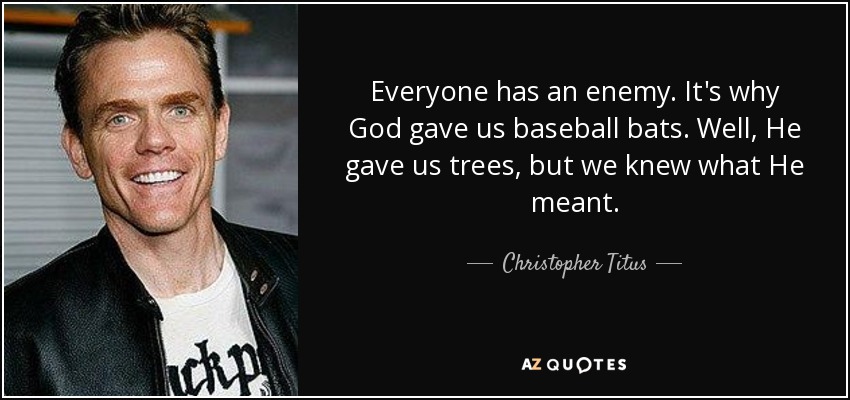
CHRISTOPHER TITUS CONQUERS COMEDY AGAIN FOR A CAUSE
Next Saturday Night in Glendale: Comedian Christopher Titus Stands Up for a Worthy Cause
by Carl Kozlowski
Christopher Titus thought he had a lot to endure while growing up, with a severely alcoholic and emotionally abusive father and a mother who ultimately committed suicide. Yet instead of succumbing to despair himself and letting his hardships defeat him, he became a standup comedian who turned his pain into riveting and relatable tales that eventually earned him his own self-titled Fox network sitcom.
But even as he’s attained the highest of comedic success – including his upcoming third standup special for Comedy Central, which will debut July 4 – Titus has kept his eyes and heart open to the hardships of others. He’s established the charity Project InSight to organize annual stand-up shows to benefit various faith-based, private organizations that work to improve the lives of teens who are homeless or in foster care.
Saturday night, May 7th, at the Alex Theatre in Glendale, Titus will perform in a special show called “Laugh You A$$ Off, Save the World” with stellar talent including Kevin Nealon (“Saturday Night Live,” “Weeds”), Billy Gardell (star of CBS’ hit sitcom “Mike & Molly”) and Dana Carvey (“SNL”, “Wayne’s World”) to raise funds for the Olive Crest center for troubled teens. The event will be hosted by Jillian Barberie of Ch. 11’s “Good Day LA,” who is a former foster child herself, and is aiming to raise funds for the program’s comprehensive care services.
“There’s 56,000 foster and homeless teens in Los Angeles, and that’s a big deal for me,” says Titus. “We want to eradicate the problem of teens being homeless from Los Angeles by 2020. I had a tough childhood, with a tough dad and an insane mom, but can you imagine living in the bushes by the 101?”
Titus is particularly concerned about teenagers in the foster care system because of the general societal attitude that holds that troubled children must be reached at a young age or else it’s too late to do anything constructive for them. He notes that many teens spend their entire lives in foster care and then are forced out into society without ever having had anyone to truly care about them, develop their interests and train them to deal with the real world.
Project InSight seeks to work with private, faith-based charities because Titus believes that state-run foster homes are often houses where the foster caregivers “are just out to cash a check,” and that private programs make more effort to truly help their wards. He also strives to find efficient organizations, stating that many bigger charities have such large bureaucratic structures that up to 40 percent of the money they raise goes to maintain their payroll and public relations.
This year, he chose to help Olive Crest because it has provided wraparound services -including safe houses, counseling and education for both the troubled youths and their parents so that the families have the best shot at staying together before kids get sent into foster care – for more than 50,000 kids in California, Nevada and the Pacific Northwest since 1973.
“Right now they’re trying to fill a $150,000 shortfall for their counseling program,” says Titus. “I really learned about these issues by volunteering with a Hollywood day shelter called My Friend’s Place. They told me these kids live in the bushes by the freeway, and I was like ‘Holy shit.’ This is freakin’ Los Angeles, one of the most beautiful cities on earth, and economically we set trends and that’s not one we should be setting.”
Plenty of other social issues are upsetting Titus these days, fueling the outraged comedic sensibility that flourished during the three-year run of his sitcom “Titus.” His new comedy special is called “Neverlution,” and is rooted in the frustration he feels.
“We’re a society built on revolution, but now we’re placated by Starbucks and IPads and so we’re never going to get angry enough to have a revolution again,” says Titus. “We spend $900 billion on bullets and defense, and $90 billion on education. Why is Singapore kicking our ass on math and science? We’re not paying attention to what matters. I’m not Democrat or Republican, but that’s just messed up.”
Indeed, Titus is fiercely independent politically, finding serious faults with the approaches of both parties. But most of all, he believes that individuals should find a charity that they believe in and get involved with their donations and volunteering, so that private citizens can solve the country’s problems rather than waiting on the gargantuan and financially strapped government to do it for them.
“Just remembering what a screw-up I was as a teenager, I was a horrible student at 17 and they wouldn’t give me my diploma because I had to go to summer school still to graduate,” Titus recalls. “But I turned into a guy with a Writers’ Guild nomination. Who you are is a choice, what you want to be is a choice – and sometimes people don’t give these kids a choice.
“We need to give money to groups that give kids counseling and a different life,” he continues. “Maybe they’ll start a charity, follow a dream, get into standup or music rather than just try to survive every day.”
“Laugh Your A$$ Off, Save the World” takes place at 8 p.m. Saturday, May 7th, at the Alex Theatre, 216 N. Brand Blvd., Glendale. Tickets are $35 to $250 and are tax-deductible.
Call (818) 243-2538 or visit in-sightyouth.com for more information and to learn how to help if you can’t attend.
by Carl Kozlowski
Christopher Titus thought he had a lot to endure while growing up, with a severely alcoholic and emotionally abusive father and a mother who ultimately committed suicide. Yet instead of succumbing to despair himself and letting his hardships defeat him, he became a standup comedian who turned his pain into riveting and relatable tales that eventually earned him his own self-titled Fox network sitcom.
But even as he’s attained the highest of comedic success – including his upcoming third standup special for Comedy Central, which will debut July 4 – Titus has kept his eyes and heart open to the hardships of others. He’s established the charity Project InSight to organize annual stand-up shows to benefit various faith-based, private organizations that work to improve the lives of teens who are homeless or in foster care.
Saturday night, May 7th, at the Alex Theatre in Glendale, Titus will perform in a special show called “Laugh You A$$ Off, Save the World” with stellar talent including Kevin Nealon (“Saturday Night Live,” “Weeds”), Billy Gardell (star of CBS’ hit sitcom “Mike & Molly”) and Dana Carvey (“SNL”, “Wayne’s World”) to raise funds for the Olive Crest center for troubled teens. The event will be hosted by Jillian Barberie of Ch. 11’s “Good Day LA,” who is a former foster child herself, and is aiming to raise funds for the program’s comprehensive care services.
“There’s 56,000 foster and homeless teens in Los Angeles, and that’s a big deal for me,” says Titus. “We want to eradicate the problem of teens being homeless from Los Angeles by 2020. I had a tough childhood, with a tough dad and an insane mom, but can you imagine living in the bushes by the 101?”
Titus is particularly concerned about teenagers in the foster care system because of the general societal attitude that holds that troubled children must be reached at a young age or else it’s too late to do anything constructive for them. He notes that many teens spend their entire lives in foster care and then are forced out into society without ever having had anyone to truly care about them, develop their interests and train them to deal with the real world.
Project InSight seeks to work with private, faith-based charities because Titus believes that state-run foster homes are often houses where the foster caregivers “are just out to cash a check,” and that private programs make more effort to truly help their wards. He also strives to find efficient organizations, stating that many bigger charities have such large bureaucratic structures that up to 40 percent of the money they raise goes to maintain their payroll and public relations.
This year, he chose to help Olive Crest because it has provided wraparound services -including safe houses, counseling and education for both the troubled youths and their parents so that the families have the best shot at staying together before kids get sent into foster care – for more than 50,000 kids in California, Nevada and the Pacific Northwest since 1973.
“Right now they’re trying to fill a $150,000 shortfall for their counseling program,” says Titus. “I really learned about these issues by volunteering with a Hollywood day shelter called My Friend’s Place. They told me these kids live in the bushes by the freeway, and I was like ‘Holy shit.’ This is freakin’ Los Angeles, one of the most beautiful cities on earth, and economically we set trends and that’s not one we should be setting.”
Plenty of other social issues are upsetting Titus these days, fueling the outraged comedic sensibility that flourished during the three-year run of his sitcom “Titus.” His new comedy special is called “Neverlution,” and is rooted in the frustration he feels.
“We’re a society built on revolution, but now we’re placated by Starbucks and IPads and so we’re never going to get angry enough to have a revolution again,” says Titus. “We spend $900 billion on bullets and defense, and $90 billion on education. Why is Singapore kicking our ass on math and science? We’re not paying attention to what matters. I’m not Democrat or Republican, but that’s just messed up.”
Indeed, Titus is fiercely independent politically, finding serious faults with the approaches of both parties. But most of all, he believes that individuals should find a charity that they believe in and get involved with their donations and volunteering, so that private citizens can solve the country’s problems rather than waiting on the gargantuan and financially strapped government to do it for them.
“Just remembering what a screw-up I was as a teenager, I was a horrible student at 17 and they wouldn’t give me my diploma because I had to go to summer school still to graduate,” Titus recalls. “But I turned into a guy with a Writers’ Guild nomination. Who you are is a choice, what you want to be is a choice – and sometimes people don’t give these kids a choice.
“We need to give money to groups that give kids counseling and a different life,” he continues. “Maybe they’ll start a charity, follow a dream, get into standup or music rather than just try to survive every day.”
“Laugh Your A$$ Off, Save the World” takes place at 8 p.m. Saturday, May 7th, at the Alex Theatre, 216 N. Brand Blvd., Glendale. Tickets are $35 to $250 and are tax-deductible.
Call (818) 243-2538 or visit in-sightyouth.com for more information and to learn how to help if you can’t attend.
Labels:
Billy Gardell,
comedy,
Dana Carvey,
Kevin Nealon,
Titus
Friday, August 13, 2010
Tell It To Her Heart: Taylor Dayne
She'll always love singing
Dance diva Taylor Dayne celebrates more than 20 years in the music biz with a free show at Americana at Brand
By Carl Kozlowski
Most dance-music divas come and go like the wind. Anyone remember Expose? How about the Spice Girls? Even the Pussycat Dolls have managed to implode after one hit CD. Yet Taylor Dayne is one of the smart and lucky ones, having parlayed a fervent gay following and continued overseas popularity to keep touring worldwide more than 20 years after bursting onto the pop charts with her hit song “Tell It To My Heart.”
In fact, the New York native just returned from performing in a packed stadium of 25,000 fans at the Gay Games international sports exhibition in Cologne, Germany. Amid working on a greatest-hits collection in which she’ll re-record 10 of her biggest hits and four new songs, Dayne is continuing to tour stateside, including a free show at 6 p.m. Wednesday at the Americana at Brand in Glendale. Dayne spoke with PW by phone from her home in New York about the keys to her success and the joy she’s received from being a mother for the past few years.
“What drew me to singing is that, like anything someone loves, I turned on the radio as a child and I could sing along with any artist, and I got good at it,” says Dayne. “Your life’s dream always starts with something you’re good at, and then you excel and have pride in it. As a child, I held on to singing with two hands and never looked back.”
Dayne began singing professionally with bands after graduating high school, but established herself as a solo artist after finishing college. By the time she was 25 in 1987, she had released her debut CD for Arista Records and managed to score four Top 10 hits off of it: “Tell It To My Heart,” “Prove Your Love,” “I’ll Always Love You” and “I’ll Be Your Shelter.”
By the time her initial hot streak of singles ended, Dayne had managed to land seven Top 10 hits on the Billboard Hot 100 Singles chart. Yet it’s her base of club fans, rooted strongly in the gay community, whom Dayne is particularly thankful for, as evidenced by not only her Gay Games concert but her performances in nine Pride Festivals across the US this summer.
“You take a powerful female voice with a couple of hits and you’re moving in that territory [of gay fans],” says Dayne. “There’s an identification they have with female artists of that nature. Mix classic dance-pop with a big voice, and I certainly have a hell of a hairdo, plus I’ve worked this relationship and put out music consistently for 22 years — that all speaks to that audience. And in the artistic community, that’s the most loyal audience outside the one for the Grateful Dead.”
Dayne has also made time for a side career as an actress, having performed on Broadway in Elton John’s “Aida” stage musical in 2001 and acted in independent films such as “Fool’s Paradise,” “Stag” and “Jesus the Driver” in addition to Warren Beatty’s big-budget film “Love Affair.”
She is actively involved in charitable work and serves as a representative of the Dream Foundation, which grants special life wishes to terminally ill adults in the same fashion that the Make-a-Wish Foundation helps dying children. She also has testified to members of Congress on the importance of public-school music education on behalf of the National Association of Music Merchants.
But it’s motherhood that is the most important aspect of her life these days, since she had a surrogate mother deliver twins eight years ago. “Motherhood is a complete joy, and it’s filled out my life in such a way that there ain’t a dull moment,” she laughs. “I went for one and I got two, and I’m a single parent. I come out and speak when asked for a lot of gay groups with the movement and gay couples trying to parent. As an ally in the heterosexual community, here I was having a surrogate just like they often do, and that was ahead of its time. But I didn’t want to miss the opportunity to be a mom, and that’s the best thing in the world to me.”
Dance diva Taylor Dayne celebrates more than 20 years in the music biz with a free show at Americana at Brand
By Carl Kozlowski
Most dance-music divas come and go like the wind. Anyone remember Expose? How about the Spice Girls? Even the Pussycat Dolls have managed to implode after one hit CD. Yet Taylor Dayne is one of the smart and lucky ones, having parlayed a fervent gay following and continued overseas popularity to keep touring worldwide more than 20 years after bursting onto the pop charts with her hit song “Tell It To My Heart.”
In fact, the New York native just returned from performing in a packed stadium of 25,000 fans at the Gay Games international sports exhibition in Cologne, Germany. Amid working on a greatest-hits collection in which she’ll re-record 10 of her biggest hits and four new songs, Dayne is continuing to tour stateside, including a free show at 6 p.m. Wednesday at the Americana at Brand in Glendale. Dayne spoke with PW by phone from her home in New York about the keys to her success and the joy she’s received from being a mother for the past few years.
“What drew me to singing is that, like anything someone loves, I turned on the radio as a child and I could sing along with any artist, and I got good at it,” says Dayne. “Your life’s dream always starts with something you’re good at, and then you excel and have pride in it. As a child, I held on to singing with two hands and never looked back.”
Dayne began singing professionally with bands after graduating high school, but established herself as a solo artist after finishing college. By the time she was 25 in 1987, she had released her debut CD for Arista Records and managed to score four Top 10 hits off of it: “Tell It To My Heart,” “Prove Your Love,” “I’ll Always Love You” and “I’ll Be Your Shelter.”
By the time her initial hot streak of singles ended, Dayne had managed to land seven Top 10 hits on the Billboard Hot 100 Singles chart. Yet it’s her base of club fans, rooted strongly in the gay community, whom Dayne is particularly thankful for, as evidenced by not only her Gay Games concert but her performances in nine Pride Festivals across the US this summer.
“You take a powerful female voice with a couple of hits and you’re moving in that territory [of gay fans],” says Dayne. “There’s an identification they have with female artists of that nature. Mix classic dance-pop with a big voice, and I certainly have a hell of a hairdo, plus I’ve worked this relationship and put out music consistently for 22 years — that all speaks to that audience. And in the artistic community, that’s the most loyal audience outside the one for the Grateful Dead.”
Dayne has also made time for a side career as an actress, having performed on Broadway in Elton John’s “Aida” stage musical in 2001 and acted in independent films such as “Fool’s Paradise,” “Stag” and “Jesus the Driver” in addition to Warren Beatty’s big-budget film “Love Affair.”
She is actively involved in charitable work and serves as a representative of the Dream Foundation, which grants special life wishes to terminally ill adults in the same fashion that the Make-a-Wish Foundation helps dying children. She also has testified to members of Congress on the importance of public-school music education on behalf of the National Association of Music Merchants.
But it’s motherhood that is the most important aspect of her life these days, since she had a surrogate mother deliver twins eight years ago. “Motherhood is a complete joy, and it’s filled out my life in such a way that there ain’t a dull moment,” she laughs. “I went for one and I got two, and I’m a single parent. I come out and speak when asked for a lot of gay groups with the movement and gay couples trying to parent. As an ally in the heterosexual community, here I was having a surrogate just like they often do, and that was ahead of its time. But I didn’t want to miss the opportunity to be a mom, and that’s the best thing in the world to me.”
THE GREATEST SONGWRITER YOU NEVER HEARD OF
JD Souther photo by Erick Anderson The Kid's Back in Town
Classic ’70s songwriter JD Souther plays Levitt Pavilion as part of Make Music Pasadena
By Carl Kozlowski 06/17/2010
“Go with the musical questions. I never tell the truth about personal stuff.”
It’s with those words, uttered with sly sarcasm in a laconic drawl, that JD Souther greets a reporter by phone while riding through the streets of Austin, Texas. Yet it’s those simple words that explain much more about the legendary songwriter, who helped craft dozens of classics like “New Kid in Town,” and “Best of My Love” for The Eagles, and other greats for artists like Linda Ronstadt and James Taylor, before entering a 25-year self-imposed exile from recording in 1984.
But now he’s back, with a new studio album called “If the World Was You” released last fall, and a new live concert EP called “Rain –– Live at the Belcourt Theatre” that not only bring his sterling roots-based songwriting back to the fore, but also put him on stage at Pasadena’s Levitt Pavilion Saturday night for a free show as part of the Make Music Pasadena festival.
“Hearing you say I sound better than ever is completely reviving,” he says. “I wouldn’t be back in the studio if I didn’t feel we had something to offer. Now I’ve got two more albums planned, with seven songs in good shape, but we have guys who can still tweak more tunes in rehearsals, and then we record live.”
Souther discovered his passion for music while growing up in the Texas Panhandle, where the high elevation and flat terrain enabled some of the nation’s greatest radio stations to be heard. Reeling off memories of call letters like KOMA (“the Oma in Oklahoma”), WLS of Chicago, and “Louisiana stations that I heard when the wind was right from the Gulf,” he recalls being immersed in a spectrum of sounds that took the place of formal musical training.
“My musical education is like Duke Ellington: He said there are only two kinds of music; good and bad,” says Souther. “Jazz guys came in and said, let’s play the way we want as well as we can, and the rock and blues guys felt the same. It goes to show; anyone’s best bet is the truth about themsleves. If you play the music that’s truly in your heart, you can’t go wrong.”
Souther moved out to Los Angeles at the start of the 1970s and quickly found himself writing and recording with a bevy of breakout artists. Glenn Frey of The Eagles was his roommate, and between the two young performers a nonstop string of top-quality jam sessions ensued in their apartment and at the pads of their friends.
“I find it interesting that a lot of people think that this particular time in our young lives was interesting, because that time [his early-20s] was interesting in everyone’s lives,” recalls Souther. “It just occurred for us on a bigger scale. It was before two or three corporations owned all the stations, so you could flip around the dial and find anything to your taste. So many kinds of music were allowed then. FM didn’t have to play Top 40 hits, so you could hear Hendrix followed by the Flying Burrito Brothers and Hank Williams, all in a row. I long for the time when diversity was a positive, not a rarity on radio.”
After a decade of writing and occasionally recording smash hits, including his one solo Top Ten hit “You're Only Lonely” and a duet with James Taylor called “Her Town Too” which hit No. 11, Souther decided to walk away. The question of where he went and why has been one of the enduring musical mysteries of the past three decades, but his answer is surprisingly simple and straightforward.
“I just didn’t have anything I wanted to record,” he explains. “There were a lot of things I wanted to do, a lot of places to go in the world, and I built my dream house. But then I went to Cuba in ’98 and started playing again, started listening to a lot of Cuban music, and I had books and books of poems that I could turn into music. I found a band made out of great jazz musicians who turned out to know each other, rehearsing and rehearsing and did gigs for a month, got a remote truck and recorded the CD live in one room.”
Souther is excited to be playing Pasadena, a place of many fond memories from his 30 years in Los Angeles. He has never played a local venue before, a fact that keys excitement in him that one might expect to hear from a star about to play Madison Square Garden. But then again, these days he’s enthusiastic about coming back, and about the fact that his kind of music has found an enduring audience.
“It’s a great time for music, because there’s more ways to release your own work and that democratizes it, with less money paying off but it exposes the phonies,” says Souther. “The year I came out, 1,000 records came out and now 115,000 come out. They can’t all be good and very few make it. But if you do, you feel blessed.”
Classic ’70s songwriter JD Souther plays Levitt Pavilion as part of Make Music Pasadena
By Carl Kozlowski 06/17/2010
“Go with the musical questions. I never tell the truth about personal stuff.”
It’s with those words, uttered with sly sarcasm in a laconic drawl, that JD Souther greets a reporter by phone while riding through the streets of Austin, Texas. Yet it’s those simple words that explain much more about the legendary songwriter, who helped craft dozens of classics like “New Kid in Town,” and “Best of My Love” for The Eagles, and other greats for artists like Linda Ronstadt and James Taylor, before entering a 25-year self-imposed exile from recording in 1984.
But now he’s back, with a new studio album called “If the World Was You” released last fall, and a new live concert EP called “Rain –– Live at the Belcourt Theatre” that not only bring his sterling roots-based songwriting back to the fore, but also put him on stage at Pasadena’s Levitt Pavilion Saturday night for a free show as part of the Make Music Pasadena festival.
“Hearing you say I sound better than ever is completely reviving,” he says. “I wouldn’t be back in the studio if I didn’t feel we had something to offer. Now I’ve got two more albums planned, with seven songs in good shape, but we have guys who can still tweak more tunes in rehearsals, and then we record live.”
Souther discovered his passion for music while growing up in the Texas Panhandle, where the high elevation and flat terrain enabled some of the nation’s greatest radio stations to be heard. Reeling off memories of call letters like KOMA (“the Oma in Oklahoma”), WLS of Chicago, and “Louisiana stations that I heard when the wind was right from the Gulf,” he recalls being immersed in a spectrum of sounds that took the place of formal musical training.
“My musical education is like Duke Ellington: He said there are only two kinds of music; good and bad,” says Souther. “Jazz guys came in and said, let’s play the way we want as well as we can, and the rock and blues guys felt the same. It goes to show; anyone’s best bet is the truth about themsleves. If you play the music that’s truly in your heart, you can’t go wrong.”
Souther moved out to Los Angeles at the start of the 1970s and quickly found himself writing and recording with a bevy of breakout artists. Glenn Frey of The Eagles was his roommate, and between the two young performers a nonstop string of top-quality jam sessions ensued in their apartment and at the pads of their friends.
“I find it interesting that a lot of people think that this particular time in our young lives was interesting, because that time [his early-20s] was interesting in everyone’s lives,” recalls Souther. “It just occurred for us on a bigger scale. It was before two or three corporations owned all the stations, so you could flip around the dial and find anything to your taste. So many kinds of music were allowed then. FM didn’t have to play Top 40 hits, so you could hear Hendrix followed by the Flying Burrito Brothers and Hank Williams, all in a row. I long for the time when diversity was a positive, not a rarity on radio.”
After a decade of writing and occasionally recording smash hits, including his one solo Top Ten hit “You're Only Lonely” and a duet with James Taylor called “Her Town Too” which hit No. 11, Souther decided to walk away. The question of where he went and why has been one of the enduring musical mysteries of the past three decades, but his answer is surprisingly simple and straightforward.
“I just didn’t have anything I wanted to record,” he explains. “There were a lot of things I wanted to do, a lot of places to go in the world, and I built my dream house. But then I went to Cuba in ’98 and started playing again, started listening to a lot of Cuban music, and I had books and books of poems that I could turn into music. I found a band made out of great jazz musicians who turned out to know each other, rehearsing and rehearsing and did gigs for a month, got a remote truck and recorded the CD live in one room.”
Souther is excited to be playing Pasadena, a place of many fond memories from his 30 years in Los Angeles. He has never played a local venue before, a fact that keys excitement in him that one might expect to hear from a star about to play Madison Square Garden. But then again, these days he’s enthusiastic about coming back, and about the fact that his kind of music has found an enduring audience.
“It’s a great time for music, because there’s more ways to release your own work and that democratizes it, with less money paying off but it exposes the phonies,” says Souther. “The year I came out, 1,000 records came out and now 115,000 come out. They can’t all be good and very few make it. But if you do, you feel blessed.”
Monday, August 9, 2010
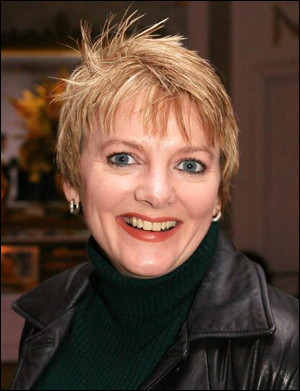
Nervy Nellie - Alison Arngrin
Nervy Nellie
Former child star Alison Arngrin hits Vroman’s with her hilarious memoir, ‘Confessions of a Prairie Bitch’
By Carl Kozlowski 07/01/2010
Most people have to spend their workdays sucking up to everyone around them in the interest of workplace civility. But actress Alison Arngrim got to live out every worker’s secret dream and act hostile all day long during her best job ever, as child villain Nellie Oleson on the classic TV series “Little House on the Prairie.”
In fact, her character’s behavior was so bad that Arngrim titled her new memoir “Confessions of a Prairie Bitch,” and is coming to Vroman’s on Friday to read from and sign the laugh-out-loud funny tome. Now 30 years after the series ended, and following a lengthy adult career as an actress and activist against AIDS and child trafficking, she maintains a wicked sense of humor about her childhood career that can draw explosive laughter from even the most serious of minds.
“‘Little House’ was a supposedly family show, but there was so much death and depravity,” Arngrim recalls with a chuckle. “I think that’s why people went so nuts over me because Nellie was so mean on a show where everyone was so good.”
Arngrim was born into a showbiz family. Her father was a manager for Liberace, and her mother was the voice for cartoon characters such as Casper the Friendly Ghost, Gumby and Sweet Polly Purebred, the girlfriend of Underdog. She started acting in commercials at the age of 6.
But she was 10 when the call came for her to audition for “Little House.” While she was turned down for the lead roles of Laura Ingalls and her sister Mary, she landed the role of Nellie Oleson and delivered an audition that left the show’s creator, TV legend Michael Landon, “in tears from laughing,” she remembers.
“I was fascinated with villains, wanted to play the bad guy and didn’t think they had parts like that for girls my age,” recalls Arngrin. “My dream role was [the classic evil girl title character of] ‘The Bad Seed.’ We didn’t think that the show would be a hit, and my dad thought it would flop after a season so he wondered why they built all the sets. It wound up lasting 7 years.”
The show still airs in 140 countries, and has remained so wildly successful in France that Arngrin makes at least two trips a year there to perform her solo comedy show, which shares her book’s title. In fact, on her next two-week trip in mid-July, she’ll also be hosting a week-long country music festival there.
Yet what really drives Arngrin these days is her social activism on behalf of AIDS-related and anti-child-trafficking causes. She was thrust into the battle against AIDS shortly after her run on “Little House” ended, when actor Steve Tracy, who played her husband on the show, revealed publicly that he was dying of AIDS.
“Steve died of AIDS around the time of Rock Hudson, but he admitted it freely while Hudson denied his gayness until just before
he died and Liberace said he was on a watermelon diet. There were no meds then, nothing, not even AZT. Steve let them use experimental drugs on him in hopes it could help others.”
So she started volunteering with AIDS Project Los Angeles, working on the hotline and in its speaker’s bureau to help out smaller agencies across the country.
Arngrin's involvement in child abuse and trafficking causes stems from an even sadder, more personal place, as she was physically and sexually abused from age 6 to 9. When she was approached by the National Coalition to Protect Children, she jumped at the chance because she was impressed with the fact that the group had already changed laws in three states.
“We have changed laws all over the country and have a petition going to Congress for increased funding for the cause,” says Arngrim. “The FBI can now find people uploading child pornography. They know where these people are, but they don’t have the manpower and money to arrest them all. You’d think it’d be a no-brainer and yet it's very difficult. Many groups say ‘if only, if only, boohoo.’ But we take on cases and we win.”
Former child star Alison Arngrin hits Vroman’s with her hilarious memoir, ‘Confessions of a Prairie Bitch’
By Carl Kozlowski 07/01/2010
Most people have to spend their workdays sucking up to everyone around them in the interest of workplace civility. But actress Alison Arngrim got to live out every worker’s secret dream and act hostile all day long during her best job ever, as child villain Nellie Oleson on the classic TV series “Little House on the Prairie.”
In fact, her character’s behavior was so bad that Arngrim titled her new memoir “Confessions of a Prairie Bitch,” and is coming to Vroman’s on Friday to read from and sign the laugh-out-loud funny tome. Now 30 years after the series ended, and following a lengthy adult career as an actress and activist against AIDS and child trafficking, she maintains a wicked sense of humor about her childhood career that can draw explosive laughter from even the most serious of minds.
“‘Little House’ was a supposedly family show, but there was so much death and depravity,” Arngrim recalls with a chuckle. “I think that’s why people went so nuts over me because Nellie was so mean on a show where everyone was so good.”
Arngrim was born into a showbiz family. Her father was a manager for Liberace, and her mother was the voice for cartoon characters such as Casper the Friendly Ghost, Gumby and Sweet Polly Purebred, the girlfriend of Underdog. She started acting in commercials at the age of 6.
But she was 10 when the call came for her to audition for “Little House.” While she was turned down for the lead roles of Laura Ingalls and her sister Mary, she landed the role of Nellie Oleson and delivered an audition that left the show’s creator, TV legend Michael Landon, “in tears from laughing,” she remembers.
“I was fascinated with villains, wanted to play the bad guy and didn’t think they had parts like that for girls my age,” recalls Arngrin. “My dream role was [the classic evil girl title character of] ‘The Bad Seed.’ We didn’t think that the show would be a hit, and my dad thought it would flop after a season so he wondered why they built all the sets. It wound up lasting 7 years.”
The show still airs in 140 countries, and has remained so wildly successful in France that Arngrin makes at least two trips a year there to perform her solo comedy show, which shares her book’s title. In fact, on her next two-week trip in mid-July, she’ll also be hosting a week-long country music festival there.
Yet what really drives Arngrin these days is her social activism on behalf of AIDS-related and anti-child-trafficking causes. She was thrust into the battle against AIDS shortly after her run on “Little House” ended, when actor Steve Tracy, who played her husband on the show, revealed publicly that he was dying of AIDS.
“Steve died of AIDS around the time of Rock Hudson, but he admitted it freely while Hudson denied his gayness until just before
he died and Liberace said he was on a watermelon diet. There were no meds then, nothing, not even AZT. Steve let them use experimental drugs on him in hopes it could help others.”
So she started volunteering with AIDS Project Los Angeles, working on the hotline and in its speaker’s bureau to help out smaller agencies across the country.
Arngrin's involvement in child abuse and trafficking causes stems from an even sadder, more personal place, as she was physically and sexually abused from age 6 to 9. When she was approached by the National Coalition to Protect Children, she jumped at the chance because she was impressed with the fact that the group had already changed laws in three states.
“We have changed laws all over the country and have a petition going to Congress for increased funding for the cause,” says Arngrim. “The FBI can now find people uploading child pornography. They know where these people are, but they don’t have the manpower and money to arrest them all. You’d think it’d be a no-brainer and yet it's very difficult. Many groups say ‘if only, if only, boohoo.’ But we take on cases and we win.”
Eating Up the Attention: Larry Wilmore
Eating up the attention
Emmy-winning writer Larry Wilmore eyes the next course following ‘Dinner for Schmucks’
By Carl Kozlowski
Larry Wilmore has had a richly varied career, from winning an Emmy and a prestigious Peabody Award for “The Bernie Mac Show,” which he co-created, to writing his own nationally published humor book about the African-American experience, “I’d Rather We Got Casinos.”
But his latest career move might be his most visible to date. His major supporting role in the new comedy film “Dinner for Schmucks” not only placed him next to comedy stars Steve Carell and Paul Rudd, but also forced him to share screen time with a most unusual performer.
“It’s my biggest role yet in a film” explains Wilmore. “I had to audition for it, and I’d forgotten about it because I was focused on another project when the call offering the job came. But when I learned I got it, it was exciting, because the thought of working with Rudd and Carell was pretty good. But there was a vulture in the cast as well, and it was crapping all the time, so it was really scary to be around it. Steve Carell got terrified a couple times too.”
“Schmucks” is a remake of the 1998 French screwball comedy hit “Le Diner de Cons,” following the antics that ensue when a group of corporate executives force employees who are vying for promotions to bring the biggest fool, or “schmuck,” they can find to a lavish private dinner. The person who brings the biggest schmuck to dinner earns the coveted position, but the twist here is that Rudd plays a man who has a crisis of conscience while participating in the contest with Carell as his guest. The pair team up to turn the tables on the mean-spirited execs, resulting in nonstop hijinks.
As a Pasadena resident, Wilmore was also happy to shoot “Schmucks” close to home. While the interior sets were located on the Paramount Pictures lot in Hollywood, the mansion where the dinner was hosted was the Pasadena mansion that served as the Caped Crusader’s secret home base in the 1960s “Batman” series.
“That was also a lot of fun, because I’ve lived in Pasadena for years but never knew the Batman house was here,” says Wilmore, the joy of discovery still in his voice. “We shot some pre-dinner scenes outside that house, but the actual dinner was shot at Paramount.”
For Wilmore, the biggest challenge of all on the film was adjusting from his natural writer’s mindset, which made him want to work from the film’s screenplay, to adopting the improvisational techniques that Carell and Rudd favored. Director Jay Roach (of the “Meet the Parents” and “Austin Powers” films) shot 900,000 feet of film while most directors shoot 500,000 feet on a feature, which meant that the cameras were always kept rolling through the leads’ infinite attempts to make the scenes as funny as possible.
“It was really a lot of fun watching Carell and [supporting actor] Zach Galifianakis really go for it,” says Wilmore, who’s perhaps best known to the public as the “African-American Correspondent” on Comedy Central’s “The Daily Show.” “They did a scene where they’re playing mind games with each other. To see them going take after take, doing it really different, made it almost impossible not to laugh. It was really scary, challenging and fun at the same time.”
With the film’s world premiere at New York’s classic Ziegfeld Theatre now behind him, Wilmore is waiting to see what his next career move will be. He’s a consulting producer and actor on the new NBC show “Love Bites,” but he doesn’t see another book happening any time soon, and he seems doubtful that he’ll suddenly face a major loss of privacy from his heightened profile.
“My life’s really gonna change,” he laughs. “I don’t think so. I’m very low on the totem pole in terms of power on this movie. I’m more of a straight role in it, not one of the crazy parts, though I still have a lot of funny lines. But there are no more offers yet — I’m thinking maybe less. I’m counting on this article to really put me over the top. This is what I call the tipping point.”
Emmy-winning writer Larry Wilmore eyes the next course following ‘Dinner for Schmucks’
By Carl Kozlowski
Larry Wilmore has had a richly varied career, from winning an Emmy and a prestigious Peabody Award for “The Bernie Mac Show,” which he co-created, to writing his own nationally published humor book about the African-American experience, “I’d Rather We Got Casinos.”
But his latest career move might be his most visible to date. His major supporting role in the new comedy film “Dinner for Schmucks” not only placed him next to comedy stars Steve Carell and Paul Rudd, but also forced him to share screen time with a most unusual performer.
“It’s my biggest role yet in a film” explains Wilmore. “I had to audition for it, and I’d forgotten about it because I was focused on another project when the call offering the job came. But when I learned I got it, it was exciting, because the thought of working with Rudd and Carell was pretty good. But there was a vulture in the cast as well, and it was crapping all the time, so it was really scary to be around it. Steve Carell got terrified a couple times too.”
“Schmucks” is a remake of the 1998 French screwball comedy hit “Le Diner de Cons,” following the antics that ensue when a group of corporate executives force employees who are vying for promotions to bring the biggest fool, or “schmuck,” they can find to a lavish private dinner. The person who brings the biggest schmuck to dinner earns the coveted position, but the twist here is that Rudd plays a man who has a crisis of conscience while participating in the contest with Carell as his guest. The pair team up to turn the tables on the mean-spirited execs, resulting in nonstop hijinks.
As a Pasadena resident, Wilmore was also happy to shoot “Schmucks” close to home. While the interior sets were located on the Paramount Pictures lot in Hollywood, the mansion where the dinner was hosted was the Pasadena mansion that served as the Caped Crusader’s secret home base in the 1960s “Batman” series.
“That was also a lot of fun, because I’ve lived in Pasadena for years but never knew the Batman house was here,” says Wilmore, the joy of discovery still in his voice. “We shot some pre-dinner scenes outside that house, but the actual dinner was shot at Paramount.”
For Wilmore, the biggest challenge of all on the film was adjusting from his natural writer’s mindset, which made him want to work from the film’s screenplay, to adopting the improvisational techniques that Carell and Rudd favored. Director Jay Roach (of the “Meet the Parents” and “Austin Powers” films) shot 900,000 feet of film while most directors shoot 500,000 feet on a feature, which meant that the cameras were always kept rolling through the leads’ infinite attempts to make the scenes as funny as possible.
“It was really a lot of fun watching Carell and [supporting actor] Zach Galifianakis really go for it,” says Wilmore, who’s perhaps best known to the public as the “African-American Correspondent” on Comedy Central’s “The Daily Show.” “They did a scene where they’re playing mind games with each other. To see them going take after take, doing it really different, made it almost impossible not to laugh. It was really scary, challenging and fun at the same time.”
With the film’s world premiere at New York’s classic Ziegfeld Theatre now behind him, Wilmore is waiting to see what his next career move will be. He’s a consulting producer and actor on the new NBC show “Love Bites,” but he doesn’t see another book happening any time soon, and he seems doubtful that he’ll suddenly face a major loss of privacy from his heightened profile.
“My life’s really gonna change,” he laughs. “I don’t think so. I’m very low on the totem pole in terms of power on this movie. I’m more of a straight role in it, not one of the crazy parts, though I still have a lot of funny lines. But there are no more offers yet — I’m thinking maybe less. I’m counting on this article to really put me over the top. This is what I call the tipping point.”
Double Funny: Harland Williams
Double funny
Comedian and children’s author Harland Williams keeps his two careers separate
By Carl Kozlowski 08/05/2010
Harland Williams has a skewed way of looking at the world. As a standup comic, he’s prone to expressing awe and wonderment at the most ridiculous things imaginable, while his acting career has featured him playing everything from an accident-prone astronaut in “Rocket Man” to a hitchhiking serial killer who’s invented a six-minute workout for abdominal muscles in “There’s Something About Mary.”
But what even his comedic fans may not realize is that Williams is also a popular children’s author, with eight tomes to his credit, including “The Things You Don’t Know You Don’t Know” and “The Kid With Too Many Nightmares.”
Williams turns back to comedy Friday and Saturday, performing in rare appearances at the Ice House comedy club in Pasadena.
A Toronto native, Williams spent several years working as a Canadian forest ranger before embarking on comedy as a profession. But he grew up loving to write, since his mom was a professional writer while his dad was a lawyer and member of the Ontario provincial parliament. In fact, his first book was released even before he became famous as a comic, making Williams one of the few celebrity authors who can legitimately claim that he was published due to the quality of his writing, not the notoriety of his name.
“I just get the inspiration from my childlike mind,” explains Williams. “I want to do them because it combines writing, composing, drawing and painting. It’s such a visual and mental combination of disciplines that it’s just really fun. I don’t necessarily pick a topic; it’s what I find amusing that I think they’ll find amusing. My first priority is cool, funny drawings and silly stories. The difference between me and most celebrities is I do my own artwork, since I illustrate as well.”
Williams also eagerly noted his online podcast talk show “The Harland Highway,” which he offers for free at iTunes.com and his own Web site, harlandwilliams.com. In it, he engages in a weekly rant, tells stories and performs characters — “just like coming to a concert with just your ears.” He also takes pride in his guest list, which has included top comics including Dane Cook, Tom Green and Orny Adams.
The one disappointment Williams feels about his comedic and acting success is that his performance schedule keeps him too busy to write books as often as he’d like. He’s careful not to cross the two professions and draws a clear line regarding what material is appropriate in each arena.
“I don’t intermingle my styles. I think people go through stages in life, so for kids ages 3 to 10, my material is presented in my books with that age bracket in mind, for them to enjoy during those years,” says Williams. “But there are also human beings in the world who are 15 to 100, and they don’t want to hear about a kid’s book, so I tailor my humor and artistic expression toward that age. It’s like, are you a counselor for kids or a therapist for adults? They’re two separate things.”
--------------------------------------------------------------------------------
Comedian and children’s author Harland Williams keeps his two careers separate
By Carl Kozlowski 08/05/2010
Harland Williams has a skewed way of looking at the world. As a standup comic, he’s prone to expressing awe and wonderment at the most ridiculous things imaginable, while his acting career has featured him playing everything from an accident-prone astronaut in “Rocket Man” to a hitchhiking serial killer who’s invented a six-minute workout for abdominal muscles in “There’s Something About Mary.”
But what even his comedic fans may not realize is that Williams is also a popular children’s author, with eight tomes to his credit, including “The Things You Don’t Know You Don’t Know” and “The Kid With Too Many Nightmares.”
Williams turns back to comedy Friday and Saturday, performing in rare appearances at the Ice House comedy club in Pasadena.
A Toronto native, Williams spent several years working as a Canadian forest ranger before embarking on comedy as a profession. But he grew up loving to write, since his mom was a professional writer while his dad was a lawyer and member of the Ontario provincial parliament. In fact, his first book was released even before he became famous as a comic, making Williams one of the few celebrity authors who can legitimately claim that he was published due to the quality of his writing, not the notoriety of his name.
“I just get the inspiration from my childlike mind,” explains Williams. “I want to do them because it combines writing, composing, drawing and painting. It’s such a visual and mental combination of disciplines that it’s just really fun. I don’t necessarily pick a topic; it’s what I find amusing that I think they’ll find amusing. My first priority is cool, funny drawings and silly stories. The difference between me and most celebrities is I do my own artwork, since I illustrate as well.”
Williams also eagerly noted his online podcast talk show “The Harland Highway,” which he offers for free at iTunes.com and his own Web site, harlandwilliams.com. In it, he engages in a weekly rant, tells stories and performs characters — “just like coming to a concert with just your ears.” He also takes pride in his guest list, which has included top comics including Dane Cook, Tom Green and Orny Adams.
The one disappointment Williams feels about his comedic and acting success is that his performance schedule keeps him too busy to write books as often as he’d like. He’s careful not to cross the two professions and draws a clear line regarding what material is appropriate in each arena.
“I don’t intermingle my styles. I think people go through stages in life, so for kids ages 3 to 10, my material is presented in my books with that age bracket in mind, for them to enjoy during those years,” says Williams. “But there are also human beings in the world who are 15 to 100, and they don’t want to hear about a kid’s book, so I tailor my humor and artistic expression toward that age. It’s like, are you a counselor for kids or a therapist for adults? They’re two separate things.”
--------------------------------------------------------------------------------
Subscribe to:
Posts (Atom)