Sunday, November 1, 2015

Daily readings

With new book 'Lizz Free or Die,' Lizz Winstead brings the voice behind 'The Daily Show' to the page


By Carl Kozlowski 05/24/2012
Growing up amid a large and boisterous Catholic family in Minneapolis, Lizz Winstead always found herself questioning what she was taught, both at home and at Catholic school. She wanted to know how Adam and Eve managed to populate the earth without resorting to incest and later experienced injustice for the first time when she learned she couldn’t be a priest, or even an altar boy, despite her devout love of the Mass and its rituals. 
 
Thankfully, Winstead never lost her fiery spirit as an adult. Even she’s now glad she never became a priest, because she’s managed to reach a much bigger audience as the co-creator (with Madeline Smithberg) of Comedy Central’s “The Daily Show,” a program that created a seismic shift in the way that America gets its news, through its sharp melding of entertainment, satire and journalism. 
 
Now, Winstead has crafted a book of essays called “Lizz Free or Die,” in which she recounts her life — including teen pregnancy and having an abortion — and career in sometimes astonishingly frank fashion. She’ll be discussing and signing copies of it tonight at 7 p.m. at Vromans Bookstore in Pasadena, and if her interaction is as open and freewheeling as it was in a recent phone interview, it should be an interesting evening indeed. 
 
“My interest in being a priest partly came out of growing up the youngest of five in a very opinionated family. I was looking to get my voice out there, and I saw that priests always spoke in uninterrupted fashion and were then told how great their sermon was,” recalls Winstead. “I assumed as a kid that the way to become a priest was to become an altar boy, like an apprenticeship. I approached my priest excited, like no girl had ever thought of this, and he was so mortified that I brought it up and gave me my first dose of an adult saying ‘no’ for no good reason — that girls can’t be altar boys, because it’s called altar boy and you’re a girl. I was stunned, because it made no sense, and he was stunned when I suggested they just let me do it and call me an altar girl.” 
 
That encounter led Winstead to create what she calls her “anvil test” for life, a philosophy that has guided her moves and beliefs ever since. Basically, she knows she can’t lift an anvil, and can accept that limitation. But it’s when a limitation doesn’t make sense that she’s determined to seek justice in the world. 
 
“If I’m told ‘no’ about something without good reason, like saying people can’t marry because they’re gay or that their skin colors are different, then I start gravitating toward being heard and then fighting with the people who are wronged,” says Winstead. “That’s how the ball got rolling with me, listening to people say ‘no’ and then deciding if it was legit or bull.” 
 
Winstead’s entry into standup comedy was largely a result of her rejection by the priest. She was on a quest to be heard by the world and happened to love listening to George Carlin and Richard Pryor records. One night when she was watching “Tonight Show,” a friend said she should try doing standup because she was always so opinionated and funny. 
 
Having grown up watching older women comics like Joan Rivers and Phyllis Diller on “The Tonight Show,” Winstead didn’t feel there were women of her generation to whom she could relate. But she dove in anyway, appearing at an open mike event in her hometown, scored some laughs and never looked back. 
 
She eventually built a reputation that got her a show-pitching meeting with Comedy Central, during which she entered with one idea and emerged with the job of a lifetime at the helm of “The Daily Show” in its initial three seasons with host Craig Kilborn. 
 
“I had never brought my personal views on politics onstage,” explains Winstead. “But on the first night of the [1991] Gulf War, I was on a blind date in a sports bar with a guy, and we were with everyone watching a war unfold live on TV for the first time. There were graphics, theme music, green lights, bombs dropping and people reporting from the roofs of hotels. It seemed like a miniseries.
 
“I thought, ‘Are they reporting a war or selling a war?’” Winstead continues. “People, including my date, said it was awesome, and I thought that I need to start paying attention and getting my politics into my standup. Comedy Central called me in to pitch one idea, but instead offered us a show every single night that responds to the world and its news coverage. It was like someone saying you have the keys to the kingdom.” 
 
Between her involvement with “Daily” and her subsequent stint with the heavily-hyped but now defunct progressive talk-radio network Air America, Winstead has had an enormous impact on the way the media operates. And while she reminds even her fans that it’s important to get their news from serious sources as well, she feels that the changes have helped the national discourse. 
 
“We created a show that was basically mocking the media given us at the time,” says Winstead. “In 1995, it was newsmagazines galore, featuring either celebrity drama or stories that would frighten you. In local news, it was ‘if it bleeds it leads,’ and on the world scale we had the baby-shaking nanny and OJ’s trial of the century. So we launched the show by satirizing weird local news stories and satirizing celebrity culture.
 
“Yet I love that the show with Jon [Stewart] serves as the voice of us, the people, and his correspondents are representing the news media as it is,” she continues. “What I loved is that the show followed the news so profoundly, they’ve taken it to a whole new place and followed the trajectory of where media has moved as well. It’s brilliant.” 

Lizz Winstead discusses and signs her book “Lizz Free or Die” at 7 p.m. tonight at Vromans Bookstore, 695 E. Colorado Blvd., Pasadena. Call (626) 449-5320 or visit vromansbookstore.com.                                                                                                            

Movie magic

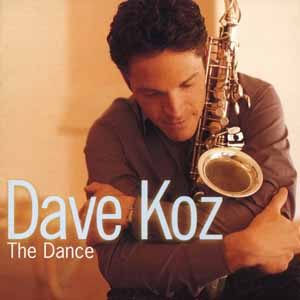
Superstar jazz saxophonist Dave Koz teams with the Glendale POPS for 'A Night at the Movies'


By Carl Kozlowski 05/10/2012
It’s not often that one’s passion in life leads to two successful careers, but Dave Koz has been one of the lucky few to make that happen. As a saxophone player, he has risen to the top of the contemporary “smooth” jazz world, complete with world tours and a top 10 album.

Yet, he’s also a nationally syndicated radio host with a weekly series that spotlights the best of modern jazz as he interviews and plays the latest and greatest performers on the scene. And this Friday, Koz will take the stage with the Glendale POPS Orchestra for “A Night at the Movies,” a special show spotlighting classic movie music that reunites him with his friend of three decades, POPS conductor Matt Catingub.

“Normally, I just tour a lot with my band, but I also have a show for orchestras,” says Koz in a phone interview. “When he called me late last year asking me to do a show, I said absolutely. I’m very excited, and of course with Glendale being a suburb of LA, I have no doubt they’ll have stellar musicianship.”

A native of Encino, Koz started performing on saxophone as a member of the school jazz band at William Howard Taft High School in Woodland Hills. He graduated from UCLA in 1986 with a degree in mass communications before going pro as a member of jazz legend Bobby Caldwell’s touring band.

He built his reputation further as a popular session musician for several bands, including those of fellow jazzman Jeff Lorber and pop star Richard Marx, and even played in the house band of Pat Sajak’s short-lived CBS late-night talk show. But his biggest move came in 1990, when he decided to pursue a solo career and immediately scored a Capitol Records contract.

“It was not really a decision to be in the smooth style, but more like playing music that’s in my heart, like Tower of Power, Earth Wind and Fire and Chicago, more than straight, traditional jazz,” explains Koz. “Smooth jazz is really a radio format more than a style of music, as it’s really just contemporary taking on elements of R&B and rock fused with melody and a rhythmic drum element, rather than emphasizing improvisational playing.”

Koz added radio hosting to his career in 1994, when he began the nationally syndicated “The Dave Koz Radio Show.” He still hosts the series, which airs on weekends, but additionally hosted “The Dave Koz Morning Show” locally on Los Angeles radio station 94.7 FM The Wave from 2001 to 2007.

The past decade has brought a couple of landmark changes to the life of the 49-year-old Koz, particularly his decision to publicly come out as gay at age 40. Although he had long worried such an announcement would hurt his career, he admits being surprised that there was “zero impact” professionally.

“The only impact was on me, because I could be a whole person, not two people all the time,” says Koz. “I’m married to my saxophone,” he says when asked about his relationship status. “I grew up in a time very different from now, and so I’d come out to friends and family but not publicly until I was 40. It’s been eight or nine years, and the only impact has been creating a lot more wholeness in my life.”

Koz’s other big move was to record his dream album in 2007, when he released “At the Movies.” The CD was by far the most successful of his career, even breaking into the Billboard Top 10 Albums chart when it peaked at No. 8.

“If you’re lucky enough to be a recording artist, everyone should have an opportunity to make their dream album, and that was it for me,” says Koz. “Then to be working with Phil Ramone as producer, a legend who’s worked with everyone from Barbra Streisand to Billy Joel and Paul Simon, and have guest artists like Johnny Mathis, Barry Manilow and Chris Botti take part was amazing.

“I’m happiest when I’m in a theater in the dark with popcorn, Diet Coke and some M&M’s,” Koz adds. “The music, and the movies that music comes from, are so intertwined you can’t think of ‘Casablanca’ without thinking of’ ‘As Time Goes By,’ or think of ‘The Wizard of Oz’ without thinking of ‘Over the Rainbow.’ There’s nothing like getting the chance to play those songs with an orchestra.”

Dave Koz performs with the Glendale POPS Orchestra and singer Monica Mancini in “A Night at the Movies” 8 p.m. Friday at the Alex Theatre, 216 N. Brand Blvd., Glendale. Tickets are $26 to $80. Call (818) 243-ALEX or visit alextheatre.org.

Beyond Blossom'

Big Bang' star Mayim Bialik's book 'Beyond the Sling' helps parents decide what's best for their child


By Carl Kozlowski 03/08/2012
Mayim Bialik could have faded into obscurity like countless other child stars when her run on the four-year hit NBC sitcom “Blossom” came to an end in 1994. And in fact, she chose to leave acting behind, heading off to UCLA to study an entirely different profession: neuroscience.   
 
Now, after 17 years, she’s made an improbably big comeback into the public consciousness, both as an actress on the smash CBS comedy “The Big Bang Theory,” and as the author of “Beyond the Sling,” a book advocating the controversial practice of attachment parenting. 
 
She’ll be discussing and signing the book at 7 p.m. Thursday, March 15, at Vroman’s Bookstore, in Pasadena, where she grew up.
“When I finished ‘Blossom,’ I wanted to pursue neuroscience, because I always loved studying science under my tutors on the show,” says Bialik, who earned her doctorate in the field. “But eventually I realized I didn’t want to be a researcher my whole life, and once my kids reached an age of some independence, I felt I could go back to acting and wound up with the perfect fit.” 
 
Indeed, winding up on a sitcom about science nerds at Caltech was perfect, and the shooting schedule was surprisingly simple enough to allow Bialik ample opportunity to write “Sling.” The book teaches readers about attachment parenting, a theory popularized by physicians Dr. William Sears and Dr. Jay Gordon in which parental intuition and accommodating a child’s natural rhythms are considered key to successful parenting. 
 
The philosophy is rooted in the idea that using gentle discipline — getting a child to behave without yelling, threatening or using time-outs — works better than harsher means. It also embraces “co-sleeping,” in which kids are allowed to sleep with their parents until they make their own decision to sleep on their own, even if it means sharing a bed until they are 7 or 8 years old. 
 
Add in the philosophy’s endorsement of “baby wearing,” using a sling to keep the baby close to parents as much as possible, and of breastfeeding until the child decides to wean on its own, and attachment parenting has become controversial because it’s so different from modern norms. But Bialik passionately defends the practice and even points out an impressive result of it. 
 
“The fact is, these techniques were used everywhere until 200 years ago and are still used in most parts of the planet today, because they establish a strong family bond and have profound benefits for children,” says Bialik. “Kids (raised this way) are so sharp and in tune that I teach neuroscience to 11 kids ages 11 to 16 in our home-school community.” 
 
With her life in full swing as a mother, actress and now writer, Bialik is excited about both where she’s at and the opportunities that lie ahead. In fact, promoting “Sling” has put her in the middle of a media whirlwind, with appearances on shows like “The View” and “Good Morning America” during a trip to New York City last week. 
 
But ultimately, she is defiantly proud of her involvement with the growing AP movement.
 
“This is about me and my child deciding what’s best for the individual child, rather than having society set norms that can’t possibly make sense for every single kid,” says Bialik. “Whether they’re 3 years old or 5 years old, they can still have individual needs and limits, and if people just give this a chance they’ll see it’s profoundly effective.” 

Mayim Bialik discusses and signs “Beyond the Sling” at 7 p.m. next Thursday, Mar. 15, at Vroman’s Bookstore, 695 E. Colorado Blvd., Pasadena. Call (626) 449-5320 or visit vromans.com.                                                                                                                

Furious and Funny

Comic Eddie Ifft hits a nerve in post-modern America


By Carl Kozlowski 01/12/2012
It’s Thursday night at the Improv comedy club in West Hollywood, and Eddie Ifft is frothing up a frenzied crowd. He riffs on a recent cross-country trip with his girlfriend that coincided with her period, resulting in emotional agony that took the couple from star-crossed love to a bitterly funny breakup within five days on the road together.
 
But as horrifically funny as that tale is, it’s nothing compared to Eddie’s anguish over the state of the US and the presidential candidates being offered to the 2012 electorate. And taking things even further, he says we only have to blame ourselves for the poor selection — he fires on all cylinders as he decries the myriad ways Americans have chosen to tune out reality in favor of psych meds and reality shows like “Jersey Shore.” 
 
Drawing shocked gasps along with laughs, and building to a crescendo of wild applause, Ifft finally storms off the stage and out of the showroom to decompress over a beer and some mahi mahi in the club’s restaurant. And as he sits for an interview to promote his upcoming shows at Pasadena’s Ice House comedy club Friday and Saturday, an endless parade of comics drops by to pay tribute to the Pittsburgh native whose outrage over the state of his homeland led him to become more popular in places like Australia (where he has sold out the world-famous Sydney Opera House) than here in the US. 
 
“That’s probably why I’m not bigger than I am — I have ADD, and on stage I can talk for 10 minutes about campaign finance reform and special interests having too much clout in our electoral process, and right after that I’ll talk about shaving designs in my pubes,” says Ifft. “That’s a problem. Sometimes the dirtiest shit makes me laugh, but I like to think that my life and comedy is similar to a ‘South Park’ episode: There’s a lot of shit and dick humor, but it’s masking deeper issues. Like I’ll let you know there’s a real AIDS problem out there.” 
 
Ifft grew up in Pittsburgh and turned to comedy after his own father fired him from the family’s insurance agency. He was canned because he agreed with several male customers who mulled over the concept of life insurance “and wondered why their wives get a million dollars just because they die. I said I didn’t know either, that they should just get a job, and my dad said that kind of answer couldn’t fly.”
 
Nonetheless, Ifft considers being a comic — work he describes as “selling dick jokes”— to be perfectly in line with the family’s tradition of sales (his mom was a real estate agent). But he’s never received much emotional support from his folks in return. He recalls taking his mom to a theater, where he was about to tape his second Comedy Central special, and finding her only response was, “It’s not that big.”
 
Despite his career status as a verbal grenade-throwing radical whose views can’t fit comfortably under Republican or Democrat labels, Ifft grew up sharing his parents’ Republican opinions. But when he went to work as an intern for former Republican Sen. Arlen Specter at age 20, his up-close views of Congress and the legislative process drastically changed him forever. 
 
“I was the worst possible type of person to work in the halls of Congress, because I don’t respect authority and I was always trying to make the other interns laugh,” Ifft recalls. “You were supposed to call everyone ‘Senator,’ but I’d look over a ledge a floor above Ted Kennedy as he walked by and say ‘Hey T-Bone!’ and duck before he could see me. I wasn’t exactly fired, but let’s just say the internships are renewable, and mine wasn’t renewed.”
 
As he looks incredulously at the fact that former Pennsylvania Sen. Rick Santorum is now a frontrunner for the Republican presidential nomination, he also recalls playing in a softball game between Specter’s and Santorum’s office staffs. The interns were told to let the senators get on base “no matter what,” but Ifft says his competitive nature wouldn’t allow it. 
 
“So Santorum hits the ball right down the line to me at shortstop, and I fire the ball over to first base, determined to make him earn it,” says Ifft, his face lighting up with defiance as he tells the story. “The first baseman purposely dropped the ball to let him on base, and I started screaming ‘No!!!’ When a pop fly was hit next, I made sure I caught it, and I chased down Santorum until I personally tagged him out and yelled, ‘You are OUT, sir!’ I’m sure that didn’t help keep the job going, either.”
 
Over the next two hours, Ifft holds hilarious court as he rips on homophobia, both the Christian Right and atheists and how he doesn’t believe there’s not a single elected official in the United States that is not “bought and paid for” by corporations. 
“I think comedy is easy, and there are 10 million of us doing it,” says Ifft. “The challenge to me is saying something you’re not supposed to say and getting them to laugh. I really like when I do a corporate gig, elderly or a cancer center and I have people doubled over laughing at things you’d assume they wouldn’t laugh at. 
 
“But I find it very frustrating that we’re living in a political climate where we’re reaching an economic apocalypse, and some people are trying to start a revolution and are getting zero support from the entertainment community, who could inspire and lead the youth,” says Ifft, referring to the Occupy Wall Street and Tea Party movements. “The youth drives revolutions, and so the powers make sure no youth gets motivated. In Greek and Roman times, satirists made fun of the politicians because the only power they had was to embarrass them, and sometimes they’d embarrass a politician so bad that they’d kill themselves. We have completely lost our way in that regard.” 

Eddie Ifft performs at 8:30 and 10:30 p.m. Friday and 8 and 10 p.m. Saturday at the Ice House, 24 N. Mentor Ave., Pasadena. Tickets are $17.50 to $24.50. Call (626) 577-1894 or visit icehousecomedy.com. 

Third Time's the Charm

Pasadena’s Matthew Lillard rides a wave of newfound fame with a key role in the hit film ‘The Descendants’


By Carl Kozlowski 12/22/2011
As one of the two serial killers in the original “Scream,” and as the live-action incarnation of  iconic cartoon character Shaggy in two hit “Scooby Doo” movies, Pasadena resident Matthew Lillard has had two big tastes of Hollywood success. Yet, like the vast majority of working actors, Lillard has also felt the fickle side of fame and endured a couple of lulls in his career as well.
But with his role as Brian Speer — a seemingly smarmy real-estate agent who has an affair with the wife of a real-estate kingpin played by George Clooney in the current critically-acclaimed hit “The Descendants” — Lillard may find that the third time is truly the charm. 
His performance in the relatively small but pivotal role is brilliantly nuanced, revealing a man who is truly sorry for his adultery and terrified that Clooney’s character will expose him to his wife, turning what could have been a one-dimensional character as a lout into a sympathetic and emotionally torn man.
Lillard spoke exclusively with PW amid the current wave of attention for the film, which just netted a slew of Golden Globe Award nominations, including one for Best Picture. The happily married father of three spoke thoughtfully of riding the Hollywood rollercoaster and how Pasadena offers him a charmed respite from Tinseltown turmoil.
“I went in to audition for the part of her lover, and five of the best looking guys in the world were there, and I thought, ‘I’ll never get this,’” laughs Lillard. “I auditioned once, and [co-writer/director Alexander Payne] said it was the best audition he’d ever seen. I still said, ‘No way I’d get the part,’ and I said ‘No way George Clooney’s wife cheats with a guy like me.’ They said, ‘Get out of the room, and four months later I got the call to do it.”
“The Descendants” centers around the emotional struggles that Clooney’s character faces after his wife enters a coma and he has to tell their friends and daughters that she wants to be taken off life support. When his oldest girl tells him his wife had been having an affair, he sets out to find her lover, both to quell his maddening curiosity about the man and to give him a chance to say goodbye to her.
The film renders the lover as a mystery figure for much of the film, however, with Clooney and Lillard only facing off in the final half hour of the film. But those scenes are so critical to the essence of the project that a lesser actor in the role of Speer could have sunk the film.
“The good news is, there’s a lot of hype built up around that part, as the whole movie is a ticking clock about when Clooney’s gonna confront that guy,” says Lillard. “The climax of the movie is that scene between them, and I knew there’d be a lot of pressure on that moment, because if you suck at that scene, you destroy the whole movie. But it goes back to the genius of Alexander Payne, in casting a guy like me, a really normal guy. Every time you think it’s going cliché or melodramatic, he makes a left turn and is simply human.”
Lillard grew up in Detroit and moved to Orange County when he was 10 before heading off to New York City at the start of his acting career. He caught the performing bug at age 13, when his salesman father asked him to take either a typing or an acting class –– he felt both skills were essential to success in the business world. Acting, his dad thought, would teach him to be comfortable in front of strangers.
“It was the first time in the world where I didn’t suck at something, and adults said ‘You did good.’” says Lillard. “I studied at New York’s Circle in the Square, and then in Pasadena at the American Academy of Dramatic Arts. They taught me to try to stay busy and endure the downslides that come.”
In the meantime, as he basks in the attention that has included an audition for filmmaking titan Clint Eastwood, Lillard is grateful for the charms of the Crown City. He moved to Pasadena 10 years ago, picking his house just five minutes after he and his wife, a La Cañada Flintridge native, finished touring the premises.
“We were considering the Westside of Los Angeles or East LA, but I can’t imagine living anywhere else,” says Lillard. “It’s got everything every family in America could want: great schools, restaurants and incredible culture with the Pasadena Playhouse. You just can’t beat it.”

“The Descendants” is playing at the Arclight Pasadena, 336 E. Colorado Blvd. Call (626) 568-8888.

Still tellin' it like it is

Aaron Neville brings a rich musical history to the Luckman Fine Arts Complex


By Carl Kozlowski 12/15/2011
As a youngster growing up in New Orleans in the 1950s, Aaron Neville had a gift, one he learned how to use early on. Listening to classics by the likes of Nat King Cole and Sam Cooke, his own voice soared to an incredibly high register, expressed with a gentleness that sharply contrasted with his burly physique. 
That combination of ruggedly handsome looks and startling vocals drew attention everywhere Neville went, helping him raise money from passersby to attend movies or basketball games. But more importantly, it helped his large and musically inclined family attain worldwide fame and financial success after Neville and his brothers formed the legendary vocal act The Neville Brothers in 1976, with his sister following suit as a member of the girl group The Dixie Cups (who sang “Going to the Chapel”). 
Now 70, Neville is still touring the nation, although he does so now mostly as the leader of his own combo, the Aaron Neville Quintet. With a new gospel-music CD called “I Know I’ve Been Changed” currently in stores, the tour will bring him Sunday to the Luckman Fine Arts Complex at Cal State LA. 
Speaking by phone from a pit stop in St. Louis last week between shows in Detroit and Oklahoma City, Neville shared some of the memories from his 50-year career and talked about his life and how the loss of his home in New Orleans to Hurricane Katrina inspired the new CD. 
“The last gospel album I did was in 2005, but before Katrina,” recalls Neville, a devout Catholic, who wears a St. Jude medal as an earring. “This one was on the books and planned for a while, and I finally had the chance to do it with [legendary fellow musician] Alvin Toussaint. People usually take longer than five days to record an album, but we had to wait to fit everyone’s schedules, like Alvin and Joe Henry and other guest performers, and it was a real blessing how all this came together just quick like that.”
Neville now lives in New York City. He finds spending time in his beloved hometown too depressing after the damage Hurricane Katrina inflicted upon it. He packs each year with dozens of shows, noting that he prefers heading his own group now, because “I don’t know how much time I’ve got left, so I put the time into my solo stuff I’ve been wanting to do.”
Neville is of mixed African American and Native American heritage, with Cajun and Creole influences permeating his rich combinations of R&B and pop music. He burst onto the scene with one of the most seductive ballads ever recorded, “Tell It Like It Is,” in 1961, when he was just 20 years old, riding its popularity all the way to No. 2 on the Billboard singles charts. 
While he kept performing live through the years, Neville hadn’t recorded an album in well over a decade before co-founding the Neville Brothers. And he didn’t attain solo chart success again until 1989, when he teamed up with singer Linda Ronstadt for a smash hit album of duets called “Cry Like a Rainstorm, Howl Like the Wind.” 
Featuring two Grammy-winning singles, “Don’t Know Much” and “All My Life,” that reached the top spot on the Billboard singles charts, the album reminded a mass audience of his unique abilities and launched 
his touring career to perennially popular status.
“Ronstadt opened a lot of doors for me, and she produced my first solo album in 1990,” says Neville. 
“I met her in New Orleans in 1984, when she was down there for the World’s Fair, and she came to see the Neville Brothers perform. We talked about working together and started a couple years later.” 
Since then, Neville has kept his career eclectic, recording songs in multiple genres. He is currently preparing a doo-wop vocals CD, 
a tribute to the many doo-wop groups he enjoyed as a child, and is looking toward country and R&B albums soon after.
That mix of music will be prominent in Saturday’s concert, despite the show’s overall holiday theme. All music speaks to him, 
and Neville interprets and offers it to the broader world.
“I love gospel, and I pick stuff that I can deliver to the people in any music I sing, whether it’s gospel,  R&B, doo-wop , pop, whatever — I pick songs that let listeners hear my heart,” says Neville. “This tour is a mixture of all of it, a smorgasbord of everything. It’s a journey, a musical journey through my life. I just listened to great singers and learned different techniques from everyone.”

Aaron Neville performs at 8 p.m. Saturday at the Luckman Fine Arts Complex at Cal State LA, 5151 State University Drive, Los Angeles. Tickets are $25 to $45. Call (323) 343-6600 or visit ticketmaster.com. 

Tuesday, February 5, 2013

Life After Death: Damien Echols of the West Memphis Three

Life after death

Life after death

Damien Echols puts focus on the horrors of death row in new memoir and documentary on the West Memphis Three

By Carl Kozlowski 12/12/2012
In the past 21 months, Damien Echols has tasted fresh snow in the mountains of Utah while visiting one of the most prestigious film-industry events on the planet, the Sundance Film Festival. He's hang-glided over the lush green fields of New Zealand alongside world-class film director Peter Jackson and worked as an extra in Jackson’s new movie “The Hobbit.” He even scratched off the top item on his bucket list — the list of things he dreamed of doing before dying, or “kicking the bucket” — when he saw his beloved Boston Red Sox play baseball at historic Fenway Park.
At 37, Echols has had to consider his bucket list in a much more serious way than most of his contemporaries. And until a miracle occurred in March 2011, it looked like he would never be able to live out his dreams, much less lead a normal life.
Echols was sentenced to Arkansas' Death Row back in 1993, after being convicted as the ringleader of a group of three young men who soon garnered international attention as the “West Memphis Three.” He, Jason Baldwin and Jessie Misskelley had been sullen teenagers who felt like abject outsiders being raised in the buckle of the Bible Belt, but their lives were nearly destroyed in a flash when they were convicted of perpetrating the heinous murders of three young boys in their hometown of West Memphis, Ark.
Echols was sentenced to death, and the other two men received life sentences without chance of parole. Yet, thanks to a relentless campaign — including three HBO documentaries and countless fundraisers and media appeals by the likes of actor Johnny Depp and rocker Eddie Vedder that charged the trio were railroaded to prison in a vast miscarriage of justice — the three were freed in March 2011 via an unusual plea deal in which they were forced to plea guilty to the crimes, but were then released on time served.
These days, Echols is touring the country promoting his new memoir, “Life After Death,” as well as a major new documentary opening Christmas Day about the case and its aftermath, called “West of Memphis.”
His recent stop for a press day at the Four Seasons Hotel in Beverly Hills came as the debate over the use of the death penalty in California rages nore hotly than ever.
“It’s the personal things that matter more for me,” says Echols, sitting in a suite alongside wife Lorri, who met and married him while he was in prison. “I had a list of things I wanted to do if I ever got out, and I'm glad seeing the Red Sox play was one of them, because Lorri and I took a tour of Salem, Mass., while we were up there and fell in love with it and we live there now. I don’t like doing the big production things, but rather walking around, having snacks, talking to people, milling around and wasting time.”
He laughs with that simple statement, and it's almost disconcerting to see and hear joy coming from this man. For nearly two decades, Echols was demonized by Arkansas prosecutors and the media, seen first as a brooding presence who, before donning prison uniforms, liked to wear black clothing and listen to heavy metal bands like Metallica.
In his book, he vividly describes with a mix of powerful drama and gallows humor the profoundly sad conditions that he endured during his time on Death Row and the rough childhood he experienced being raised by his grandmother from age 3. She died while he was still trapped in prison, providing another major emotional setback he had to soldier through.
And yet soldier on he did, anchored by his wife, who quit her job to fight for his freedom full time and now expresses her own happiest moments as being “every morning when I wake up and realize he’s right there beside me, after all that time apart. It makes me really joyful when that happens.”
“This woman saved my life,” says Echols. “There were times when I would be so tired and beat down by everything that I could not keep going. I couldn’t get up. It kills you inside. And at those times, Lorrie would carry me psychologically, emotionally, spiritually, and enable me to get back out and walk with people again. She’s literally why I’m sitting here right now.”
Unlike Echols, many death row inmates don’t have the good fortune of being innocent, nor do they have a spouse or ultra-committed friend or family member to plead their case for survival. Since 1978, when the death penalty was reinstated in California, making it one of 33 states with capital punishment, 724 inmates have been placed on death row.
However, due to the incredibly long and complicated appeals process afforded such inmates, only 13 executions have been carried out in those 34 years. The possibility of staging an execution in the state has been put on hold for the past five years, as the courts wrestle with the question of whether California’s means of administering lethal injections constitutes cruel and inhumane punishment.
That backlog is costing the financially strapped state vastly more per inmate than if the same prisoners were serving life sentences without parole, and it appears that California voters are inching ever closer to abolishing the death penalty for good, as Proposition 34 lost by a 6 percent margin in the Nov. 6 election with only 48 percent of the vote.
That prospect gives hope to the Rev. Ed Bacon, rector of Pasadena’s All Saints Church. For decades, Bacon has argued for an end to capital punishment.
“I’m definitely against the death penalty because it's not a deterrent and the state doesn’t have the freedom or moral authority to kill a human being,” says Bacon. “Every human being bears the image of God, and everyone is intrinsically human. No one is as bad as the things that they’ve done. Every human being’s life is precious before God, so I’m for the abolition of the death penalty in all cases. We will pass that proposition the next time we bring it before the voters, because the death penalty is a very expensive policy, and that money should be put into preventive measures like public education.”
That sentiment is echoed by former California Attorney General John Van de Kamp of Pasadena, who in 2004 headed the California Commission on the Fair Administration of Justice.
“I've always been opposed to the death penalty, but I understand the emotional reaction people have to some of these awful cases,” says Van de Kamp.
His commission found that abolishment of capital punishment would save the state more than $1 billion over five years. Van de Kamp also served as LA County District Attorney before being elected state attorney general in 1982.
“The first reaction to some of these cases is, how could anybody do that [crime], and especially if it's one of your loved ones? But a lot of people have been convinced that it’s not making sense economically, and it will come to a vote again in two to four years,” he says.
That vote won’t come about through any help from Echols, however. After losing nearly two decades of his life to the hellish conditions of prison and the unfairness of the system that put him there, he simply can’t handle devoting much more thought to the matter, hoping that his life and telling his own story will be his contribution to the cause.
“Lorri asked me if I would do something to help change the system, and I had to say no,” he says, wistfully. “It took 20 years of my life, and the help of so many others and documentaries, and God knows how many newspaper articles, just to change one case. Can you imagine what it would take to change the system? I think you have to focus on changing the hearts of people, not the system.”