The new movie “Date Night” pairs two of TV's hippest stars, as Steve Carell of “The Office” and Tina Fey of “30 Rock” play a suburban New Jersey couple out on their weekly 'date night' who wind up being chased by crooked cops in a race for their lives due to mistaken identity. The film is a great deal of silly fun, but underlying its premise is a subtle exploration of how even a good marriage can go stale and the importance of keeping even the most seemingly secure of relationships fresh and exciting.
Carell, Fey and director Shawn Levy (“Night at the Museum” films) sat down with Relevant to discuss their movie at the Four Seasons Hotel in Beverly Hills.
RELEVANT: Steve and Tina, we know NBC's having a little bit of trouble these days. Do they get a bulk rate for loaning you out to 20th Century Fox?
TINA: First just say thank God is having trouble or my show wouldn't be on the air.
STEVE: Neither of us.
TINA: And the Fox advertising money is helping NBC out some, so that's good.
RELEVANT: Once they take your bag away, you had no props. How hard was that?
TINA: Once I lost my purse and coat, it was just me and my arms and the night. I was trying to hide my arms the whole time behind things like doorjambs. The only thing they didn't take was my high heels.
LEVY: Because of course you're going to be keeping your high heels on when you're running for your life.
RELEVANT: You didn't really wear your heels the whole time did you?
TINA: I took 'em off when we were in the car, I'd cheat a litle bit. And we had a few grandma sets where I could fit in without them. Steve built all the shoes, so the reinforcement was amazing. He's also a cobbler.
LEVY: We always do the script as written because it was very strong and didn't need to be changed. Once we had it to our satisfaction, we opened it up and played around. So it's hard to determine what's improvised. We also did readings, notes and rehearsals throughout a full year before the shoot. Steve and tina would give their input, i'd go back and we'd rewrite. But I bet if someone called out ten favorite jokes from the film, i'd wager half of them came up on set on shooting day. We didn't improvise from scratch everyday but we knew it inside out and then after we did some improvs.
RELEVANT: Steve and Tina, both being married, do you have date nights?
TINA: Maybe once a month my husband and I get out. It's a real effort, it's usually very late at night and if we get more than 10 blocks from my house, it's a miracle. I'm always exhausted. Steve's had tons of weird stuff happen.
STEVE: We're always happy to get invited to award shows, but that's it. Just the thrill of getting dressed up. Once it's 10, we're wiped out. If you have kids you know you're in trouble, trying much later. The kids are up at 530 and so are you. Generally our best date nights are very very simple and we spend a good deal of them talking about our children anyway.
RELEVANT: Steve, you've made many many movies while The Office is on TV and Tina it seems you film one once every two years. Are either of you looking forward to having movie careers after your shows are off the air?
TINA: About once every two years is all I can handle because being the creator my year at 30 Rock starts in middle of June and all the way to March. I want to write more movies but with films it's just for fun now and we'll take it as it comes.
STEVE: I'm gonna move towards voicing video games. I'm always happy to be employed so there's no giant plans.
RELEVANT: Did this come out of a longstanding desire to do something together?
STEVE: We were both offered, and our interest was weighed initially. We spoke on the phone to see how we get along. Tina said wouldn't it be fun to be hanging off a car in the middle of New York City, I said 'yeah!' When I heard she was involved and Shawn was the other component, I signed up.
TINA: I liked the idea that it was married couple, grown up, because that's who we are. At a certain point you can't do a movie about your wedding, and I thought that this is a movie my husband and I would go see.
RELEVANT: Steve, you've been a movie star for a bit longer than Tina. Was there anything you taught e her about being a movie star?
STEVE: Yes, I taught her about attitude, and there's no pretense about her so I taught her pretense. I dont think either of us think of ourselves in that movie star realm at all, and Tina doesn't need any advice from me.
TINA: This is like an enjoyable and very long-sustaining prank that I'm pulling on the American people.
'
RELEVANT: Tina, how did you learn to dance so ridiculously in the big scene?
TINA: We made a decision not to plan it.
SHAWN: Not to even hire a choreographer.
STEVE: It would've been too good.
TINA: I forget if it's the part where Steve carries me around...But we only did two long takes and the first take when he carried me around I forgot and let go of the pole so he was yelling 'Hold the pole!' I knew I could count on Steve to deliver, and one of my favorite things in the movie is Steve licking the pole and then becoming nauseous. I'd like to say we went to a bunch of strip clubs and really studied, but we didn't.
I also wanted this movie to feel at the top of its intelligence in dealing with marriage and each other, worn down by everyday lives and the struggle to come together and this night sparks that.
SHAWN: Some of the easy ways to do this movie is 'they're on the cusp of divorce and here's one last try' or they'll move to the city but no they wouldn't do that. They're still suburban and I had to keep it nuanced, no matter how crazy their lives ended up being.
RELEVANT: Do you have any advice for real life couples to keep things exciting, Steve?
STEVE: Every relationship is unique so there's not a lot of advice to offer. With my wife Nancy and I, there's an open communication and lots of laughter. We just have fun with one another and never forget to stop that. That, and amazing lovemaking.
Wednesday, May 19, 2010
Friday, April 9, 2010
Still smokin’
With their new DVD “Hey Watch This,” Cheech & Chong reclaim their thrones as comic royalty
By Carl Kozlowski
Anyone who smoked a joint in the ‘70s was also likely aware of Cheech and Chong. The countercultural comedy superstars smoked and toked their way through nine albums, four feature films and thousands of concerts worldwide – offering living proof that stoners could also be ambitious and hard workers if given the right incentives, i.e., money, women and weed.
But eventually the laughs started to fade, and with the Reagan White House constantly touting its War on Drugs and overtaking the nation’s airwaves with incessant “Just Say No” sloganeering, even Robert “Cheech” Marin and Tommy Chong lost their buzz and decided to split up. In the past 25 years since that ignoble occurrence, which also signified the end of their friendship for nearly two decades, Cheech’s career has taken him far into the mainstream with major roles on network TV hits like “Nash Bridges” and “Lost,” while Chong wound up serving time in federal prison on highly questionable trafficking charges.
Now they’re back, revived and ready to roll (no pun intended) with a new DVD called “Hey, Look at This!” and plans for not only a sequel to their most famous film “Up in Smoke” but a nearly-completed animated film as well. The DVD – which depicts on-stage and behind-the-scenes highlights of the duo’s 2009-2010 worldwide concert tour - is a means of reclaiming their status as the greatest pot-related comedy act of all time, but also remind fans and newcomers alike that their comedy was also quite clever and covered tons of material unrelated to drugs as well. It’s no coincidence that the tour was a smash hit, opening many doors for them to make a mark in the nation’s current medical marijuana and pot-legalization debates.
Sitting down with PW for an exclusive interview (with the full audio of the chat also running on my Internet-radio show “Grand Theft Audio: The Jake, Brant & Carl Show” from 6 to 8 p.m. April 22 on www.latalkradio.com, Channel One and on ITunes podcast downloads April 23), the dynamic duo looked both far into the past to explain how they met and into their suddenly vibrant future.
“We actually met up in Canada, where Tommy’s from (Chong is a naturalized U.S. citizen), and we were doing shows with a little comedy opening for a band,” Marin recalls, squinting his already heavy-lidded eyes. “Then the band split up but we stayed together, playing music as The Royal Shakespearean Strippers. Well theoretically we played music, but really did so much comedy we never around to playing any music. That’s when we realized you don’t need a whole band for comedy, just two guys, and it just seemed the obvious way to go.”
While they made their mark worldwide, Chong says they weren’t quite as wild as their image would suggest. In fact, his favorite “wild” road story really is just an amusing tale of a surprise celebrity encounter.
“Getting high with George Harrison was pretty incredible. He played guitar on 'Basketball Jones,” says Chong. “I got stoned with George one time, got high and started talking. I looked over and the guy next to me was Wally from ‘Leave it to Beaver.’ That was even more mind-blowing.”
While their split was acrimonious, as evidenced by their agreeing to voice a “South Park” skit in 2000 only if they could record at separate times, Chong now adopts a mellow tone in explaining the dissolution of their partnership.
“We had a nice string. Everybody has a string: Eddie Murphy, Jim Carrey, no matter how funny you are it only lasts so long,” says Chong.
“Every new generation wants their own heroes. Now if we do 3,4, 5 movies we'll run the string out again,” adds Marin.
On the other hand, there’s a certain activity that neither comic ever stopped.
“When you get older, you smoke less and less and less because it takes less to have an effect,” says Marin. “But stop? Never!”
“I'm still experimenting. I've been experimenting for 50 years and I'll say one thing – you can't get hooked on it,” adds Chong with a sly grin. “I do it in my act too, but pot smoking is really unsafe for work because you get so stoned you forget to fuck it up. We should send some more to Washington. Then they’ll forget to fuck up the country.”
Chong knows plenty about governmental overreach amid the War on Drugs, as he himself was busted for trafficking and served nine months in prison after federal authorities raided his home, even though it was Chong’s son Paris who served as the company’s CEO and handled nearly all business matters. While he expresses humorous defiance in loudly and proudly proclaiming his renewed use of weed, Chong also detailed the tricky ways in which the prison system strives to make offenders offend again, ensuring a constant flow of money into the system.
“Ironically, I'm invited to give an address for the Democratic person running for Congress in Pittsburgh against the woman who put me in jail,” says Chong. “I was really innocent. It was my son's company and technically I was innocent as I can be. The US will invade any country it wants, haha, and so the same goes for messing with your life. It was good research, though, and I'm a writer. They had all the dope you wanted but then they drug test you. Once you're in prison, when you violate their rules, they can give you five extra years with barely an honest hearing, and add more time to your sentence, so I stayed away from it.“
Chong claims that, despite seeing Marin in an anti-drug commercial (a charge Marin disputes but admits “not remembering”) and a slew of mainstream projects, he never abandoned hope that Marin would be willing to reunite. That hope remained even after the duo had a meeting in which they argued so much they briefly threw out ideas for films.
“My son read an email Cheech sent to me. We'd had a meeting and decided that we're not going to get back together again, but then I hadn't seen my buddy in so long I missed him,” Chong says. “I said even though we're not together professionally, we should see each other personally. So my son came up with the idea for the tour.”
That tour, which led them across the U.S. as well as Australia and many points in between, proved to be a multi-million dollar smash hit. And it’s shown that they’re a long, long way from ever calling things off again.
“What brought us back together?” Marin asks. “We got 150 hours of community service knocked off.”
“The real answer? M-O-N-E-Y,” clarifies Chong. “Our individual careers had petered out, and we said 'we blew it' so let's try it again. The brand was bigger than either one of us, then we both looked at each other and had some stranger running the Cheech and Chong website and making big money selling Tshirts of us. So it's harvest time now, time to bring it all in.”
“Cheech & Chong’s Hey Watch This” will be released on DVD worldwide on Tuesday, April 20 (natch).
With their new DVD “Hey Watch This,” Cheech & Chong reclaim their thrones as comic royalty
By Carl Kozlowski
Anyone who smoked a joint in the ‘70s was also likely aware of Cheech and Chong. The countercultural comedy superstars smoked and toked their way through nine albums, four feature films and thousands of concerts worldwide – offering living proof that stoners could also be ambitious and hard workers if given the right incentives, i.e., money, women and weed.
But eventually the laughs started to fade, and with the Reagan White House constantly touting its War on Drugs and overtaking the nation’s airwaves with incessant “Just Say No” sloganeering, even Robert “Cheech” Marin and Tommy Chong lost their buzz and decided to split up. In the past 25 years since that ignoble occurrence, which also signified the end of their friendship for nearly two decades, Cheech’s career has taken him far into the mainstream with major roles on network TV hits like “Nash Bridges” and “Lost,” while Chong wound up serving time in federal prison on highly questionable trafficking charges.
Now they’re back, revived and ready to roll (no pun intended) with a new DVD called “Hey, Look at This!” and plans for not only a sequel to their most famous film “Up in Smoke” but a nearly-completed animated film as well. The DVD – which depicts on-stage and behind-the-scenes highlights of the duo’s 2009-2010 worldwide concert tour - is a means of reclaiming their status as the greatest pot-related comedy act of all time, but also remind fans and newcomers alike that their comedy was also quite clever and covered tons of material unrelated to drugs as well. It’s no coincidence that the tour was a smash hit, opening many doors for them to make a mark in the nation’s current medical marijuana and pot-legalization debates.
Sitting down with PW for an exclusive interview (with the full audio of the chat also running on my Internet-radio show “Grand Theft Audio: The Jake, Brant & Carl Show” from 6 to 8 p.m. April 22 on www.latalkradio.com, Channel One and on ITunes podcast downloads April 23), the dynamic duo looked both far into the past to explain how they met and into their suddenly vibrant future.
“We actually met up in Canada, where Tommy’s from (Chong is a naturalized U.S. citizen), and we were doing shows with a little comedy opening for a band,” Marin recalls, squinting his already heavy-lidded eyes. “Then the band split up but we stayed together, playing music as The Royal Shakespearean Strippers. Well theoretically we played music, but really did so much comedy we never around to playing any music. That’s when we realized you don’t need a whole band for comedy, just two guys, and it just seemed the obvious way to go.”
While they made their mark worldwide, Chong says they weren’t quite as wild as their image would suggest. In fact, his favorite “wild” road story really is just an amusing tale of a surprise celebrity encounter.
“Getting high with George Harrison was pretty incredible. He played guitar on 'Basketball Jones,” says Chong. “I got stoned with George one time, got high and started talking. I looked over and the guy next to me was Wally from ‘Leave it to Beaver.’ That was even more mind-blowing.”
While their split was acrimonious, as evidenced by their agreeing to voice a “South Park” skit in 2000 only if they could record at separate times, Chong now adopts a mellow tone in explaining the dissolution of their partnership.
“We had a nice string. Everybody has a string: Eddie Murphy, Jim Carrey, no matter how funny you are it only lasts so long,” says Chong.
“Every new generation wants their own heroes. Now if we do 3,4, 5 movies we'll run the string out again,” adds Marin.
On the other hand, there’s a certain activity that neither comic ever stopped.
“When you get older, you smoke less and less and less because it takes less to have an effect,” says Marin. “But stop? Never!”
“I'm still experimenting. I've been experimenting for 50 years and I'll say one thing – you can't get hooked on it,” adds Chong with a sly grin. “I do it in my act too, but pot smoking is really unsafe for work because you get so stoned you forget to fuck it up. We should send some more to Washington. Then they’ll forget to fuck up the country.”
Chong knows plenty about governmental overreach amid the War on Drugs, as he himself was busted for trafficking and served nine months in prison after federal authorities raided his home, even though it was Chong’s son Paris who served as the company’s CEO and handled nearly all business matters. While he expresses humorous defiance in loudly and proudly proclaiming his renewed use of weed, Chong also detailed the tricky ways in which the prison system strives to make offenders offend again, ensuring a constant flow of money into the system.
“Ironically, I'm invited to give an address for the Democratic person running for Congress in Pittsburgh against the woman who put me in jail,” says Chong. “I was really innocent. It was my son's company and technically I was innocent as I can be. The US will invade any country it wants, haha, and so the same goes for messing with your life. It was good research, though, and I'm a writer. They had all the dope you wanted but then they drug test you. Once you're in prison, when you violate their rules, they can give you five extra years with barely an honest hearing, and add more time to your sentence, so I stayed away from it.“
Chong claims that, despite seeing Marin in an anti-drug commercial (a charge Marin disputes but admits “not remembering”) and a slew of mainstream projects, he never abandoned hope that Marin would be willing to reunite. That hope remained even after the duo had a meeting in which they argued so much they briefly threw out ideas for films.
“My son read an email Cheech sent to me. We'd had a meeting and decided that we're not going to get back together again, but then I hadn't seen my buddy in so long I missed him,” Chong says. “I said even though we're not together professionally, we should see each other personally. So my son came up with the idea for the tour.”
That tour, which led them across the U.S. as well as Australia and many points in between, proved to be a multi-million dollar smash hit. And it’s shown that they’re a long, long way from ever calling things off again.
“What brought us back together?” Marin asks. “We got 150 hours of community service knocked off.”
“The real answer? M-O-N-E-Y,” clarifies Chong. “Our individual careers had petered out, and we said 'we blew it' so let's try it again. The brand was bigger than either one of us, then we both looked at each other and had some stranger running the Cheech and Chong website and making big money selling Tshirts of us. So it's harvest time now, time to bring it all in.”
“Cheech & Chong’s Hey Watch This” will be released on DVD worldwide on Tuesday, April 20 (natch).
Saturday, March 13, 2010
IF YOU WATCHED TV GROWING UP, YOU KNOW THIS GUY: STEPHEN J. CANNELL"S LAST INTERVIEW
Telling tales
‘Over-performer’ Stephen J. Cannell takes over mystery book writing much the way he conquered episodic TV
By Carl Kozlowski 03/11/2010
Stephen J. Cannell’s sonorous voice commands your attention while his expressive face and darting hands can keep you focused for hours at a time. These storytelling skills have served the fit and energetic 69-year-old television icon well, enabling him to convince America’s network executives to buy more than 40 of his TV series during a four-decade career that earned him numerous awards, including an Emmy for Outstanding Drama Series for “The Rockford Files.”
In addition to Jim Rockford, played by James Garner, Cannell’s created many other memorable TV characters for shows such as “The Commish,” “Hardcastle and McCormick,” “The Greatest American Hero” and the ultimate badass group of all television — “The A-Team.”
Despite his mastery of the TV game, the lifelong Pasadena resident and devoted family man has shifted professional gears, authoring 15 crime novels over as many years, with nine titles built on the adventures of Los Angeles private detective Shane Scully.
All 15 of his released novels (with two more ready to go) have been New York Times best sellers, and that’s not likely to change with the release this month of Cannell’s newest Scully novel, “The Pallbearers.”
Cannell will be appearing this weekend at the Left Coast Crime Conference at the Omni Hotel in Los Angeles, where he’ll be discussing and signing his new tome — a story that has the hardboiled Scully facing some rough memories following the murder of his childhood mentor.
“My initial idea was to go back and deal with that part of his life that I had talked about in several of the novels but hadn’t really detailed. I had said that he was from a group home and decided to show the first chapter as a prologue, as a child, and show who Walter Dix was as a surrogate father for him,” explains Cannell. “I knew Walter was going to be a murder and not a suicide, so I started looking on the Internet for group-home incidents like corruption and graft, which led me into my plot. I wanted to show this guy who had given Shane and the other kids so much by reaching out to them and at the same time to be able to explore Shane’s early life and why he is who he is.”
The book also features bad guys who are mixed martial artists (MMAs), which is one field that Cannell knew little about. An incredibly disciplined and physically fit man, Cannell gets up at 4 a.m. each day and works out before engaging in a day of writing and meetings. His schedule is so intense that more than 25 years ago his wife, Marcia, insisted that he hire a driver so he could maximize his work time en route to his Hollywood Boulevard offices and get home at a reasonable time to be with his family.
“I was looking for some heavies at the front of this story that would be really frightening. I wanted some people at the beginning of the story who could pose a real threat to Shane and the pallbearers,” says Cannell. “They train all day long. It was almost like human cockfighting. I did speak to some MMA fighters before I wrote the book. It’s a very competitive field, and most don’t make much money.”
Cannell landed an unexpected bonus from his immersion in the world of ultimate fighting. It was there that he met heavyweight champion Rampage Jackson, who went on to become the choice to replace Mr. T as B.A. Baracus in the June feature film version of “The A-Team.” (Mr. T is in talks over a possible cameo in the film.)
That “The A-Team” is finally making it to the big screen after more than 20 years off the air has already created enough buzz to make the film a prime candidate as one of the summer’s leading box office moneymakers. The cast includes Liam Neeson, flexing the action-star cred he earned with last year’s “Taken,” as John “Hannibal” Smith, a role made famous by George Peppard. The cast also includes “District 9’s” Sharlto Copley as the lunatic “Howling Mad” Murdock, a role originated by Dwight Schultz, and “Hangover” star Bradley Cooper filling the shoes of Dirk Benedict’s smooth-talking “The Face.”
With all the money and effort behind the revival, it’s interesting to hear Cannell describe the freewheeling nature of the show’s conception.
“It was [former NBC chief executive Brandon] Tartikoff’s idea and he called me over and said I want you to create a show called ‘The A-Team,’ and I thought, oh my God, it’s right on the nose,” says Cannell. “He said, remember ‘Road Warrior?’ It’s like that, but not that. Remember Belker [actor Bruce Weitz, who did not appear on the show], that crazy guy on ‘Hill Street Blues’ — that guy could be in the show. And you know that guy, Mr. T in the ‘Rocky’ movie? He drives the car.’
“And that was the pitch. I was with [long-time producing partner] Frank Lupo. We went to the commissary and I said, ‘What the hell was that?’ And I said, ‘I think he’s telling us to break all the rules.’ I always wanted to do a show on soldiers of fortune and this was a chance to just cut loose and include everything from an invisible dog to rescuing an entire Mexican village. That was a huge show as it developed one hit after another and was the start of the NBC dynasty. We lit up that time period and gave them a promotion base, and the network roared.”
Over the years, Cannell has won accolades for his writing, including the Saturn Life Career Award in 2004, the Marlow Lifetime Achievement Award from Mystery Writers of America in 2005, the WGA Paddy Chayefsky Laurel Award for Television Writing Achievement in 2006, the NAPTE Brandon Tartikoff Legacy Award in 2007 and the 2008 Final Draft Hall of Fame Award, recognizing entertainment industry leaders who foster the art of screenwriting and nurture and inspire the creative process.
Considering all the success he has enjoyed and the impact he’s had on American pop culture, it’s interesting to note that Cannell nearly took an entirely different career path: following his father and taking over his interior design and furniture business. Cannell, who is dyslexic, worked extra hard at writing while working for his dad throughout the first four years of his marriage to his eighth-grade sweetheart. Cannell stayed up late into the evenings banging out scripts for TV, sending them out to agents and learning from the rejection notices how to improve.
“I’d come home every night and I wrote for five hours, had a snack and wrote from 5:30 to 10:30 p.m., and then had dinner. I’d work a half day as a writer on Saturday and a half day on Sunday. It was a high priority on the list of things I wanted to accomplish and I put it ahead of fucking around and going to the beach,” says Cannell. “I put it up there with my wife and kids. I believed in the concept of over-performing. I believe anyone can achieve their goals in life if they over-perform; that means you have to work 10 times harder than anybody you see. My agent would get me a meeting with a producer tomorrow and I’d say, ‘No, a week from tomorrow.’ She didn’t get it, but I wanted to get ready all day long for eight days for one 45-minute meeting.”
All the hard work eventually had a downside on his personal life. Once he got the chance, Cannell decided to establish his own television studio, competing against the likes of Universal to fill network airtime. However, that didn’t leave enough hours in a day for him to keep as close to his family as he now wishes he had been.
“My wife is my best friend. She’s put up with a lot of bullshit because this is not an easy business to be in. But I’ve been a good husband, I did not cheat on her, I don’t play around,” says Cannell, turning introspective and facing the floor as he takes a moment to continue. “I lost a son. My oldest, Derek, died when he was 15 ½,” suffocating at a beach after a sand castle he was building collapsed on him. Cannell has two grown daughters, Tawnia and Chelsea, and a grown son, Cody.
“That was a huge wake-up call. I was doing ‘Greatest American Hero’ in 1981,” Cannell recalls. “I never missed his games, or plays, things that were important to him. But I was getting home late at night, missing dinners and going in on weekends. All the time I thought I’d catch up with him later on, but it never happened. So I stopped that. And with the rest of the four children I decided: I will be home with you every night for dinner. But I did burn out around 9 o’ clock because of getting up so early.”
Cannell credits his father’s example and his own strong Episcopal faith as a member of All Saints Church with his ability to stay strong amid the temptations and frustrations of Hollywood. He stopped producing for TV in the mid-1990s, when the networks’ pay rules changed and he found he would start making far less for all of his efforts on a new series.
The move freed him up creatively to pursue writing novels, as well as establishing a secondary career as a character actor. He has appeared in more than 50 TV series and films and currently has a recurring role as himself on ABC’s “Castle” — the very type of lighthearted mystery series that he once would have created himself.
“I’ve done the hard work for decades and I still work hard,” says Cannell, relaxing recently in his wood-paneled and lushly carpeted office. “But there is something to be said for creatively stretching and enjoying it all, mixing it up and keeping it fresh. I might return to TV one day again, but for now it’s all about keeping things fresh.”
‘Over-performer’ Stephen J. Cannell takes over mystery book writing much the way he conquered episodic TV
By Carl Kozlowski 03/11/2010
Stephen J. Cannell’s sonorous voice commands your attention while his expressive face and darting hands can keep you focused for hours at a time. These storytelling skills have served the fit and energetic 69-year-old television icon well, enabling him to convince America’s network executives to buy more than 40 of his TV series during a four-decade career that earned him numerous awards, including an Emmy for Outstanding Drama Series for “The Rockford Files.”
In addition to Jim Rockford, played by James Garner, Cannell’s created many other memorable TV characters for shows such as “The Commish,” “Hardcastle and McCormick,” “The Greatest American Hero” and the ultimate badass group of all television — “The A-Team.”
Despite his mastery of the TV game, the lifelong Pasadena resident and devoted family man has shifted professional gears, authoring 15 crime novels over as many years, with nine titles built on the adventures of Los Angeles private detective Shane Scully.
All 15 of his released novels (with two more ready to go) have been New York Times best sellers, and that’s not likely to change with the release this month of Cannell’s newest Scully novel, “The Pallbearers.”
Cannell will be appearing this weekend at the Left Coast Crime Conference at the Omni Hotel in Los Angeles, where he’ll be discussing and signing his new tome — a story that has the hardboiled Scully facing some rough memories following the murder of his childhood mentor.
“My initial idea was to go back and deal with that part of his life that I had talked about in several of the novels but hadn’t really detailed. I had said that he was from a group home and decided to show the first chapter as a prologue, as a child, and show who Walter Dix was as a surrogate father for him,” explains Cannell. “I knew Walter was going to be a murder and not a suicide, so I started looking on the Internet for group-home incidents like corruption and graft, which led me into my plot. I wanted to show this guy who had given Shane and the other kids so much by reaching out to them and at the same time to be able to explore Shane’s early life and why he is who he is.”
The book also features bad guys who are mixed martial artists (MMAs), which is one field that Cannell knew little about. An incredibly disciplined and physically fit man, Cannell gets up at 4 a.m. each day and works out before engaging in a day of writing and meetings. His schedule is so intense that more than 25 years ago his wife, Marcia, insisted that he hire a driver so he could maximize his work time en route to his Hollywood Boulevard offices and get home at a reasonable time to be with his family.
“I was looking for some heavies at the front of this story that would be really frightening. I wanted some people at the beginning of the story who could pose a real threat to Shane and the pallbearers,” says Cannell. “They train all day long. It was almost like human cockfighting. I did speak to some MMA fighters before I wrote the book. It’s a very competitive field, and most don’t make much money.”
Cannell landed an unexpected bonus from his immersion in the world of ultimate fighting. It was there that he met heavyweight champion Rampage Jackson, who went on to become the choice to replace Mr. T as B.A. Baracus in the June feature film version of “The A-Team.” (Mr. T is in talks over a possible cameo in the film.)
That “The A-Team” is finally making it to the big screen after more than 20 years off the air has already created enough buzz to make the film a prime candidate as one of the summer’s leading box office moneymakers. The cast includes Liam Neeson, flexing the action-star cred he earned with last year’s “Taken,” as John “Hannibal” Smith, a role made famous by George Peppard. The cast also includes “District 9’s” Sharlto Copley as the lunatic “Howling Mad” Murdock, a role originated by Dwight Schultz, and “Hangover” star Bradley Cooper filling the shoes of Dirk Benedict’s smooth-talking “The Face.”
With all the money and effort behind the revival, it’s interesting to hear Cannell describe the freewheeling nature of the show’s conception.
“It was [former NBC chief executive Brandon] Tartikoff’s idea and he called me over and said I want you to create a show called ‘The A-Team,’ and I thought, oh my God, it’s right on the nose,” says Cannell. “He said, remember ‘Road Warrior?’ It’s like that, but not that. Remember Belker [actor Bruce Weitz, who did not appear on the show], that crazy guy on ‘Hill Street Blues’ — that guy could be in the show. And you know that guy, Mr. T in the ‘Rocky’ movie? He drives the car.’
“And that was the pitch. I was with [long-time producing partner] Frank Lupo. We went to the commissary and I said, ‘What the hell was that?’ And I said, ‘I think he’s telling us to break all the rules.’ I always wanted to do a show on soldiers of fortune and this was a chance to just cut loose and include everything from an invisible dog to rescuing an entire Mexican village. That was a huge show as it developed one hit after another and was the start of the NBC dynasty. We lit up that time period and gave them a promotion base, and the network roared.”
Over the years, Cannell has won accolades for his writing, including the Saturn Life Career Award in 2004, the Marlow Lifetime Achievement Award from Mystery Writers of America in 2005, the WGA Paddy Chayefsky Laurel Award for Television Writing Achievement in 2006, the NAPTE Brandon Tartikoff Legacy Award in 2007 and the 2008 Final Draft Hall of Fame Award, recognizing entertainment industry leaders who foster the art of screenwriting and nurture and inspire the creative process.
Considering all the success he has enjoyed and the impact he’s had on American pop culture, it’s interesting to note that Cannell nearly took an entirely different career path: following his father and taking over his interior design and furniture business. Cannell, who is dyslexic, worked extra hard at writing while working for his dad throughout the first four years of his marriage to his eighth-grade sweetheart. Cannell stayed up late into the evenings banging out scripts for TV, sending them out to agents and learning from the rejection notices how to improve.
“I’d come home every night and I wrote for five hours, had a snack and wrote from 5:30 to 10:30 p.m., and then had dinner. I’d work a half day as a writer on Saturday and a half day on Sunday. It was a high priority on the list of things I wanted to accomplish and I put it ahead of fucking around and going to the beach,” says Cannell. “I put it up there with my wife and kids. I believed in the concept of over-performing. I believe anyone can achieve their goals in life if they over-perform; that means you have to work 10 times harder than anybody you see. My agent would get me a meeting with a producer tomorrow and I’d say, ‘No, a week from tomorrow.’ She didn’t get it, but I wanted to get ready all day long for eight days for one 45-minute meeting.”
All the hard work eventually had a downside on his personal life. Once he got the chance, Cannell decided to establish his own television studio, competing against the likes of Universal to fill network airtime. However, that didn’t leave enough hours in a day for him to keep as close to his family as he now wishes he had been.
“My wife is my best friend. She’s put up with a lot of bullshit because this is not an easy business to be in. But I’ve been a good husband, I did not cheat on her, I don’t play around,” says Cannell, turning introspective and facing the floor as he takes a moment to continue. “I lost a son. My oldest, Derek, died when he was 15 ½,” suffocating at a beach after a sand castle he was building collapsed on him. Cannell has two grown daughters, Tawnia and Chelsea, and a grown son, Cody.
“That was a huge wake-up call. I was doing ‘Greatest American Hero’ in 1981,” Cannell recalls. “I never missed his games, or plays, things that were important to him. But I was getting home late at night, missing dinners and going in on weekends. All the time I thought I’d catch up with him later on, but it never happened. So I stopped that. And with the rest of the four children I decided: I will be home with you every night for dinner. But I did burn out around 9 o’ clock because of getting up so early.”
Cannell credits his father’s example and his own strong Episcopal faith as a member of All Saints Church with his ability to stay strong amid the temptations and frustrations of Hollywood. He stopped producing for TV in the mid-1990s, when the networks’ pay rules changed and he found he would start making far less for all of his efforts on a new series.
The move freed him up creatively to pursue writing novels, as well as establishing a secondary career as a character actor. He has appeared in more than 50 TV series and films and currently has a recurring role as himself on ABC’s “Castle” — the very type of lighthearted mystery series that he once would have created himself.
“I’ve done the hard work for decades and I still work hard,” says Cannell, relaxing recently in his wood-paneled and lushly carpeted office. “But there is something to be said for creatively stretching and enjoying it all, mixing it up and keeping it fresh. I might return to TV one day again, but for now it’s all about keeping things fresh.”
HEY LOOK IT"S THE BANGLES!
Sisters of charity
The Bangles — Debbi Peterson, Susanna Hoffs and Vicki Peterson — help raise funds for La Salle High School
By Carl Kozlowski 03/11/2010
Think back to those school fundraisers of your teenage years. The image likely includes bake sales, car washes or, if you were lucky, a dance with a deejay.
On Saturday night, La Salle High School is hosting the fundraiser to top all high school fundraisers, featuring a performance by rock superstars The Bangles, who first strutted their signature hit “Walk Like an Egyptian” to international fame in 1986 and are still touring and recording today.
So how did the small Catholic high school score so big? Bangles guitarist Vicki Peterson and her drummer sister Debbi have a nephew in his senior year there. So they decided to send him out with something neither he nor grateful students and school officials will likely soon forget, performing a concert to raise much-needed funds for the school’s arts program. The show, set for 7 p.m. Saturday, is open to the public.
“My nephew is very active in the music department and he’s a senior, so it’s our last chance to help out while he’s still in school,” Vicki Peterson explains in an interview with the Pasadena Weekly. “We’ve done something for almost all of our kids’ schools, and certainly art departments suffer in funding.”
While Peterson gladly engaged in a trip down memory lane, she emphasized that The Bangles have remained more than a nostalgia act. They tour nationally each summer, and in the past decade they’ve mounted tours of Europe, Australia, Canada and Japan — all while releasing the CD “Doll Revolution” in 2003 and currently recording a new album.
Both efforts have inspired the Peterson sisters and lead singer Susanna Hoffs (bassist Michael Steele rarely joins them) to keep creating fresh songs, as opposed to relying on past hits and cover tunes.
The band is celebrating its 30th anniversary this year, having met in 1980 through an ad in The Recycler. Vicki recalls that she and Debbie had just fired a guitarist, who still lived with Vicki, and placed the ad in hopes of finding a new band to work with. Hoffs answered the ad and called in, but Vicki picked up the phone and started an instant friendship.
“We had actually stopped looking for a singer and had nearly given up on trying to have a band, but she called that ad and I happened to pick up the phone,” Peterson recalls. “It was sort of serendipitous. That was December of 1980, right after John Lennon was shot, and by the next year we’d recorded our first little 45 that we funded ourselves and were playing clubs and stuff.”
The Bangles signed with seminal alternative label IRS Records in 1983 and put out a hitless EP before jumping to the major label CBS Columbia. There, they made a bigger splash with their debut album “All Over the Place,” after two songs — “Going Down to Liverpool” and “Hero Takes a Fall” — attracted KROQ-FM airplay and a performance on David Letterman’s show.
But it took a song written by Prince to break them wide open with the public. He wrote the smash hit “Manic Monday” as a means of wooing Hoffs (whom Peterson adamantly says never reciprocated, despite a rumored romance with the rocker), and it became the first smash of their careers when included on their 1986 album “Different Light.”
“Our first full album caught his attention, and he sent ‘Manic Monday,’” says Peterson. “I’m sure he had his reasons, but he’s a very mysterious person. It’s not like I call him up and we hang.”
Despite The Bangles’ ability to write their own popular songs (the smash ballad “Eternal Flame” was a Hoffs composition), Peterson said that record labels held a lot more sway over artists in the ’80s and could force groups to take on outside songwriters’ tunes. The Bangles played ball to resoundingly successful effect, as “If She Knew What She Wants” — another one of “Different Light’s” four hits — was written by their friend, songwriter Jules Shear.
“Nobody’s gonna turn their back on a good song, so we always kept an open mind. We always did covers anyway, though writing was always important to keeping our point of view and it’s something I still love about what we do,” says Peterson. “I was hoping that one of us would have an original composition on that level, and Susanna finally did with ‘Eternal Flame.’”
The greatest gift from the music gods came in the form of outside songwriter Liam Sternberg’s “Walk Like an Egyptian.” The song exploded worldwide, creating an instantly popular new dance move that fans all over the planet replicated. To this day, it stands as one of the most-played songs from the ’80s.
“Liam is a very interesting, eclectic writer. Susanna and I could have written a ‘Manic Monday’ but not a ‘Walk.’ It’s a pretty out there composition,” Peterson says. “It didn’t really impact me until much later, until I realized that it was one of the things people didn’t just remember from The Bangles, but the ’80s, and that colleges were having ‘Walk’ nights and frats were having themed parties. It was a cultural headstone in a way that was fun, silly and irreverent that people now associate with the ’80s.”
The fun kept going through their next CD, 1988’s “Everything.” But after “nine years together, 24/7, with no relationships, we were four exhausted young ladies,” says Peterson. Hoffs and Steele walked away from the band, though The Bangles never officially broke up. In 1999, Hoffs called up the Petersons and asked if they’d want to work with her again.
Peterson had spent much of the intervening decade as a member of the critically acclaimed Continental Drifters, an ensemble of top alternative-rock musicians based in New Orleans. So her one demand with Hoffs was that the group wouldn’t just rest on its laurels but really re-fire and maintain their creative spark by writing all new material for a new CD, which became “Doll Revolution.”
“Debbi and Susanna and I wrote songs via cassettes in the mail. We wrote a song originally for ‘Austin Powers 2,’ and we talked Michael [Meyers] into doing it with us that time,” Peterson says. “That was first time together in the studio in ages, and then we went to the Hollywood Bowl for a sold-out tribute to The Beatles night.
“We’re looking forward to the benefit. We’re even trying to work up a song to sing with the choir,” says Peterson. “It’ll be a special night and I do hope people come out and help kids get the money for trips to perform in other cities.”
The Bangles — Debbi Peterson, Susanna Hoffs and Vicki Peterson — help raise funds for La Salle High School
By Carl Kozlowski 03/11/2010
On Saturday night, La Salle High School is hosting the fundraiser to top all high school fundraisers, featuring a performance by rock superstars The Bangles, who first strutted their signature hit “Walk Like an Egyptian” to international fame in 1986 and are still touring and recording today.
So how did the small Catholic high school score so big? Bangles guitarist Vicki Peterson and her drummer sister Debbi have a nephew in his senior year there. So they decided to send him out with something neither he nor grateful students and school officials will likely soon forget, performing a concert to raise much-needed funds for the school’s arts program. The show, set for 7 p.m. Saturday, is open to the public.
“My nephew is very active in the music department and he’s a senior, so it’s our last chance to help out while he’s still in school,” Vicki Peterson explains in an interview with the Pasadena Weekly. “We’ve done something for almost all of our kids’ schools, and certainly art departments suffer in funding.”
While Peterson gladly engaged in a trip down memory lane, she emphasized that The Bangles have remained more than a nostalgia act. They tour nationally each summer, and in the past decade they’ve mounted tours of Europe, Australia, Canada and Japan — all while releasing the CD “Doll Revolution” in 2003 and currently recording a new album.
Both efforts have inspired the Peterson sisters and lead singer Susanna Hoffs (bassist Michael Steele rarely joins them) to keep creating fresh songs, as opposed to relying on past hits and cover tunes.
The band is celebrating its 30th anniversary this year, having met in 1980 through an ad in The Recycler. Vicki recalls that she and Debbie had just fired a guitarist, who still lived with Vicki, and placed the ad in hopes of finding a new band to work with. Hoffs answered the ad and called in, but Vicki picked up the phone and started an instant friendship.
“We had actually stopped looking for a singer and had nearly given up on trying to have a band, but she called that ad and I happened to pick up the phone,” Peterson recalls. “It was sort of serendipitous. That was December of 1980, right after John Lennon was shot, and by the next year we’d recorded our first little 45 that we funded ourselves and were playing clubs and stuff.”
The Bangles signed with seminal alternative label IRS Records in 1983 and put out a hitless EP before jumping to the major label CBS Columbia. There, they made a bigger splash with their debut album “All Over the Place,” after two songs — “Going Down to Liverpool” and “Hero Takes a Fall” — attracted KROQ-FM airplay and a performance on David Letterman’s show.
But it took a song written by Prince to break them wide open with the public. He wrote the smash hit “Manic Monday” as a means of wooing Hoffs (whom Peterson adamantly says never reciprocated, despite a rumored romance with the rocker), and it became the first smash of their careers when included on their 1986 album “Different Light.”
“Our first full album caught his attention, and he sent ‘Manic Monday,’” says Peterson. “I’m sure he had his reasons, but he’s a very mysterious person. It’s not like I call him up and we hang.”
Despite The Bangles’ ability to write their own popular songs (the smash ballad “Eternal Flame” was a Hoffs composition), Peterson said that record labels held a lot more sway over artists in the ’80s and could force groups to take on outside songwriters’ tunes. The Bangles played ball to resoundingly successful effect, as “If She Knew What She Wants” — another one of “Different Light’s” four hits — was written by their friend, songwriter Jules Shear.
“Nobody’s gonna turn their back on a good song, so we always kept an open mind. We always did covers anyway, though writing was always important to keeping our point of view and it’s something I still love about what we do,” says Peterson. “I was hoping that one of us would have an original composition on that level, and Susanna finally did with ‘Eternal Flame.’”
The greatest gift from the music gods came in the form of outside songwriter Liam Sternberg’s “Walk Like an Egyptian.” The song exploded worldwide, creating an instantly popular new dance move that fans all over the planet replicated. To this day, it stands as one of the most-played songs from the ’80s.
“Liam is a very interesting, eclectic writer. Susanna and I could have written a ‘Manic Monday’ but not a ‘Walk.’ It’s a pretty out there composition,” Peterson says. “It didn’t really impact me until much later, until I realized that it was one of the things people didn’t just remember from The Bangles, but the ’80s, and that colleges were having ‘Walk’ nights and frats were having themed parties. It was a cultural headstone in a way that was fun, silly and irreverent that people now associate with the ’80s.”
The fun kept going through their next CD, 1988’s “Everything.” But after “nine years together, 24/7, with no relationships, we were four exhausted young ladies,” says Peterson. Hoffs and Steele walked away from the band, though The Bangles never officially broke up. In 1999, Hoffs called up the Petersons and asked if they’d want to work with her again.
Peterson had spent much of the intervening decade as a member of the critically acclaimed Continental Drifters, an ensemble of top alternative-rock musicians based in New Orleans. So her one demand with Hoffs was that the group wouldn’t just rest on its laurels but really re-fire and maintain their creative spark by writing all new material for a new CD, which became “Doll Revolution.”
“Debbi and Susanna and I wrote songs via cassettes in the mail. We wrote a song originally for ‘Austin Powers 2,’ and we talked Michael [Meyers] into doing it with us that time,” Peterson says. “That was first time together in the studio in ages, and then we went to the Hollywood Bowl for a sold-out tribute to The Beatles night.
“We’re looking forward to the benefit. We’re even trying to work up a song to sing with the choir,” says Peterson. “It’ll be a special night and I do hope people come out and help kids get the money for trips to perform in other cities.”
Tuesday, February 23, 2010
INTERVIEW WITH THE VAMPIRE..WRITER
Friday, January 29, 2010
INTERVIEW WITH THE VAMPIRE...FICTION WRITER
"Time" heals all
With “Angel Time,” Anne Rice continues her quest for truths hidden amid eternal mysteries
By Carl Kozlowski
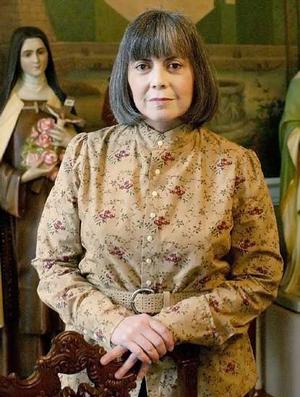
Anne Rice has spent her entire life caught up in a spiritual quest for truth. Yet she has carried on that search in a highly public and creative fashion, creating novels rooted in indelible portraits of evil and lost souls throughout her 11-novel series about the Vampire Lestat before tossing that vastly lucrative path aside to write novels in which Jesus and holy angels are the heroes.
Rice will be signing her latest novel, “Angel Time,” in a free 1 p.m. Saturday event at Vroman’s Bookstore. Following the story of Toby O’Dare, a contract killer assigned to yet another murder who is visited by a mysterious stranger – an angel who offers him a chance to save rather than destroy lives. When he agrees to take that chance, he is whisked back to 13th-Century England, amid an era in which children suddenly die or disappear and accusations of ritual murder have been made against Jews – a dark world in which he is determined to bring light.
“Both vampires and angels challenge the imagination. You have to live up to a classic concept, with angels they’re a creature who’s a messenger of God who comes from Heaven ,” explains Rice. “So you think: ‘what’s he going to sound like when he talks, what’s he going to say?’ It’s exciting to me, to write about angel Malchiah and make him believable to my audience.
“We have to respect what they are. Angels are messengers of God and live in the presence of God, but over and over in Hollywood movies, they’re made into sad figures who want to be on earth instead of Heaven. My angels want to be in Heaven. It’s kind of thrilling and very similar to writing about vampires.”
It’s been a rather unique full-circle journey for Rice, who grew up in a devout Roman Catholic family in New Orleans before questioning her beliefs upon attending college out of state in Texas. Yet Anne didn’t rebel in the conventional sense of those around her in the heyday of hippiedom; she was a few years older than that generation and decided to question things on an intellectual and philosophical level rather than through the use of drugs.
She reached her professional breakthrough in 1976 with the release of her first novel, Interview with the Vampire, a full three years after she finished writing it. Following the illicit deeds of an immortal vampire, the book was an extremely dark exploration of the very questions Rice was harboring in her real life. While writing the remaining ten books in the vampire series, which went on to sell tens of millions of copies worldwide, she also wrote three erotic novels under the pen name of A.N. Roquelaure.
But even as she eventually came to describe herself as an atheist and had great wealth and adulation surrounding her, Rice wasn’t truly happy. In 1998, she started to rediscover her strong faith in the Catholic Church, and by 2004, she announced that she would no longer write about vampires. Instead, she was devoting herself to “what the Lord wanted” in her writing.
“The answer to why I switched is my personal conversion. I didn’t really have the same worldview after that conversion,” Rice explained in an exclusive interview from her home in Rancho Mirage. “I didn’t have any more tales to tell with Lestat because I now saw the world through different eyes and the vampires didn’t make a connection for me.
“Vampires were people groping for faith, living through darkness, and I personally found the change those characters were looking for,” Rice adds. “I came to the end of my quest. The last two [Lestat books] reflected the split in me and were written after I’d been writing in faith.”
Rice’s shift away from faith was one that is common on the nation’s college campuses, even though she now feels it was “tragic” for her life. For despite her vast wealth and a happy 41-year marriage to Stan Rice, a lifelong atheist who died in 2002, she wishes she had never walked away from her beloved mother church.
“I went through a crisis at 18. I was at a secular college campus in Texas, away from my Catholic roots and had a whole host of new influences,” recalls Rice. “I rejected the faith of my childhood as too limited. I wanted to learn what the modern world was about. I ended up styling myself as an atheist, but was really agnostic. As Catholics we encounter a whole lot of new information, and we don’t know how to incorporate that into our faith.”
Rice particularly recalls her first readings of existentialist writers like Jean-Paul Sartre and Albert Camus as leading her astray, but with the wisdom of time now says “it isn’t necessary to leave your church in order to read Sartre or Camus, but when I was 18 it didn’t seem that way and that I had to leave and seek knowledge a different way. It was a tragedy.”
Rice ultimately decided to return to the Catholic Church but also came back with a strong sense that she was supposed to write about Jesus Christ now and devote all her future work to Him. She feels that even her vampire novels were reflections of the search for the great truths of existence, just from the dark flipside of the path she walks now.
“There was not a specific incident that sparked my return to the church. I’d been thinking a long time and one day I made decision to go back, and realized I didn’t need answers to all the sociological questions I had,” explains Rice. “God had the answers for what was the meaning of the Holocaust or why was there a Second World War? – and that was enough. That burden was not for us. It was a release to let it go but it was also intellectual. Americans tend to believe in that story that you turn towards or against faith due to tragic loss, but that never happened for me. They’re always casting my story in those terms but it didn’t fit.”
Ultimately, Rice has been pleased that some of her old fans have followed her new direction and tries not to concern herself too much with those who haven’t been as kind about it. She drew particular ire from some fans on Amazon.com for her Christ-centered novel Blood Canticle, and wound up attempting to defend herself in writing – only to find Amazon pull her response down without explanation.
“I don’t disavow my past books at all. I have communication with my followers everyday, and love their feedback and comments,” says Rice. “I hear a lot from fans who are curious and searching for faith. I get a lot of emails about my conversion – how did you do it, what do you believe in? I spoke at a synagogue about “Christ the Lord” outside of Birmingham, and people asked how did faith get back to you? Sometimes it’s hard to express how complicated it is.”
Posted by America's Funniest Reporter at 6:18 PM
INTERVIEW WITH THE VAMPIRE...FICTION WRITER
"Time" heals all
With “Angel Time,” Anne Rice continues her quest for truths hidden amid eternal mysteries
By Carl Kozlowski
Anne Rice has spent her entire life caught up in a spiritual quest for truth. Yet she has carried on that search in a highly public and creative fashion, creating novels rooted in indelible portraits of evil and lost souls throughout her 11-novel series about the Vampire Lestat before tossing that vastly lucrative path aside to write novels in which Jesus and holy angels are the heroes.
Rice will be signing her latest novel, “Angel Time,” in a free 1 p.m. Saturday event at Vroman’s Bookstore. Following the story of Toby O’Dare, a contract killer assigned to yet another murder who is visited by a mysterious stranger – an angel who offers him a chance to save rather than destroy lives. When he agrees to take that chance, he is whisked back to 13th-Century England, amid an era in which children suddenly die or disappear and accusations of ritual murder have been made against Jews – a dark world in which he is determined to bring light.
“Both vampires and angels challenge the imagination. You have to live up to a classic concept, with angels they’re a creature who’s a messenger of God who comes from Heaven ,” explains Rice. “So you think: ‘what’s he going to sound like when he talks, what’s he going to say?’ It’s exciting to me, to write about angel Malchiah and make him believable to my audience.
“We have to respect what they are. Angels are messengers of God and live in the presence of God, but over and over in Hollywood movies, they’re made into sad figures who want to be on earth instead of Heaven. My angels want to be in Heaven. It’s kind of thrilling and very similar to writing about vampires.”
It’s been a rather unique full-circle journey for Rice, who grew up in a devout Roman Catholic family in New Orleans before questioning her beliefs upon attending college out of state in Texas. Yet Anne didn’t rebel in the conventional sense of those around her in the heyday of hippiedom; she was a few years older than that generation and decided to question things on an intellectual and philosophical level rather than through the use of drugs.
She reached her professional breakthrough in 1976 with the release of her first novel, Interview with the Vampire, a full three years after she finished writing it. Following the illicit deeds of an immortal vampire, the book was an extremely dark exploration of the very questions Rice was harboring in her real life. While writing the remaining ten books in the vampire series, which went on to sell tens of millions of copies worldwide, she also wrote three erotic novels under the pen name of A.N. Roquelaure.
But even as she eventually came to describe herself as an atheist and had great wealth and adulation surrounding her, Rice wasn’t truly happy. In 1998, she started to rediscover her strong faith in the Catholic Church, and by 2004, she announced that she would no longer write about vampires. Instead, she was devoting herself to “what the Lord wanted” in her writing.
“The answer to why I switched is my personal conversion. I didn’t really have the same worldview after that conversion,” Rice explained in an exclusive interview from her home in Rancho Mirage. “I didn’t have any more tales to tell with Lestat because I now saw the world through different eyes and the vampires didn’t make a connection for me.
“Vampires were people groping for faith, living through darkness, and I personally found the change those characters were looking for,” Rice adds. “I came to the end of my quest. The last two [Lestat books] reflected the split in me and were written after I’d been writing in faith.”
Rice’s shift away from faith was one that is common on the nation’s college campuses, even though she now feels it was “tragic” for her life. For despite her vast wealth and a happy 41-year marriage to Stan Rice, a lifelong atheist who died in 2002, she wishes she had never walked away from her beloved mother church.
“I went through a crisis at 18. I was at a secular college campus in Texas, away from my Catholic roots and had a whole host of new influences,” recalls Rice. “I rejected the faith of my childhood as too limited. I wanted to learn what the modern world was about. I ended up styling myself as an atheist, but was really agnostic. As Catholics we encounter a whole lot of new information, and we don’t know how to incorporate that into our faith.”
Rice particularly recalls her first readings of existentialist writers like Jean-Paul Sartre and Albert Camus as leading her astray, but with the wisdom of time now says “it isn’t necessary to leave your church in order to read Sartre or Camus, but when I was 18 it didn’t seem that way and that I had to leave and seek knowledge a different way. It was a tragedy.”
Rice ultimately decided to return to the Catholic Church but also came back with a strong sense that she was supposed to write about Jesus Christ now and devote all her future work to Him. She feels that even her vampire novels were reflections of the search for the great truths of existence, just from the dark flipside of the path she walks now.
“There was not a specific incident that sparked my return to the church. I’d been thinking a long time and one day I made decision to go back, and realized I didn’t need answers to all the sociological questions I had,” explains Rice. “God had the answers for what was the meaning of the Holocaust or why was there a Second World War? – and that was enough. That burden was not for us. It was a release to let it go but it was also intellectual. Americans tend to believe in that story that you turn towards or against faith due to tragic loss, but that never happened for me. They’re always casting my story in those terms but it didn’t fit.”
Ultimately, Rice has been pleased that some of her old fans have followed her new direction and tries not to concern herself too much with those who haven’t been as kind about it. She drew particular ire from some fans on Amazon.com for her Christ-centered novel Blood Canticle, and wound up attempting to defend herself in writing – only to find Amazon pull her response down without explanation.
“I don’t disavow my past books at all. I have communication with my followers everyday, and love their feedback and comments,” says Rice. “I hear a lot from fans who are curious and searching for faith. I get a lot of emails about my conversion – how did you do it, what do you believe in? I spoke at a synagogue about “Christ the Lord” outside of Birmingham, and people asked how did faith get back to you? Sometimes it’s hard to express how complicated it is.”
Posted by America's Funniest Reporter at 6:18 PM
Wednesday, October 15, 2008
FEELING KINDA "WORDY" WITH NPR SUPERSTAR SARAH VOWELL
Purely funny
NPR’s Sarah Vowell tells about ‘Wordy Shipmates’ at All Saints
Think of warring factions within a religion, and the strife in Iraq between Sunni and Shia Muslims might come to mind. Unless you happen to be Sarah Vowell, best-selling humor essayist and star contributor to NPR’s “This American Life.”
Vowell has just released her fifth book, “The Wordy Shipmates,” in which she reveals the internecine (and sometimes humorous) conflicts that existed between the disparate factions of Puritans who helped found our own nation. Illuminating the battles over separation between church and state that were carried out via dramatic court trials, vicious pamphlet wars, and even orders of exile, Vowell also takes time to show the strange and surprising ways that Puritan culture affects our lives to this day (including via a Puritan-themed water park).
Speaking by phone from her New York City apartment before launching a promotional tour that brings her to Pasadena’s All Saints Church tonight for a reading and signing event sponsored by Vroman’s Bookstore, Vowell readily admits that the similarities between Puritan factions and Iraq’s Muslim factions helped light the fire for her new work.
“I wrote about this for a lot of different reasons. One of them is just simply that I have an illustration in the book — the seal of the Massachusetts state colony, with an Indian saying ‘Come over and help us,’” Vowell explains. “This is the official seal the Puritans brought with them from England, and it shows the ironic vision of how they saw themselves: they’re here to help, whether anyone wants their help or not. I feel that — and their notion of themselves as God’s new chosen people as always right, the city on the hill — I find that to be just a really enduring component of the American DNA.
“But also just in terms of the whole intricacies of Islam — there were so many days I’d put down the newspaper about all these squabbling theological factions over there and get back to work on my squabbling theological factions that were here. Every era has them.”
American history’s dark and quirky underbelly is a continuous source of fascination for Vowell, whose previous book, “Assassination Vacation,” detailed an extensive trip she took across America, visiting the sites of famous assassinations and digging up odd forgotten facts about the killers and their victims that have been otherwise scrubbed from our official historic texts. She developed her passion for history when she and her sister drove along the notorious Trail of Tears that cost the deaths of 4,000 displaced Cherokee Indian ancestors back in 1838. The audio documentary that resulted changed the course of her life.
“I had started out writing about music and books, but at ‘This American Life’ I started doing stories about music and family. That trip made me fall in love with history and the process of discovering it,” Vowell recalls. “The documentary wasn’t just about the Trail of Tears, it was also about our driving on it, so there were all types of off-topic shenanigans. I guess part of it is that I write about American history for Americans, which is to say a bunch of amnesiacs who don’t care about history.”
Ironically, Vowell’s stop at All Saints Church comes even as she admits to being a secular atheist. Some might think she is not the ideal candidate to write about one of America’s founding religions, but she says her earlier childhood upbringing in a Pentecostal church has maintained its influence on her in many ways.
“I have an incredibly classic evangelical background, and while I’ve thrown off the trappings of the mythological aspects of Christianity, I’m still influenced by the teachings of Christ, I guess,” says Vowell. “Also, religion was my entry into scholarship basically. In the town where I lived until I was 11 years old, almost no one had gone to college and almost the only scholarly facet of life was Bible study. I think that kind of childhood was enormous influential to me becoming a quasi-scholar/writer. Religion was the only way you got to spend your life in a library, and the thing I love most about the Puritans is their love of words and knowledge and learning, scholarship and intellect.” — Carl Kozlowski
NPR’s Sarah Vowell tells about ‘Wordy Shipmates’ at All Saints
Think of warring factions within a religion, and the strife in Iraq between Sunni and Shia Muslims might come to mind. Unless you happen to be Sarah Vowell, best-selling humor essayist and star contributor to NPR’s “This American Life.”
Vowell has just released her fifth book, “The Wordy Shipmates,” in which she reveals the internecine (and sometimes humorous) conflicts that existed between the disparate factions of Puritans who helped found our own nation. Illuminating the battles over separation between church and state that were carried out via dramatic court trials, vicious pamphlet wars, and even orders of exile, Vowell also takes time to show the strange and surprising ways that Puritan culture affects our lives to this day (including via a Puritan-themed water park).
Speaking by phone from her New York City apartment before launching a promotional tour that brings her to Pasadena’s All Saints Church tonight for a reading and signing event sponsored by Vroman’s Bookstore, Vowell readily admits that the similarities between Puritan factions and Iraq’s Muslim factions helped light the fire for her new work.
“I wrote about this for a lot of different reasons. One of them is just simply that I have an illustration in the book — the seal of the Massachusetts state colony, with an Indian saying ‘Come over and help us,’” Vowell explains. “This is the official seal the Puritans brought with them from England, and it shows the ironic vision of how they saw themselves: they’re here to help, whether anyone wants their help or not. I feel that — and their notion of themselves as God’s new chosen people as always right, the city on the hill — I find that to be just a really enduring component of the American DNA.
“But also just in terms of the whole intricacies of Islam — there were so many days I’d put down the newspaper about all these squabbling theological factions over there and get back to work on my squabbling theological factions that were here. Every era has them.”
American history’s dark and quirky underbelly is a continuous source of fascination for Vowell, whose previous book, “Assassination Vacation,” detailed an extensive trip she took across America, visiting the sites of famous assassinations and digging up odd forgotten facts about the killers and their victims that have been otherwise scrubbed from our official historic texts. She developed her passion for history when she and her sister drove along the notorious Trail of Tears that cost the deaths of 4,000 displaced Cherokee Indian ancestors back in 1838. The audio documentary that resulted changed the course of her life.
“I had started out writing about music and books, but at ‘This American Life’ I started doing stories about music and family. That trip made me fall in love with history and the process of discovering it,” Vowell recalls. “The documentary wasn’t just about the Trail of Tears, it was also about our driving on it, so there were all types of off-topic shenanigans. I guess part of it is that I write about American history for Americans, which is to say a bunch of amnesiacs who don’t care about history.”
Ironically, Vowell’s stop at All Saints Church comes even as she admits to being a secular atheist. Some might think she is not the ideal candidate to write about one of America’s founding religions, but she says her earlier childhood upbringing in a Pentecostal church has maintained its influence on her in many ways.
“I have an incredibly classic evangelical background, and while I’ve thrown off the trappings of the mythological aspects of Christianity, I’m still influenced by the teachings of Christ, I guess,” says Vowell. “Also, religion was my entry into scholarship basically. In the town where I lived until I was 11 years old, almost no one had gone to college and almost the only scholarly facet of life was Bible study. I think that kind of childhood was enormous influential to me becoming a quasi-scholar/writer. Religion was the only way you got to spend your life in a library, and the thing I love most about the Puritans is their love of words and knowledge and learning, scholarship and intellect.” — Carl Kozlowski
Wednesday, September 17, 2008
FROM "STINKFIST" TO FINE WINE SCENTS: the story of Tool singer Maynard James Keenan
Taste in the making
Tool’s Maynard James Keenan shifts his focus from writing dark lyrics to creating zesty wines
By Carl Kozlowski 09/11/2008
As lead singer and songwriter of the rock bands Tool, A Perfect Circle and Puscifer, Maynard James Keenan has crafted some of the loudest, most inventive and disturbing music of the past two decades. Yet the author of such tunes as “Prison Sex” is also a man of unexpected contradictions; a guy who prefers to live amidst the desert atmosphere of small-town Wilcox, Ariz., where he oversees a burgeoning winery called Arizona Stronghold.
On the one hand, Keenan writes lyrics that can make one’s stomach turn, such as this couplet from the tastefully titled “Stinkfist”: Knuckle deep inside the borderline.This may hurt a little but it’s something you’ll get used to.Relax. Slip away.On the other hand, he’s capable of discussing the more refined scents of fine wines for hours, speaking with passion about the meticulous processes he follows to put out a product he can be proud of. He’s already sold 13 million CDs and sold out stadiums around the world, but now Keenan wants to take over your wine cellar.
To accomplish this, Keenan is kicking off a tour of a dozen Whole Foods stores with an in-store appearance Tuesday night at the Pasadena location on South Arroyo Parkway, where he plans to sign bottles for fans.
While he says the events will likely be straightforward affairs, they nonetheless offer his rabid fan base (which includes multiple stalkers he’s had to chase from his Arizona farm with paintballs) a rare chance to meet one of rock’s most reclusive frontmen.
Keenan developed his almost-obsessive love of privacy — protected for years by wearing masks and disguises onstage — as an only child who spent a nomadic youth moving across Michigan and Ohio. While overseeing his annual grape harvesting season, which runs from August through November, Keenan spoke by phone from Wilcox to explain just how he manages to keep up with it all.
“I come from a small-town background and did a little farming for summer jobs as a kid. For me it’s an extension of the art form. I’ve been collecting wine since the early ’90s but as far as breaking ground and getting involved in making it, that was around 2001-02,” Keenan explains. “It’s a generalization that California is a good spot to grow grapes. It’s a very easy spot to grow grapes and it produces fantastic wine, but it also is a comfortable place to produce it. Arizona is seen as a hostile environment, but because of that it should create spicier wines.”
Keenan considers his wines to be “a lot more European in their structure, with a lot of mineral structure and long-aging wines that are not California style.” His world travels as a rock star have greatly influenced his approach to winemaking, due to the exposure he’s had to flavors from all over the planet.
“I’m traveling around the world seeing places like Spain and Italy, and some of my favorite wine is from those places or in France. There are so many nuances to the wines in those regions because of the landscape and the culture,” he says. “As Americans we want things very palatable and safe and we need things sold in a consistent manner, versus the regional manner found in Europe.
“You’ll have a great flavor in a town in Italy and you’ll never encounter it again unless you move there,” he continues. “There are definitely little winemakers throughout California that are doing fantastic things, but overall they’re very safe.”
Keenan, 44, entered the Army after high school in order to raise the funds to attend Kendall College of Art and Design in Grand Rapids, Mich. He moved to Los Angeles after graduation in 1988 and wound up working in interior design and set construction.
Keenan specialized in redesigning pet stores, due to a love of animals that is surprising considering he’s the author of songs with titles like “Disgustipated” and “Killing You.” He teamed up with fellow LA musician Adam Jones to form Tool in 1990 and within two years they were releasing their first CD.
Despite the drive he felt to get signed quickly, Keenan still felt a need to develop side projects and has consistently taken about five years between the release of Tool CDs. Though busy with his bands, Keenan found time to develop his own California wine label as well, called Caduceus. “For Caduceus, it’s very small, low production and high quality. With Stronghold, we want to take it as big as we can. We purchased about 60 acres of vineyards in Wilcox, outside of Tucson, with the intention to have a large venue to cherry-pick the best grapes for our wine,” says Keenan. “With our other grapes, we’re putting $19 bottles of Arizona wine in front of people to expose them to what Arizona wine will do — and eventually they’ll find their way back to Caduceus and Page Springs Cellars,” the label run by his wine business partner Eric Glomski.
These days, most of Keenan’s non-alcoholic creativity is being organized and released under the Puscifer banner. While he promises the group will eventually perform live, he’s first opening a store named after the band in Arizona, with various merchandise, paintings, art and limited-edition stuff. He also owns three tapas restaurants.
“It’s always been a multifaceted, multi-medium project. I’ve worked with different chefs, filmmakers, designers, and it’s gonna be quite a large project. I’ve been working on this project since the early ’90s, and it took a long time to pull together,” says Keenan. “For the music, it’s not about the individual — so the more you let the music speak for yourself, the more powerful the music will be. With food, it’s more about the recipe. I just like different flavors, and I can’t sit still. I have different ideas that don’t fit the personalities in different groups, and I have to stretch my legs.”
Tool’s Maynard James Keenan shifts his focus from writing dark lyrics to creating zesty wines
By Carl Kozlowski 09/11/2008
As lead singer and songwriter of the rock bands Tool, A Perfect Circle and Puscifer, Maynard James Keenan has crafted some of the loudest, most inventive and disturbing music of the past two decades. Yet the author of such tunes as “Prison Sex” is also a man of unexpected contradictions; a guy who prefers to live amidst the desert atmosphere of small-town Wilcox, Ariz., where he oversees a burgeoning winery called Arizona Stronghold.
On the one hand, Keenan writes lyrics that can make one’s stomach turn, such as this couplet from the tastefully titled “Stinkfist”: Knuckle deep inside the borderline.This may hurt a little but it’s something you’ll get used to.Relax. Slip away.On the other hand, he’s capable of discussing the more refined scents of fine wines for hours, speaking with passion about the meticulous processes he follows to put out a product he can be proud of. He’s already sold 13 million CDs and sold out stadiums around the world, but now Keenan wants to take over your wine cellar.
To accomplish this, Keenan is kicking off a tour of a dozen Whole Foods stores with an in-store appearance Tuesday night at the Pasadena location on South Arroyo Parkway, where he plans to sign bottles for fans.
While he says the events will likely be straightforward affairs, they nonetheless offer his rabid fan base (which includes multiple stalkers he’s had to chase from his Arizona farm with paintballs) a rare chance to meet one of rock’s most reclusive frontmen.
Keenan developed his almost-obsessive love of privacy — protected for years by wearing masks and disguises onstage — as an only child who spent a nomadic youth moving across Michigan and Ohio. While overseeing his annual grape harvesting season, which runs from August through November, Keenan spoke by phone from Wilcox to explain just how he manages to keep up with it all.
“I come from a small-town background and did a little farming for summer jobs as a kid. For me it’s an extension of the art form. I’ve been collecting wine since the early ’90s but as far as breaking ground and getting involved in making it, that was around 2001-02,” Keenan explains. “It’s a generalization that California is a good spot to grow grapes. It’s a very easy spot to grow grapes and it produces fantastic wine, but it also is a comfortable place to produce it. Arizona is seen as a hostile environment, but because of that it should create spicier wines.”
Keenan considers his wines to be “a lot more European in their structure, with a lot of mineral structure and long-aging wines that are not California style.” His world travels as a rock star have greatly influenced his approach to winemaking, due to the exposure he’s had to flavors from all over the planet.
“I’m traveling around the world seeing places like Spain and Italy, and some of my favorite wine is from those places or in France. There are so many nuances to the wines in those regions because of the landscape and the culture,” he says. “As Americans we want things very palatable and safe and we need things sold in a consistent manner, versus the regional manner found in Europe.
“You’ll have a great flavor in a town in Italy and you’ll never encounter it again unless you move there,” he continues. “There are definitely little winemakers throughout California that are doing fantastic things, but overall they’re very safe.”
Keenan, 44, entered the Army after high school in order to raise the funds to attend Kendall College of Art and Design in Grand Rapids, Mich. He moved to Los Angeles after graduation in 1988 and wound up working in interior design and set construction.
Keenan specialized in redesigning pet stores, due to a love of animals that is surprising considering he’s the author of songs with titles like “Disgustipated” and “Killing You.” He teamed up with fellow LA musician Adam Jones to form Tool in 1990 and within two years they were releasing their first CD.
Despite the drive he felt to get signed quickly, Keenan still felt a need to develop side projects and has consistently taken about five years between the release of Tool CDs. Though busy with his bands, Keenan found time to develop his own California wine label as well, called Caduceus. “For Caduceus, it’s very small, low production and high quality. With Stronghold, we want to take it as big as we can. We purchased about 60 acres of vineyards in Wilcox, outside of Tucson, with the intention to have a large venue to cherry-pick the best grapes for our wine,” says Keenan. “With our other grapes, we’re putting $19 bottles of Arizona wine in front of people to expose them to what Arizona wine will do — and eventually they’ll find their way back to Caduceus and Page Springs Cellars,” the label run by his wine business partner Eric Glomski.
These days, most of Keenan’s non-alcoholic creativity is being organized and released under the Puscifer banner. While he promises the group will eventually perform live, he’s first opening a store named after the band in Arizona, with various merchandise, paintings, art and limited-edition stuff. He also owns three tapas restaurants.
“It’s always been a multifaceted, multi-medium project. I’ve worked with different chefs, filmmakers, designers, and it’s gonna be quite a large project. I’ve been working on this project since the early ’90s, and it took a long time to pull together,” says Keenan. “For the music, it’s not about the individual — so the more you let the music speak for yourself, the more powerful the music will be. With food, it’s more about the recipe. I just like different flavors, and I can’t sit still. I have different ideas that don’t fit the personalities in different groups, and I have to stretch my legs.”
Labels:
"Prison Sex",
"Stinkfist",
Maynard James Keenan,
Tool,
wine
Subscribe to:
Posts (Atom)