Friday, January 29, 2010
INTERVIEW WITH THE VAMPIRE...FICTION WRITER
"Time" heals all
With “Angel Time,” Anne Rice continues her quest for truths hidden amid eternal mysteries
By Carl Kozlowski
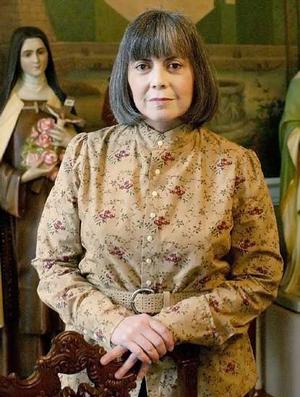
Anne Rice has spent her entire life caught up in a spiritual quest for truth. Yet she has carried on that search in a highly public and creative fashion, creating novels rooted in indelible portraits of evil and lost souls throughout her 11-novel series about the Vampire Lestat before tossing that vastly lucrative path aside to write novels in which Jesus and holy angels are the heroes.
Rice will be signing her latest novel, “Angel Time,” in a free 1 p.m. Saturday event at Vroman’s Bookstore. Following the story of Toby O’Dare, a contract killer assigned to yet another murder who is visited by a mysterious stranger – an angel who offers him a chance to save rather than destroy lives. When he agrees to take that chance, he is whisked back to 13th-Century England, amid an era in which children suddenly die or disappear and accusations of ritual murder have been made against Jews – a dark world in which he is determined to bring light.
“Both vampires and angels challenge the imagination. You have to live up to a classic concept, with angels they’re a creature who’s a messenger of God who comes from Heaven ,” explains Rice. “So you think: ‘what’s he going to sound like when he talks, what’s he going to say?’ It’s exciting to me, to write about angel Malchiah and make him believable to my audience.
“We have to respect what they are. Angels are messengers of God and live in the presence of God, but over and over in Hollywood movies, they’re made into sad figures who want to be on earth instead of Heaven. My angels want to be in Heaven. It’s kind of thrilling and very similar to writing about vampires.”
It’s been a rather unique full-circle journey for Rice, who grew up in a devout Roman Catholic family in New Orleans before questioning her beliefs upon attending college out of state in Texas. Yet Anne didn’t rebel in the conventional sense of those around her in the heyday of hippiedom; she was a few years older than that generation and decided to question things on an intellectual and philosophical level rather than through the use of drugs.
She reached her professional breakthrough in 1976 with the release of her first novel, Interview with the Vampire, a full three years after she finished writing it. Following the illicit deeds of an immortal vampire, the book was an extremely dark exploration of the very questions Rice was harboring in her real life. While writing the remaining ten books in the vampire series, which went on to sell tens of millions of copies worldwide, she also wrote three erotic novels under the pen name of A.N. Roquelaure.
But even as she eventually came to describe herself as an atheist and had great wealth and adulation surrounding her, Rice wasn’t truly happy. In 1998, she started to rediscover her strong faith in the Catholic Church, and by 2004, she announced that she would no longer write about vampires. Instead, she was devoting herself to “what the Lord wanted” in her writing.
“The answer to why I switched is my personal conversion. I didn’t really have the same worldview after that conversion,” Rice explained in an exclusive interview from her home in Rancho Mirage. “I didn’t have any more tales to tell with Lestat because I now saw the world through different eyes and the vampires didn’t make a connection for me.
“Vampires were people groping for faith, living through darkness, and I personally found the change those characters were looking for,” Rice adds. “I came to the end of my quest. The last two [Lestat books] reflected the split in me and were written after I’d been writing in faith.”
Rice’s shift away from faith was one that is common on the nation’s college campuses, even though she now feels it was “tragic” for her life. For despite her vast wealth and a happy 41-year marriage to Stan Rice, a lifelong atheist who died in 2002, she wishes she had never walked away from her beloved mother church.
“I went through a crisis at 18. I was at a secular college campus in Texas, away from my Catholic roots and had a whole host of new influences,” recalls Rice. “I rejected the faith of my childhood as too limited. I wanted to learn what the modern world was about. I ended up styling myself as an atheist, but was really agnostic. As Catholics we encounter a whole lot of new information, and we don’t know how to incorporate that into our faith.”
Rice particularly recalls her first readings of existentialist writers like Jean-Paul Sartre and Albert Camus as leading her astray, but with the wisdom of time now says “it isn’t necessary to leave your church in order to read Sartre or Camus, but when I was 18 it didn’t seem that way and that I had to leave and seek knowledge a different way. It was a tragedy.”
Rice ultimately decided to return to the Catholic Church but also came back with a strong sense that she was supposed to write about Jesus Christ now and devote all her future work to Him. She feels that even her vampire novels were reflections of the search for the great truths of existence, just from the dark flipside of the path she walks now.
“There was not a specific incident that sparked my return to the church. I’d been thinking a long time and one day I made decision to go back, and realized I didn’t need answers to all the sociological questions I had,” explains Rice. “God had the answers for what was the meaning of the Holocaust or why was there a Second World War? – and that was enough. That burden was not for us. It was a release to let it go but it was also intellectual. Americans tend to believe in that story that you turn towards or against faith due to tragic loss, but that never happened for me. They’re always casting my story in those terms but it didn’t fit.”
Ultimately, Rice has been pleased that some of her old fans have followed her new direction and tries not to concern herself too much with those who haven’t been as kind about it. She drew particular ire from some fans on Amazon.com for her Christ-centered novel Blood Canticle, and wound up attempting to defend herself in writing – only to find Amazon pull her response down without explanation.
“I don’t disavow my past books at all. I have communication with my followers everyday, and love their feedback and comments,” says Rice. “I hear a lot from fans who are curious and searching for faith. I get a lot of emails about my conversion – how did you do it, what do you believe in? I spoke at a synagogue about “Christ the Lord” outside of Birmingham, and people asked how did faith get back to you? Sometimes it’s hard to express how complicated it is.”
Posted by America's Funniest Reporter at 6:18 PM
Tuesday, February 23, 2010
Wednesday, October 15, 2008
FEELING KINDA "WORDY" WITH NPR SUPERSTAR SARAH VOWELL
Purely funny
NPR’s Sarah Vowell tells about ‘Wordy Shipmates’ at All Saints
Think of warring factions within a religion, and the strife in Iraq between Sunni and Shia Muslims might come to mind. Unless you happen to be Sarah Vowell, best-selling humor essayist and star contributor to NPR’s “This American Life.”
Vowell has just released her fifth book, “The Wordy Shipmates,” in which she reveals the internecine (and sometimes humorous) conflicts that existed between the disparate factions of Puritans who helped found our own nation. Illuminating the battles over separation between church and state that were carried out via dramatic court trials, vicious pamphlet wars, and even orders of exile, Vowell also takes time to show the strange and surprising ways that Puritan culture affects our lives to this day (including via a Puritan-themed water park).
Speaking by phone from her New York City apartment before launching a promotional tour that brings her to Pasadena’s All Saints Church tonight for a reading and signing event sponsored by Vroman’s Bookstore, Vowell readily admits that the similarities between Puritan factions and Iraq’s Muslim factions helped light the fire for her new work.
“I wrote about this for a lot of different reasons. One of them is just simply that I have an illustration in the book — the seal of the Massachusetts state colony, with an Indian saying ‘Come over and help us,’” Vowell explains. “This is the official seal the Puritans brought with them from England, and it shows the ironic vision of how they saw themselves: they’re here to help, whether anyone wants their help or not. I feel that — and their notion of themselves as God’s new chosen people as always right, the city on the hill — I find that to be just a really enduring component of the American DNA.
“But also just in terms of the whole intricacies of Islam — there were so many days I’d put down the newspaper about all these squabbling theological factions over there and get back to work on my squabbling theological factions that were here. Every era has them.”
American history’s dark and quirky underbelly is a continuous source of fascination for Vowell, whose previous book, “Assassination Vacation,” detailed an extensive trip she took across America, visiting the sites of famous assassinations and digging up odd forgotten facts about the killers and their victims that have been otherwise scrubbed from our official historic texts. She developed her passion for history when she and her sister drove along the notorious Trail of Tears that cost the deaths of 4,000 displaced Cherokee Indian ancestors back in 1838. The audio documentary that resulted changed the course of her life.
“I had started out writing about music and books, but at ‘This American Life’ I started doing stories about music and family. That trip made me fall in love with history and the process of discovering it,” Vowell recalls. “The documentary wasn’t just about the Trail of Tears, it was also about our driving on it, so there were all types of off-topic shenanigans. I guess part of it is that I write about American history for Americans, which is to say a bunch of amnesiacs who don’t care about history.”
Ironically, Vowell’s stop at All Saints Church comes even as she admits to being a secular atheist. Some might think she is not the ideal candidate to write about one of America’s founding religions, but she says her earlier childhood upbringing in a Pentecostal church has maintained its influence on her in many ways.
“I have an incredibly classic evangelical background, and while I’ve thrown off the trappings of the mythological aspects of Christianity, I’m still influenced by the teachings of Christ, I guess,” says Vowell. “Also, religion was my entry into scholarship basically. In the town where I lived until I was 11 years old, almost no one had gone to college and almost the only scholarly facet of life was Bible study. I think that kind of childhood was enormous influential to me becoming a quasi-scholar/writer. Religion was the only way you got to spend your life in a library, and the thing I love most about the Puritans is their love of words and knowledge and learning, scholarship and intellect.” — Carl Kozlowski
NPR’s Sarah Vowell tells about ‘Wordy Shipmates’ at All Saints
Think of warring factions within a religion, and the strife in Iraq between Sunni and Shia Muslims might come to mind. Unless you happen to be Sarah Vowell, best-selling humor essayist and star contributor to NPR’s “This American Life.”
Vowell has just released her fifth book, “The Wordy Shipmates,” in which she reveals the internecine (and sometimes humorous) conflicts that existed between the disparate factions of Puritans who helped found our own nation. Illuminating the battles over separation between church and state that were carried out via dramatic court trials, vicious pamphlet wars, and even orders of exile, Vowell also takes time to show the strange and surprising ways that Puritan culture affects our lives to this day (including via a Puritan-themed water park).
Speaking by phone from her New York City apartment before launching a promotional tour that brings her to Pasadena’s All Saints Church tonight for a reading and signing event sponsored by Vroman’s Bookstore, Vowell readily admits that the similarities between Puritan factions and Iraq’s Muslim factions helped light the fire for her new work.
“I wrote about this for a lot of different reasons. One of them is just simply that I have an illustration in the book — the seal of the Massachusetts state colony, with an Indian saying ‘Come over and help us,’” Vowell explains. “This is the official seal the Puritans brought with them from England, and it shows the ironic vision of how they saw themselves: they’re here to help, whether anyone wants their help or not. I feel that — and their notion of themselves as God’s new chosen people as always right, the city on the hill — I find that to be just a really enduring component of the American DNA.
“But also just in terms of the whole intricacies of Islam — there were so many days I’d put down the newspaper about all these squabbling theological factions over there and get back to work on my squabbling theological factions that were here. Every era has them.”
American history’s dark and quirky underbelly is a continuous source of fascination for Vowell, whose previous book, “Assassination Vacation,” detailed an extensive trip she took across America, visiting the sites of famous assassinations and digging up odd forgotten facts about the killers and their victims that have been otherwise scrubbed from our official historic texts. She developed her passion for history when she and her sister drove along the notorious Trail of Tears that cost the deaths of 4,000 displaced Cherokee Indian ancestors back in 1838. The audio documentary that resulted changed the course of her life.
“I had started out writing about music and books, but at ‘This American Life’ I started doing stories about music and family. That trip made me fall in love with history and the process of discovering it,” Vowell recalls. “The documentary wasn’t just about the Trail of Tears, it was also about our driving on it, so there were all types of off-topic shenanigans. I guess part of it is that I write about American history for Americans, which is to say a bunch of amnesiacs who don’t care about history.”
Ironically, Vowell’s stop at All Saints Church comes even as she admits to being a secular atheist. Some might think she is not the ideal candidate to write about one of America’s founding religions, but she says her earlier childhood upbringing in a Pentecostal church has maintained its influence on her in many ways.
“I have an incredibly classic evangelical background, and while I’ve thrown off the trappings of the mythological aspects of Christianity, I’m still influenced by the teachings of Christ, I guess,” says Vowell. “Also, religion was my entry into scholarship basically. In the town where I lived until I was 11 years old, almost no one had gone to college and almost the only scholarly facet of life was Bible study. I think that kind of childhood was enormous influential to me becoming a quasi-scholar/writer. Religion was the only way you got to spend your life in a library, and the thing I love most about the Puritans is their love of words and knowledge and learning, scholarship and intellect.” — Carl Kozlowski
Wednesday, September 17, 2008
FROM "STINKFIST" TO FINE WINE SCENTS: the story of Tool singer Maynard James Keenan
Taste in the making
Tool’s Maynard James Keenan shifts his focus from writing dark lyrics to creating zesty wines
By Carl Kozlowski 09/11/2008
As lead singer and songwriter of the rock bands Tool, A Perfect Circle and Puscifer, Maynard James Keenan has crafted some of the loudest, most inventive and disturbing music of the past two decades. Yet the author of such tunes as “Prison Sex” is also a man of unexpected contradictions; a guy who prefers to live amidst the desert atmosphere of small-town Wilcox, Ariz., where he oversees a burgeoning winery called Arizona Stronghold.
On the one hand, Keenan writes lyrics that can make one’s stomach turn, such as this couplet from the tastefully titled “Stinkfist”: Knuckle deep inside the borderline.This may hurt a little but it’s something you’ll get used to.Relax. Slip away.On the other hand, he’s capable of discussing the more refined scents of fine wines for hours, speaking with passion about the meticulous processes he follows to put out a product he can be proud of. He’s already sold 13 million CDs and sold out stadiums around the world, but now Keenan wants to take over your wine cellar.
To accomplish this, Keenan is kicking off a tour of a dozen Whole Foods stores with an in-store appearance Tuesday night at the Pasadena location on South Arroyo Parkway, where he plans to sign bottles for fans.
While he says the events will likely be straightforward affairs, they nonetheless offer his rabid fan base (which includes multiple stalkers he’s had to chase from his Arizona farm with paintballs) a rare chance to meet one of rock’s most reclusive frontmen.
Keenan developed his almost-obsessive love of privacy — protected for years by wearing masks and disguises onstage — as an only child who spent a nomadic youth moving across Michigan and Ohio. While overseeing his annual grape harvesting season, which runs from August through November, Keenan spoke by phone from Wilcox to explain just how he manages to keep up with it all.
“I come from a small-town background and did a little farming for summer jobs as a kid. For me it’s an extension of the art form. I’ve been collecting wine since the early ’90s but as far as breaking ground and getting involved in making it, that was around 2001-02,” Keenan explains. “It’s a generalization that California is a good spot to grow grapes. It’s a very easy spot to grow grapes and it produces fantastic wine, but it also is a comfortable place to produce it. Arizona is seen as a hostile environment, but because of that it should create spicier wines.”
Keenan considers his wines to be “a lot more European in their structure, with a lot of mineral structure and long-aging wines that are not California style.” His world travels as a rock star have greatly influenced his approach to winemaking, due to the exposure he’s had to flavors from all over the planet.
“I’m traveling around the world seeing places like Spain and Italy, and some of my favorite wine is from those places or in France. There are so many nuances to the wines in those regions because of the landscape and the culture,” he says. “As Americans we want things very palatable and safe and we need things sold in a consistent manner, versus the regional manner found in Europe.
“You’ll have a great flavor in a town in Italy and you’ll never encounter it again unless you move there,” he continues. “There are definitely little winemakers throughout California that are doing fantastic things, but overall they’re very safe.”
Keenan, 44, entered the Army after high school in order to raise the funds to attend Kendall College of Art and Design in Grand Rapids, Mich. He moved to Los Angeles after graduation in 1988 and wound up working in interior design and set construction.
Keenan specialized in redesigning pet stores, due to a love of animals that is surprising considering he’s the author of songs with titles like “Disgustipated” and “Killing You.” He teamed up with fellow LA musician Adam Jones to form Tool in 1990 and within two years they were releasing their first CD.
Despite the drive he felt to get signed quickly, Keenan still felt a need to develop side projects and has consistently taken about five years between the release of Tool CDs. Though busy with his bands, Keenan found time to develop his own California wine label as well, called Caduceus. “For Caduceus, it’s very small, low production and high quality. With Stronghold, we want to take it as big as we can. We purchased about 60 acres of vineyards in Wilcox, outside of Tucson, with the intention to have a large venue to cherry-pick the best grapes for our wine,” says Keenan. “With our other grapes, we’re putting $19 bottles of Arizona wine in front of people to expose them to what Arizona wine will do — and eventually they’ll find their way back to Caduceus and Page Springs Cellars,” the label run by his wine business partner Eric Glomski.
These days, most of Keenan’s non-alcoholic creativity is being organized and released under the Puscifer banner. While he promises the group will eventually perform live, he’s first opening a store named after the band in Arizona, with various merchandise, paintings, art and limited-edition stuff. He also owns three tapas restaurants.
“It’s always been a multifaceted, multi-medium project. I’ve worked with different chefs, filmmakers, designers, and it’s gonna be quite a large project. I’ve been working on this project since the early ’90s, and it took a long time to pull together,” says Keenan. “For the music, it’s not about the individual — so the more you let the music speak for yourself, the more powerful the music will be. With food, it’s more about the recipe. I just like different flavors, and I can’t sit still. I have different ideas that don’t fit the personalities in different groups, and I have to stretch my legs.”
Tool’s Maynard James Keenan shifts his focus from writing dark lyrics to creating zesty wines
By Carl Kozlowski 09/11/2008
As lead singer and songwriter of the rock bands Tool, A Perfect Circle and Puscifer, Maynard James Keenan has crafted some of the loudest, most inventive and disturbing music of the past two decades. Yet the author of such tunes as “Prison Sex” is also a man of unexpected contradictions; a guy who prefers to live amidst the desert atmosphere of small-town Wilcox, Ariz., where he oversees a burgeoning winery called Arizona Stronghold.
On the one hand, Keenan writes lyrics that can make one’s stomach turn, such as this couplet from the tastefully titled “Stinkfist”: Knuckle deep inside the borderline.This may hurt a little but it’s something you’ll get used to.Relax. Slip away.On the other hand, he’s capable of discussing the more refined scents of fine wines for hours, speaking with passion about the meticulous processes he follows to put out a product he can be proud of. He’s already sold 13 million CDs and sold out stadiums around the world, but now Keenan wants to take over your wine cellar.
To accomplish this, Keenan is kicking off a tour of a dozen Whole Foods stores with an in-store appearance Tuesday night at the Pasadena location on South Arroyo Parkway, where he plans to sign bottles for fans.
While he says the events will likely be straightforward affairs, they nonetheless offer his rabid fan base (which includes multiple stalkers he’s had to chase from his Arizona farm with paintballs) a rare chance to meet one of rock’s most reclusive frontmen.
Keenan developed his almost-obsessive love of privacy — protected for years by wearing masks and disguises onstage — as an only child who spent a nomadic youth moving across Michigan and Ohio. While overseeing his annual grape harvesting season, which runs from August through November, Keenan spoke by phone from Wilcox to explain just how he manages to keep up with it all.
“I come from a small-town background and did a little farming for summer jobs as a kid. For me it’s an extension of the art form. I’ve been collecting wine since the early ’90s but as far as breaking ground and getting involved in making it, that was around 2001-02,” Keenan explains. “It’s a generalization that California is a good spot to grow grapes. It’s a very easy spot to grow grapes and it produces fantastic wine, but it also is a comfortable place to produce it. Arizona is seen as a hostile environment, but because of that it should create spicier wines.”
Keenan considers his wines to be “a lot more European in their structure, with a lot of mineral structure and long-aging wines that are not California style.” His world travels as a rock star have greatly influenced his approach to winemaking, due to the exposure he’s had to flavors from all over the planet.
“I’m traveling around the world seeing places like Spain and Italy, and some of my favorite wine is from those places or in France. There are so many nuances to the wines in those regions because of the landscape and the culture,” he says. “As Americans we want things very palatable and safe and we need things sold in a consistent manner, versus the regional manner found in Europe.
“You’ll have a great flavor in a town in Italy and you’ll never encounter it again unless you move there,” he continues. “There are definitely little winemakers throughout California that are doing fantastic things, but overall they’re very safe.”
Keenan, 44, entered the Army after high school in order to raise the funds to attend Kendall College of Art and Design in Grand Rapids, Mich. He moved to Los Angeles after graduation in 1988 and wound up working in interior design and set construction.
Keenan specialized in redesigning pet stores, due to a love of animals that is surprising considering he’s the author of songs with titles like “Disgustipated” and “Killing You.” He teamed up with fellow LA musician Adam Jones to form Tool in 1990 and within two years they were releasing their first CD.
Despite the drive he felt to get signed quickly, Keenan still felt a need to develop side projects and has consistently taken about five years between the release of Tool CDs. Though busy with his bands, Keenan found time to develop his own California wine label as well, called Caduceus. “For Caduceus, it’s very small, low production and high quality. With Stronghold, we want to take it as big as we can. We purchased about 60 acres of vineyards in Wilcox, outside of Tucson, with the intention to have a large venue to cherry-pick the best grapes for our wine,” says Keenan. “With our other grapes, we’re putting $19 bottles of Arizona wine in front of people to expose them to what Arizona wine will do — and eventually they’ll find their way back to Caduceus and Page Springs Cellars,” the label run by his wine business partner Eric Glomski.
These days, most of Keenan’s non-alcoholic creativity is being organized and released under the Puscifer banner. While he promises the group will eventually perform live, he’s first opening a store named after the band in Arizona, with various merchandise, paintings, art and limited-edition stuff. He also owns three tapas restaurants.
“It’s always been a multifaceted, multi-medium project. I’ve worked with different chefs, filmmakers, designers, and it’s gonna be quite a large project. I’ve been working on this project since the early ’90s, and it took a long time to pull together,” says Keenan. “For the music, it’s not about the individual — so the more you let the music speak for yourself, the more powerful the music will be. With food, it’s more about the recipe. I just like different flavors, and I can’t sit still. I have different ideas that don’t fit the personalities in different groups, and I have to stretch my legs.”
Labels:
"Prison Sex",
"Stinkfist",
Maynard James Keenan,
Tool,
wine
Tuesday, July 15, 2008
EIGHT MINUTES WITH LEWIS BLACK
For those who don't know, I've interviewed dozens of comedians in my years as a reporter. You can find the profiles in my "Famous and Funny People" blog section on my site, www.americasfunniestreporter.com. This interview was with Lewis Black at Vroman's Bookstore in Pasadena, CA on Friday, June 20, 2008 after he did a hilarious Q&A with the audience at a book signing for his new collection of essays, "Me of Little Faith." This interview hasn't appeared anywhere but here so enjoy...
America's Funniest Reporter: Nobody seems as crazy as they did in the Bush elections about religion, but the fringe keeps saying that Obama’s a Muslim. So how do you feel religion is playing out in this election? Is it a factor?
BLACK: I think it’s playing out a little less, but it just gets stupid. It’s playing out stupid. Before it was idiotic and now we’ve moved to stupid. They say Obama is a Muslim because they can’t say bad things. They can’t use the other words they’d like to say, so they come up with that as the excuse.
AFR: Do you think we’re moving past this permanently?
BLACK: Yeah, I think so. I think most Americans are tired of it. Once you have a president who says he’s religious, but people see he’s just insane, they pick up on it. I think people are sick of it. You see it even with the born-agains, saying these people have got to just stop it. I think it’s the end of it. And a lot of that outpouring had to do with 9/11. That’s how people respond when the shit hits the fan.
AFR: Do you think that when things calmed down and saw more trouble wasn’t coming they backed off from it?
BLACK: Yeah, I think so and they’re sick of it. Look – you can be on your hands and knees all you want but you gotta know how to fix things. Look there’s a flood now in the Midwest and they’re still putting up sandbags. No amount of prayer, you can pray whatever, but we ended up in the position where they didn’t do the basics. Look that was in ’93 that the place flooded. They were told in ’93 to build a larger embankment, and they didn’t. We have to start doing things when they do something and go, yeah now we gotta get it done.
AFR: So this is a problem that goes across other administrations.
BLACK: It goes across all of ‘em. This country’s never dealt with its problems, always fooling around with other crap.
AFR: Some people act like Obama is the Messiah. What is your reaction to that?
BLACK: I think the kids are reacting to something they’ve never heard, which is hope.
AFR: Do you have faith in him?
BLACK: I don’t have that much faith anymore. Hope is a great thing if you’re 22. I’m 60. Hope’s not that big a deal. Hope to me is that the hotel I stay in will have a breakfast buffet tomorrow. That would be nice. I think what he’s doing is great. I think what’s really amazing is that people go “God he speaks so well.” Like there’s something wrong with that. How do we know he can do anything? Well if he can speak that way he can focus people. That’s the important thing. Whether he gets anything done with the idiots wandering around is another thing. I don’t think it’s that difficult. It’s just here’s what the liberals think, here’s what the conservatives think, let’s meet in the middle and move on. Something’s gotta give.
AFR: Gay marriage is fresh in the news, and All Saints Church here is the most liberal church in America and has said they'll crank out gay weddings as fast as they get asked. So how do you think gay marriage will play out in relation to faith? Are people chilling out about it?
BLACK: In a sense it’s – it’s a hell of a thing to compare it to, but abortion. States allowed abortion, and eventually it became the law of the land. It’ll take a number of years because it has to do with ignorance. If people don’t spend time with gay people, they don’t get it. It’s a concept and a concept that weirds them the shit out. All you have to do is get out in the country 20 minutes to see that they’re not exposed to it. Compare this to parts of the country, it’s like 10 years ahead out here. They just got cable!
AFR: Has there been any presidential candidate ever that didn’t let you down?
BLACK: No! No, not really. Look all that had to happen, all my generation had to do was legalize pot and they couldn’t do it. It’s that simple. I mean really, that was it. They couldn’t even do the basics. I was reading an article by a friend of mine today. Hemp can’t be grown in this country. You’ve gotta be kidding me. Not even cannabis – hemp! It’s a law that’s 40, 50, 60 years old
AFR: What do you want to be doing next?
BLACK: Next? Lying down.
AFR: No, your next big project?
BLACK: I do the show, it goes back on the air July 30. I go back on tour, the CD comes out August 5 and then I do a run in New York but after that I don’t know. I may do a movie this summer but it doesn’t look like it.
For those who don't know, I've interviewed dozens of comedians in my years as a reporter. You can find the profiles in my "Famous and Funny People" blog section on my site, www.americasfunniestreporter.com. This interview was with Lewis Black at Vroman's Bookstore in Pasadena, CA on Friday, June 20, 2008 after he did a hilarious Q&A with the audience at a book signing for his new collection of essays, "Me of Little Faith." This interview hasn't appeared anywhere but here so enjoy...
America's Funniest Reporter: Nobody seems as crazy as they did in the Bush elections about religion, but the fringe keeps saying that Obama’s a Muslim. So how do you feel religion is playing out in this election? Is it a factor?
BLACK: I think it’s playing out a little less, but it just gets stupid. It’s playing out stupid. Before it was idiotic and now we’ve moved to stupid. They say Obama is a Muslim because they can’t say bad things. They can’t use the other words they’d like to say, so they come up with that as the excuse.
AFR: Do you think we’re moving past this permanently?
BLACK: Yeah, I think so. I think most Americans are tired of it. Once you have a president who says he’s religious, but people see he’s just insane, they pick up on it. I think people are sick of it. You see it even with the born-agains, saying these people have got to just stop it. I think it’s the end of it. And a lot of that outpouring had to do with 9/11. That’s how people respond when the shit hits the fan.
AFR: Do you think that when things calmed down and saw more trouble wasn’t coming they backed off from it?
BLACK: Yeah, I think so and they’re sick of it. Look – you can be on your hands and knees all you want but you gotta know how to fix things. Look there’s a flood now in the Midwest and they’re still putting up sandbags. No amount of prayer, you can pray whatever, but we ended up in the position where they didn’t do the basics. Look that was in ’93 that the place flooded. They were told in ’93 to build a larger embankment, and they didn’t. We have to start doing things when they do something and go, yeah now we gotta get it done.
AFR: So this is a problem that goes across other administrations.
BLACK: It goes across all of ‘em. This country’s never dealt with its problems, always fooling around with other crap.
AFR: Some people act like Obama is the Messiah. What is your reaction to that?
BLACK: I think the kids are reacting to something they’ve never heard, which is hope.
AFR: Do you have faith in him?
BLACK: I don’t have that much faith anymore. Hope is a great thing if you’re 22. I’m 60. Hope’s not that big a deal. Hope to me is that the hotel I stay in will have a breakfast buffet tomorrow. That would be nice. I think what he’s doing is great. I think what’s really amazing is that people go “God he speaks so well.” Like there’s something wrong with that. How do we know he can do anything? Well if he can speak that way he can focus people. That’s the important thing. Whether he gets anything done with the idiots wandering around is another thing. I don’t think it’s that difficult. It’s just here’s what the liberals think, here’s what the conservatives think, let’s meet in the middle and move on. Something’s gotta give.
AFR: Gay marriage is fresh in the news, and All Saints Church here is the most liberal church in America and has said they'll crank out gay weddings as fast as they get asked. So how do you think gay marriage will play out in relation to faith? Are people chilling out about it?
BLACK: In a sense it’s – it’s a hell of a thing to compare it to, but abortion. States allowed abortion, and eventually it became the law of the land. It’ll take a number of years because it has to do with ignorance. If people don’t spend time with gay people, they don’t get it. It’s a concept and a concept that weirds them the shit out. All you have to do is get out in the country 20 minutes to see that they’re not exposed to it. Compare this to parts of the country, it’s like 10 years ahead out here. They just got cable!
AFR: Has there been any presidential candidate ever that didn’t let you down?
BLACK: No! No, not really. Look all that had to happen, all my generation had to do was legalize pot and they couldn’t do it. It’s that simple. I mean really, that was it. They couldn’t even do the basics. I was reading an article by a friend of mine today. Hemp can’t be grown in this country. You’ve gotta be kidding me. Not even cannabis – hemp! It’s a law that’s 40, 50, 60 years old
AFR: What do you want to be doing next?
BLACK: Next? Lying down.
AFR: No, your next big project?
BLACK: I do the show, it goes back on the air July 30. I go back on tour, the CD comes out August 5 and then I do a run in New York but after that I don’t know. I may do a movie this summer but it doesn’t look like it.
Thursday, March 27, 2008
JIM GAFFIGAN: SURVIVING CATHOLIC LIFE THROUGH LAUGHTER
JIM GAFFIGAN
BY CARL KOZLOWSKI
Growing up as the youngest of six kids in a Catholic family in Indiana, Jim Gaffigan found out early on that being funny was one sure way to get some attention in a boisterous household. And when he eventually became one of America’s top standup comics, he found that his faith not only provided plenty of good-natured joke material, but also a source of strength amid some of the hardest moments of his life.
Through it all, he has built his tremendous success as a comic – with sold-out shows in front of thousands, and multi-night stands in cities such as Minneapolis and Washington, DC – on a reputation for comedy that’s clean as well as clever. He’s also become a frequent presence as an actor in TV, film and commercials, having starred in his own sitcom “Welcome to New York” on CBS and a currently hot string of appearances as the creator of “Pale Force” cartoons that are frequently shown on NBC’s “Late Night with Conan O’Brien” – depicting himself and O’Brien as pale-white superheroes who have to stumble into victory each time.
Most impressive in a field where comedic elder statesman George Carlin has morphed his career into a seemingly never-ending diatribe against the Catholic Church, Gaffigan wears his faith so proudly that his Myspace profile even lists Pope John Paul II as his top personal hero. Speaking with OSV by phone from his New York City home, the father of ___________ shared the ways in which being Catholic has been just as important as being comical to him.
“As a comedian, you’re looking at the things that make you who you are. I’ve been pursuing it 18 years and what makes me are my Midwestern upbringing, being Catholic and my obsession with food and my desire to do as little work as possible,” explains Gaffigan. “I find that Catholics have a sense of humor about the Catholic experience, but I never go superdark or heavy. My style of comedy is the lazy guy’s perspective and it works from the perspective of a lazy Catholic. I am practicing, but a lot of that is a greater function of being married to a woman who is what I call Shiite Catholic.”
Gaffigan is just joking about the differences between his own personal practice and the highly devout practice of his wife, but the small divide parallels that of the differences he sees among audiences in different parts of the country.
“In secular places like New York City or Los Angeles there’s definitely a little ‘Is this guy a religious freak?’ or in places down South there’s sensitivity about ‘Is he making fun of Jesus?’ And the answer is I’m not, I’m making fun of human beings and how they respond to religion,” says Gaffigan, whose dream project is to star and produce a comedy script he wrote about the Catholic American experience. “It’s interesting being Catholic because I’ve gone through the rebellious experience and now I’m defensive of it.”
Indeed, that Catholic pride shines through in his appreciation for Pope John Paul II, whom he almost named his son Jack after. He saw the late pontiff not only as a great Catholic leader, but as a historic figure who was a “citizen of the world.” Most importantly, Gaffigan related to him because of John Paul’s own background as a performer in his early adulthood, and he’s used that fact to draw inspiration for his own career.
“I feel being a comedian is not that different from communicating what a priest might do at a Mass, in that it is kind of putting things in perspective. There is a performing thing to being a priest and a little theater in Mass, you gotta get people’s attention,” says Gaffigan. “I think God has a sense of humor and it’s an interesting day and age we live in in which we live in such a secular world. It’s kind of fun to walk that line, because if you do a joke that makes both religious people and secularists laugh I think it’s kind of exciting.”
Gaffigan is quick to note, however, that as a Catholic he’s not as big an anomaly as one might expect amid the TV and movie industry. He notes that “there’s tons of people who are Catholic in Hollywood,” and points out that he sees Brooke Shields at his parish in New York City, and that he’s run into Comedy Central star Stephen Colbert when Colbert taught Sunday school there.
Yet he recalls the many lonely times in his initial move to New York City during the ‘90s, when he came from Indiana and its slower-paced life and found himself overwhelmed by his new metropolis. It was his faith and prayer that carried him through to the success he is today.
“I aspire to be a better Catholic and I think my material is helping me find my way through it. I’m definitely an oddball observational guy and people will bring 15 year olds to my show because it is clean,” says Gaffigan. “I’m clean because it’s an artistic thing. Most comedians will throw in occasional curse words to get more mileage out of the joke, but I made an effort to throw that out seven years ago. But the topics I talk about - escalators, Hot Pockets and bacon – don’t require language. I love the challenge of making ketchup funny and dealing with issues like camping and having a fresh angle on that.
“I do love the fact that at my show the goth kids are next to the youth ministers, I really get a kick out of that,” he says.
To learn more about Jim Gaffigan and his work, visit www.jimgaffigan.com.
BY CARL KOZLOWSKI
Growing up as the youngest of six kids in a Catholic family in Indiana, Jim Gaffigan found out early on that being funny was one sure way to get some attention in a boisterous household. And when he eventually became one of America’s top standup comics, he found that his faith not only provided plenty of good-natured joke material, but also a source of strength amid some of the hardest moments of his life.
Through it all, he has built his tremendous success as a comic – with sold-out shows in front of thousands, and multi-night stands in cities such as Minneapolis and Washington, DC – on a reputation for comedy that’s clean as well as clever. He’s also become a frequent presence as an actor in TV, film and commercials, having starred in his own sitcom “Welcome to New York” on CBS and a currently hot string of appearances as the creator of “Pale Force” cartoons that are frequently shown on NBC’s “Late Night with Conan O’Brien” – depicting himself and O’Brien as pale-white superheroes who have to stumble into victory each time.
Most impressive in a field where comedic elder statesman George Carlin has morphed his career into a seemingly never-ending diatribe against the Catholic Church, Gaffigan wears his faith so proudly that his Myspace profile even lists Pope John Paul II as his top personal hero. Speaking with OSV by phone from his New York City home, the father of ___________ shared the ways in which being Catholic has been just as important as being comical to him.
“As a comedian, you’re looking at the things that make you who you are. I’ve been pursuing it 18 years and what makes me are my Midwestern upbringing, being Catholic and my obsession with food and my desire to do as little work as possible,” explains Gaffigan. “I find that Catholics have a sense of humor about the Catholic experience, but I never go superdark or heavy. My style of comedy is the lazy guy’s perspective and it works from the perspective of a lazy Catholic. I am practicing, but a lot of that is a greater function of being married to a woman who is what I call Shiite Catholic.”
Gaffigan is just joking about the differences between his own personal practice and the highly devout practice of his wife, but the small divide parallels that of the differences he sees among audiences in different parts of the country.
“In secular places like New York City or Los Angeles there’s definitely a little ‘Is this guy a religious freak?’ or in places down South there’s sensitivity about ‘Is he making fun of Jesus?’ And the answer is I’m not, I’m making fun of human beings and how they respond to religion,” says Gaffigan, whose dream project is to star and produce a comedy script he wrote about the Catholic American experience. “It’s interesting being Catholic because I’ve gone through the rebellious experience and now I’m defensive of it.”
Indeed, that Catholic pride shines through in his appreciation for Pope John Paul II, whom he almost named his son Jack after. He saw the late pontiff not only as a great Catholic leader, but as a historic figure who was a “citizen of the world.” Most importantly, Gaffigan related to him because of John Paul’s own background as a performer in his early adulthood, and he’s used that fact to draw inspiration for his own career.
“I feel being a comedian is not that different from communicating what a priest might do at a Mass, in that it is kind of putting things in perspective. There is a performing thing to being a priest and a little theater in Mass, you gotta get people’s attention,” says Gaffigan. “I think God has a sense of humor and it’s an interesting day and age we live in in which we live in such a secular world. It’s kind of fun to walk that line, because if you do a joke that makes both religious people and secularists laugh I think it’s kind of exciting.”
Gaffigan is quick to note, however, that as a Catholic he’s not as big an anomaly as one might expect amid the TV and movie industry. He notes that “there’s tons of people who are Catholic in Hollywood,” and points out that he sees Brooke Shields at his parish in New York City, and that he’s run into Comedy Central star Stephen Colbert when Colbert taught Sunday school there.
Yet he recalls the many lonely times in his initial move to New York City during the ‘90s, when he came from Indiana and its slower-paced life and found himself overwhelmed by his new metropolis. It was his faith and prayer that carried him through to the success he is today.
“I aspire to be a better Catholic and I think my material is helping me find my way through it. I’m definitely an oddball observational guy and people will bring 15 year olds to my show because it is clean,” says Gaffigan. “I’m clean because it’s an artistic thing. Most comedians will throw in occasional curse words to get more mileage out of the joke, but I made an effort to throw that out seven years ago. But the topics I talk about - escalators, Hot Pockets and bacon – don’t require language. I love the challenge of making ketchup funny and dealing with issues like camping and having a fresh angle on that.
“I do love the fact that at my show the goth kids are next to the youth ministers, I really get a kick out of that,” he says.
To learn more about Jim Gaffigan and his work, visit www.jimgaffigan.com.
Tuesday, February 26, 2008
MYSTERY MAN (Stephen J. Cannell story)
This summary is not available. Please
click here to view the post.
Labels:
" Stephen J. Cannell,
"The A-Team,
television
Monday, January 14, 2008
SEVEN MINUTES WITH FLEA OF THE RED HOT CHILI PEPPERS
SEVEN MINUTES WITH FLEA OF CHILI PEPPERS
Give it away
Through the Silverlake Conservatory of Music, rock bassist Flea offers musical opportunities to everyone
By Carl Kozlowski
When Michael Balzary was a self-proclaimed "wild child" growing up in LA in the late 1970s, he found much-needed direction and inspiration through the music education programs at Fairfax High School. It was there that he also found his lifelong best friend, Anthony Kiedis, adopted the nickname of "Flea" as his public moniker and started his life's work as rock's premier bassist when the two teamed up to create the mega-selling rock band Red Hot Chili Peppers.
But when Flea, who's now 45, went back to speak to Fairfax High students several years ago, he made a discovery that shocked him.
"They used to have a marching band, orchestra, jazz band and all sorts of student productions to play in, but now they had basically no music program at all, just a volunteer teacher and a few instruments," Flea recalls. "They used to give you the instruments and teach you how to play, and now it was all gone. Then I read a book called "Songs of the Unsung" by Horace Tapscott, a great musician who started a music school in South Central in the '60s. I was really inspired by him and, after reading it, decided to start a school."
Thanks to the fact that the Chili Peppers have sold well over 40 million albums, Flea had the wherewithal to put his intentions into action. He put up the money and oversaw the planning for the Silverlake Conservatory of Music, and even personally knew and enlisted the teachers before it opened in 2001. And for the past three years, he's recruited the Chili Peppers along with some of rock's biggest names — from Patti Smith to Tracy Chapman to this year's special guest, Eddie Vedder of Pearl Jam — to perform a fiery fund-raiser called Hullabaloo to raise most of the school's annual budget.
This year's Hullabaloo is being held Saturday night at the Henry Fonda Theatre in Hollywood, offering fans the chance to see one of the best live bands on the planet rock it out in a venue that holds just 1,400 people. The prices range from $250 for regular admission to the show and an open bar and appetizer spread beforehand, to $500 for VIP tickets that entitle buyers to attend an exclusive rooftop after-party at a Hollywood hotspot with a special performance by popular local scenester Mickey Avalon.
All the money goes to a great cause, as the Silverlake Conservatory of Music currently teaches 600 Angelenos of every age and background among the six studios that rotate users all day long, including free lessons for those who can't afford them. Keeping with Flea's old public school tradition, the Conservatory also provides the instruments for the students to use — "that's why we need a fund-raiser," Flea says, laughing.
"We just ask that you take care of the instrument we give you and that you show up on time," says Flea. "I don't know if music programs are coming back to the schools. I would hope that would be a priority in a kid's education, but who knows? Maybe if we get a decent leader in this country."
The Conservatory doesn't just focus on rock music. Emanating from its studio walls on a recent Tuesday afternoon were piano riffs from famous classical pieces, the squawk of a tuba and assorted other jazz instruments. While it may seem surprising, the mix of sounds is totally apropos for a school run by Flea, who also is a proficient trumpet player. He studied the trumpet as well as bass guitar at Fairfax High, but also was heavily influenced by his stepfather, acclaimed jazz musician Walter Urban, Jr.
"I just love music, period," says Flea. "Jazz is one of the most sophisticated forms of music in terms of harmonics, covering the spiritual and emotional as well."
And with that spirit of musical adventure helping guide the Chili Peppers to ever more sophisticated albums and critical acclaim — including a Grammy nomination for Album of the Year for their 2006 double-CD "Stadium Arcadium" — Flea can look toward his own future with excitement, but, more importantly, can see the futures of a new generation of musical talent blossom.
"I was a street kid out of control. Having music was the one thing that was a discipline that was essential to me. It gave me something to do and something to believe in," he explains. "School music programs were everything to me; they gave me a path away from self-destruction and toward giving good energy to the world. There are a lot of kids like me who need this. I just wanna give back. That's the whole thing."
Give it away
Through the Silverlake Conservatory of Music, rock bassist Flea offers musical opportunities to everyone
By Carl Kozlowski
When Michael Balzary was a self-proclaimed "wild child" growing up in LA in the late 1970s, he found much-needed direction and inspiration through the music education programs at Fairfax High School. It was there that he also found his lifelong best friend, Anthony Kiedis, adopted the nickname of "Flea" as his public moniker and started his life's work as rock's premier bassist when the two teamed up to create the mega-selling rock band Red Hot Chili Peppers.
But when Flea, who's now 45, went back to speak to Fairfax High students several years ago, he made a discovery that shocked him.
"They used to have a marching band, orchestra, jazz band and all sorts of student productions to play in, but now they had basically no music program at all, just a volunteer teacher and a few instruments," Flea recalls. "They used to give you the instruments and teach you how to play, and now it was all gone. Then I read a book called "Songs of the Unsung" by Horace Tapscott, a great musician who started a music school in South Central in the '60s. I was really inspired by him and, after reading it, decided to start a school."
Thanks to the fact that the Chili Peppers have sold well over 40 million albums, Flea had the wherewithal to put his intentions into action. He put up the money and oversaw the planning for the Silverlake Conservatory of Music, and even personally knew and enlisted the teachers before it opened in 2001. And for the past three years, he's recruited the Chili Peppers along with some of rock's biggest names — from Patti Smith to Tracy Chapman to this year's special guest, Eddie Vedder of Pearl Jam — to perform a fiery fund-raiser called Hullabaloo to raise most of the school's annual budget.
This year's Hullabaloo is being held Saturday night at the Henry Fonda Theatre in Hollywood, offering fans the chance to see one of the best live bands on the planet rock it out in a venue that holds just 1,400 people. The prices range from $250 for regular admission to the show and an open bar and appetizer spread beforehand, to $500 for VIP tickets that entitle buyers to attend an exclusive rooftop after-party at a Hollywood hotspot with a special performance by popular local scenester Mickey Avalon.
All the money goes to a great cause, as the Silverlake Conservatory of Music currently teaches 600 Angelenos of every age and background among the six studios that rotate users all day long, including free lessons for those who can't afford them. Keeping with Flea's old public school tradition, the Conservatory also provides the instruments for the students to use — "that's why we need a fund-raiser," Flea says, laughing.
"We just ask that you take care of the instrument we give you and that you show up on time," says Flea. "I don't know if music programs are coming back to the schools. I would hope that would be a priority in a kid's education, but who knows? Maybe if we get a decent leader in this country."
The Conservatory doesn't just focus on rock music. Emanating from its studio walls on a recent Tuesday afternoon were piano riffs from famous classical pieces, the squawk of a tuba and assorted other jazz instruments. While it may seem surprising, the mix of sounds is totally apropos for a school run by Flea, who also is a proficient trumpet player. He studied the trumpet as well as bass guitar at Fairfax High, but also was heavily influenced by his stepfather, acclaimed jazz musician Walter Urban, Jr.
"I just love music, period," says Flea. "Jazz is one of the most sophisticated forms of music in terms of harmonics, covering the spiritual and emotional as well."
And with that spirit of musical adventure helping guide the Chili Peppers to ever more sophisticated albums and critical acclaim — including a Grammy nomination for Album of the Year for their 2006 double-CD "Stadium Arcadium" — Flea can look toward his own future with excitement, but, more importantly, can see the futures of a new generation of musical talent blossom.
"I was a street kid out of control. Having music was the one thing that was a discipline that was essential to me. It gave me something to do and something to believe in," he explains. "School music programs were everything to me; they gave me a path away from self-destruction and toward giving good energy to the world. There are a lot of kids like me who need this. I just wanna give back. That's the whole thing."
Subscribe to:
Posts (Atom)
